 Art
Art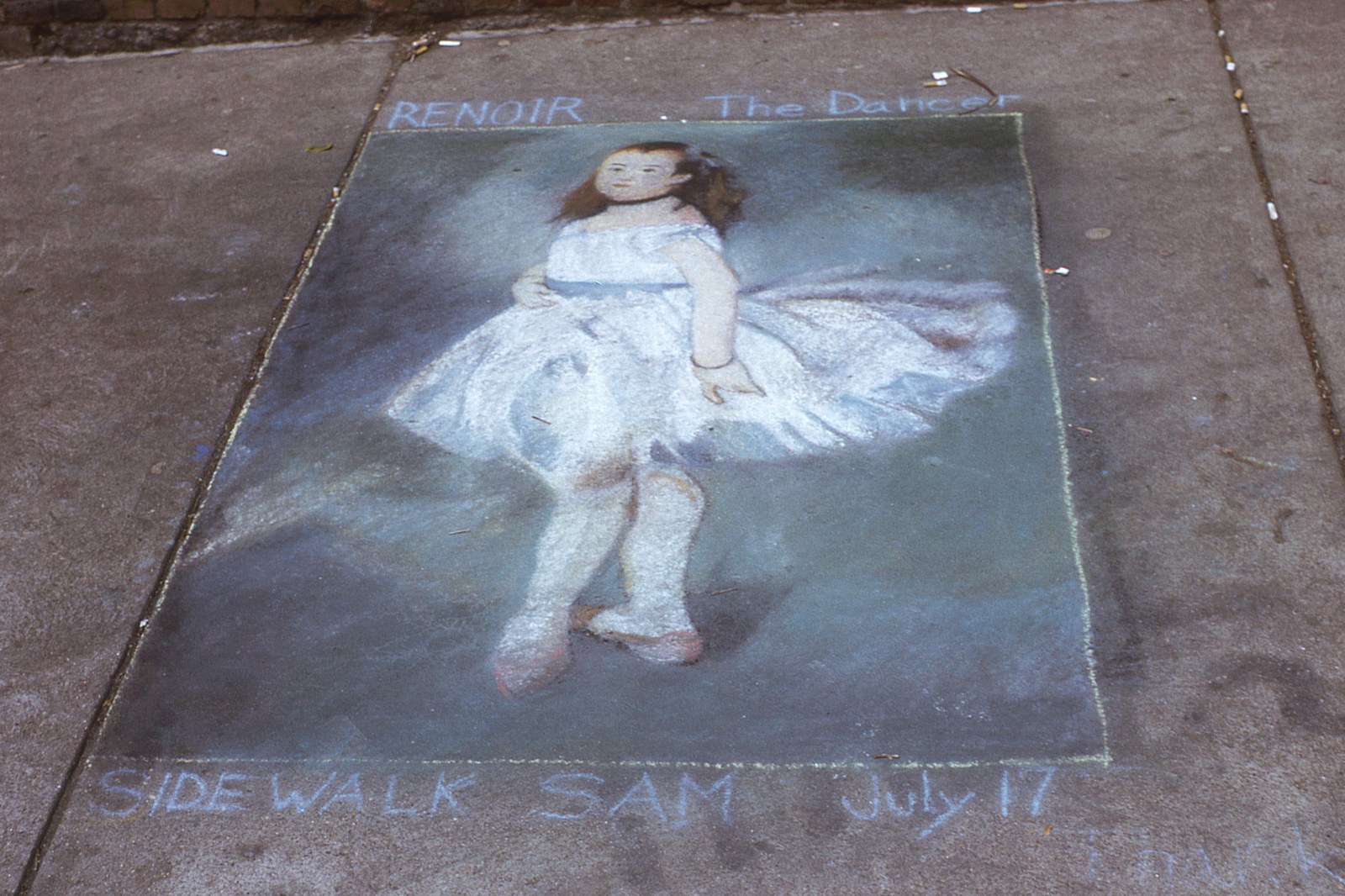
Contemporary art refers to art made from roughly 1970 to the present, a still-unfolding global era defined less by a single shared style than by an ever-expanding range of media and a genuinely worldwide network of artists, curators, and audiences. Where earlier eras clustered around one or two capitals, contemporary art draws from Lagos, Seoul, São Paulo, and Mexico City as readily as New York, London, or Berlin, carried by biennials, art fairs, and eventually the internet. Video and performance art treated time and the artist's own body as material rather than paint or stone, while new media and bio-art incorporated computing, robotics, and living organisms directly into the work. Street art carried public, unsanctioned image-making from city walls into major institutions, and post-internet, crypto, and AI art have each, in turn, grappled with how digital networks and machine tools reshape what an artwork even is and who — or what — makes it. Running through all of it is a persistent openness: no single dominant style, deliberately porous boundaries between disciplines, and an ongoing argument about art's relationship to technology, identity, and the market.
The look: what defines Contemporary Art
Expanded media
Artists work across video, performance, installation, sound, biological material, and digital code as readily as paint or stone, treating medium itself as an open question rather than a fixed craft tradition.
Global, decentralized art world
No single city or movement sets the agenda; biennials, art fairs, and online platforms connect artists and audiences across continents, and reputations increasingly form outside traditional, long-standing Western institutional gatekeepers.
Time-based and durational work
Performance and video art unfold over duration rather than existing as a fixed static object, sometimes surviving only through documentation, scripts, or instructions for later restaging rather than an original physical artifact.
Public and street presence
Street art moved unsanctioned, large-scale image-making from walls and trains into galleries and museums, carrying stencils, murals, and spray-paint lettering into spaces once reserved for traditional easel painting and sculpture.
Technology as subject and tool
New media, bio-, and AI art use computing, networks, robotics, or living cells directly as material, often examining the social and ethical consequences of the very technologies employed to make the work.
Identity and social engagement
Much contemporary work directly addresses identity, politics, and lived social experience, treating an artist's personal, cultural, or bodily position as central subject matter rather than something kept outside the frame.
The story
Contemporary art's timeline overlaps with postmodernism's but stretches further, continuing past 2000 into an ongoing present. Performance and video art took hold in the 1970s as artists treated their own bodies and real time as material, moving decisively away from a fixed, sellable object — a shift that also opened space for new media art as video and later computing technology became widely accessible tools.
Street art, born from 1970s and 1980s graffiti culture, spent decades moving from subway cars and city walls toward galleries and eventually blue-chip auction houses, gaining institutional legitimacy without fully losing its unsanctioned, public roots. Bio-art emerged later, in the 1990s, as artists began working directly with living tissue, genetic material, and laboratory processes, probing biotechnology's ethical edges.
The internet reshaped the field again from the 2000s onward: post-internet art treated network culture itself, rather than any single technology, as shared subject matter, while crypto art used blockchain technology in the 2010s to authenticate and sell purely digital works. Most recently, AI art has used machine-learning image generators as a new tool and subject at once, provoking fresh argument over authorship and originality. Meanwhile, movements like Japan's flattened, pop-culture-infused superflat aesthetic show contemporary art's continuing global range, refusing any single center or style as the field carries on into the present.
Timeline
- 1970Performance and video art gain wide gallery recognition
- 1980Street art crosses from subway cars into downtown galleries
- 1990c. bio-art emerges as artists work directly with living material
- 1995New media art expands with wider access to video and computing tools
- 2000Superflat movement articulated in Japan, blending pop culture and fine art
- 2008Post-internet art responds to a newly networked visual culture
- 2014c. crypto art begins using blockchain to authenticate digital works
- 2022AI image generators spark a new wave of AI art and debate
Works to know
| Work | Maker | Date | Why it matters |
|---|---|---|---|
| Rhythm 0 | Marina Abramović | 1974 | Six-hour endurance performance placing the artist's body at the audience's disposal, a landmark of performance art's engagement with risk and duration. |
| Untitled (Your Body Is a Battleground) | Barbara Kruger | 1989 | Text-and-image work fusing advertising graphics with political statement, widely reproduced across contemporary visual culture. |
| 727 | Takashi Murakami | 1996 | Cartoon-flat wave-and-creature painting exemplifying the superflat aesthetic's fusion of traditional Japanese art and contemporary pop culture. |
| The Weather Project | Olafur Eliasson | 2003 | Immersive installation of an artificial glowing sun inside a museum turbine hall, epitomizing contemporary art's large-scale experiential installations. |
| Everydays: The First 5000 Days | Beeple (Mike Winkelmann) | 2021 | Digital collage sold as an NFT for a record sum, a defining moment for crypto art's arrival in the mainstream art market. |
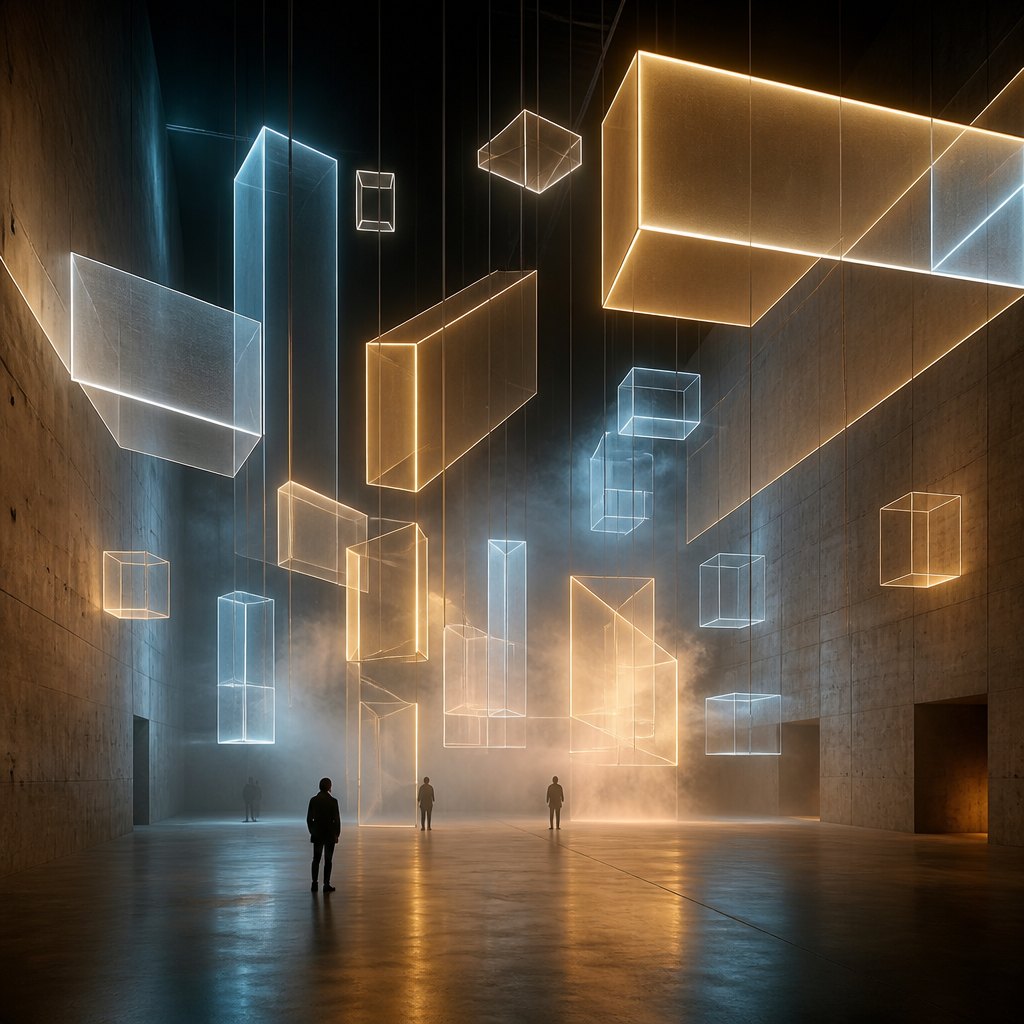 AI-generated
Make it yourself
Create art in the Contemporary Art spirit
This interpretation was generated from a prompt like: “A large-scale installation concept: a suspended arrangement of illuminated geometric forms filling a vast concrete hall, cool blue and amber lighting, drifting mist, minimalist architecture, contemporary museum atmosphere, photographic clarity, sense of quiet scale and technological wonder.”
Open the Global Contemporary Art Style generator →How to evoke the period
Choose an unconventional material or process as your real subject — light, data, a living or growing element, network imagery, or a documented action — rather than defaulting straight to paint on canvas. If working two-dimensionally, feel free to flatten space entirely, mixing pop-culture-derived imagery with traditional motifs at equal weight, as in flattened, cartoon-influenced styles. Lean into bold, saturated, printed-looking color or, alternately, immersive scale and atmosphere if depicting an installation. Text can function as image rather than caption. Keep composition open and conceptually driven: state the idea plainly, then let materials, scale, or duration carry it, rather than relying on traditional illusionistic technique alone.
What it left behind
Contemporary art is still being written, so its legacy is less settled history than live argument. It has already normalized the idea that an artwork can be an event, a network, a living organism, or a line of code rather than a discrete object, radically expanding what museums collect and what students train to make. Its global, decentralized structure has shifted real influence away from a handful of Western capitals, even as market attention remains uneven. Each new technological wave — the internet, blockchain, machine learning — has repeated the same underlying contemporary question in a new form: who authors an image, and what makes it count as art in the first place.
Frequently asked questions
What is contemporary art?
Contemporary art is art made from roughly 1970 to the present, a global, ongoing era spanning video, performance, installation, digital, and biological media, without one single dominant style or capital city defining it.
When did the contemporary art period start?
Most definitions place its start around 1970, overlapping with postmodernism, and unlike earlier historical periods it remains open-ended, continuing to expand as new artists, technologies, and regions enter the conversation.
What is the difference between contemporary art and modern art?
Modern art covers roughly 1860 to 1970's succession of Western movements; contemporary art is the more global, media-diverse period since 1970, less defined by sequential styles and more by expanding technology and geography.
What is AI art?
AI art refers to work made using machine-learning image or video generators, a recent and actively debated addition to contemporary art that raises fresh questions about authorship, originality, and the role of the artist.