 Art
Art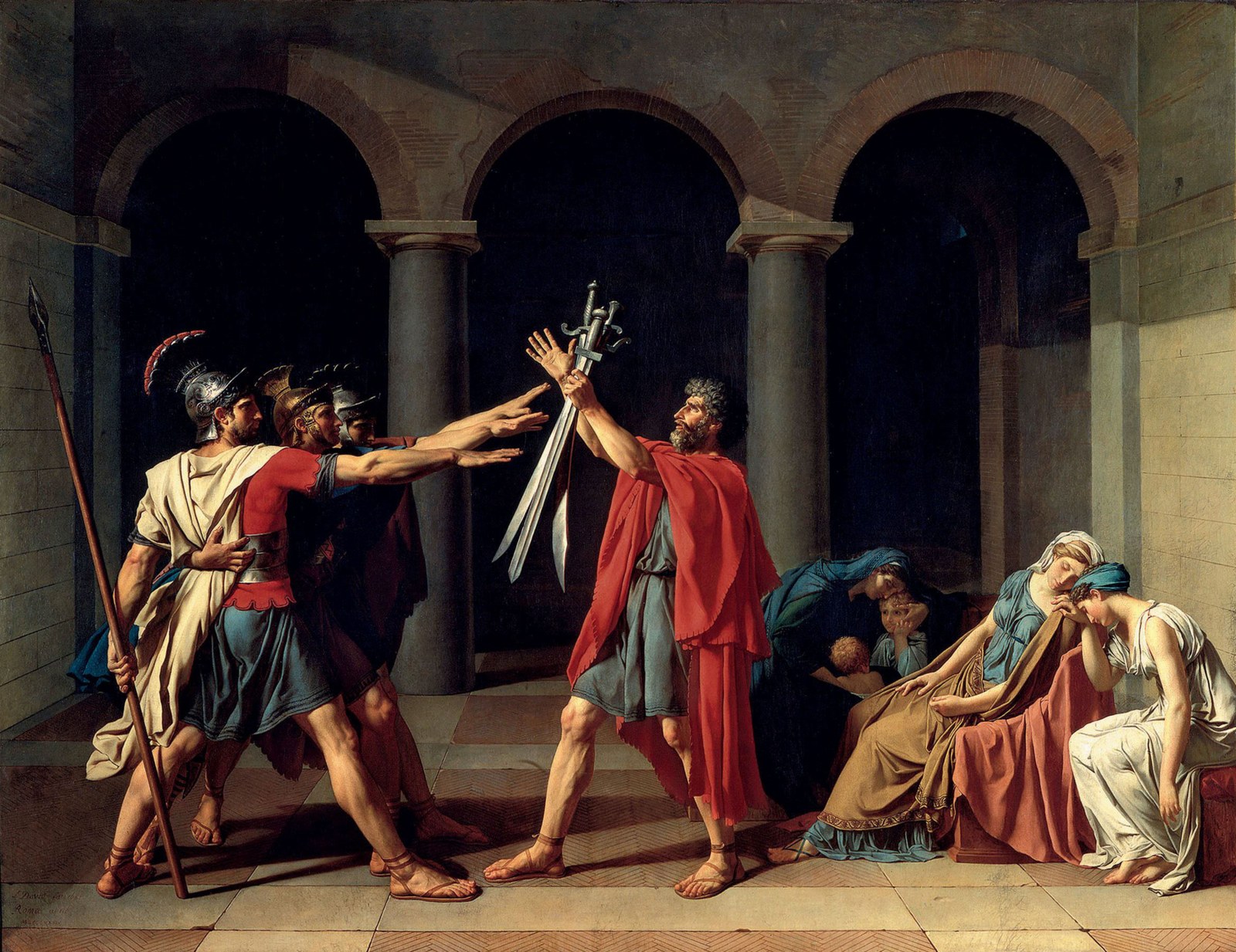
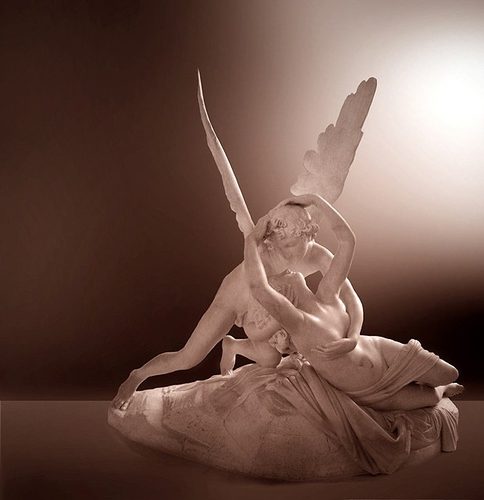
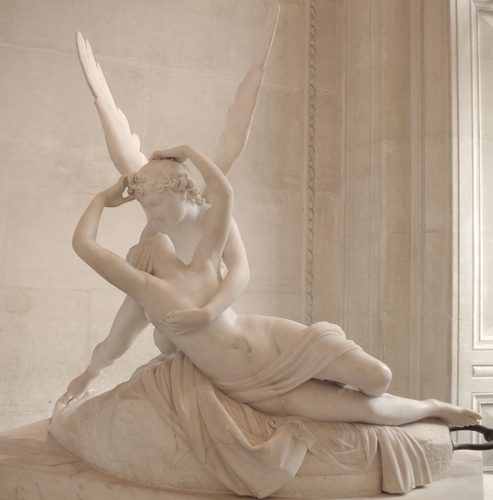
The Neoclassical era covers European and American art from roughly 1750 to 1830, defined by a deliberate return to the clarity, restraint, and moral seriousness associated with ancient Greece and Rome. The rediscovery of Pompeii and Herculaneum through mid-eighteenth-century excavation gave artists and architects direct new evidence of antique art, arriving just as Enlightenment thinkers were championing reason, civic virtue, and scientific inquiry over aristocratic ornament. Where Rococo had served private pleasure, Neoclassicism served public and moral purpose, prized by Enlightenment intellectuals, reform-minded monarchs, and, especially in France and the young United States, revolutionary and republican governments looking to classical antiquity as a model for citizenship and self-governance. Painters and sculptors favored clear outline, restrained color, and stable, frieze-like composition over Rococo's curves and pastels, choosing subjects — Roman civic sacrifice, Greek philosophy, stoic self-discipline — that modeled virtuous conduct rather than romantic leisure. Architecture returned to strict classical orders, columns, and pediments, shaping government buildings across Europe and the new American republic. The style became closely associated with the French Revolution and Napoleon's empire, before Romanticism's emotional intensity began to displace its cool restraint by the 1820s.
The look: what defines The Neoclassical Era
Clear linear outline
Figures and forms were defined by crisp, precise contour lines rather than the Rococo's soft blending, giving paintings and sculpture a sharp, sculptural clarity meant to evoke ancient relief carving and vase painting.
Restrained, sober palette
Painters favored controlled, often cooler color — stone whites, muted reds, and deep blues — over Rococo pastels, reinforcing a mood of seriousness and moral gravity appropriate to civic and historical subjects.
Frieze-like stable composition
Figures were often arranged in a shallow, stage-like space parallel to the picture plane, echoing ancient relief sculpture and creating a calm, balanced, almost theatrical stillness rather than Baroque diagonal drama.
Classical dress and setting
Subjects were staged in togas, tunics, and columned interiors drawn from careful study of Roman and Greek art and architecture, lending contemporary moral and political messages the authority of antiquity.
Civic virtue subject matter
Painters chose scenes of Roman self-sacrifice, oath-taking, and stoic duty over Rococo courtship, using ancient history and mythology as moral examples for a public increasingly focused on citizenship and reform.
Classical architectural orders
Buildings revived Greek and Roman columns, pediments, and domes with mathematical precision, a vocabulary adopted for government buildings, museums, and monuments across Europe and the newly independent United States.
The story
Neoclassicism took shape in the mid-1700s as excavations at Pompeii and Herculaneum, beginning in the 1740s, gave European artists and scholars direct physical access to ancient Roman painting, sculpture, and decorative art for the first time in centuries. Enlightenment writers, arguing for reason and civic virtue over aristocratic ornament, found in this rediscovered antiquity a ready visual language, and the style quickly displaced the Rococo it reacted against in critical favor.
In France, Neoclassicism became closely tied to revolutionary politics: painters depicted Roman civic sacrifice and stoic duty as models for republican virtue in the years leading up to and through the French Revolution, and Napoleon later adopted the same imperial Roman visual language to legitimize his own rule. Sculptors across Europe pursued a parallel ideal of cool, polished classical beauty, while architects revived Greek and Roman temple forms for government buildings, banks, and museums from London to St. Petersburg.
In the newly independent United States, Neoclassicism became the visual language of the young republic, shaping its early architecture and public monuments as a deliberate echo of ancient democratic and republican models. By the 1820s, Neoclassicism's cool rationalism began to feel emotionally limited to a new generation, who turned toward Romanticism's drama and individual feeling, though classical architecture remained a standard well beyond the movement's painterly peak.
Timeline
- 1748Excavations begin at Pompeii, revealing ancient Roman art
- 1755Winckelmann's writings promote Greek art as an ideal model
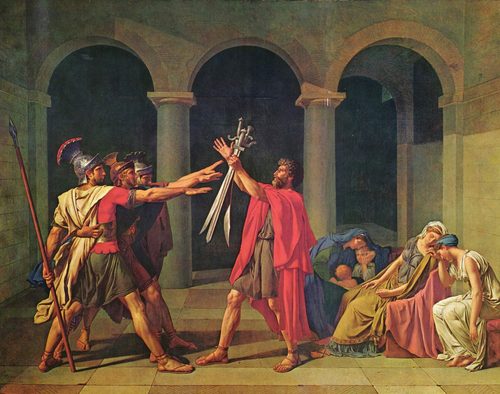
- 1784David's Oath of the Horatii defines Neoclassical painting
- 1789French Revolution embraces Neoclassical civic imagery
- 1804Napoleon adopts Neoclassical imagery to legitimize imperial rule
- 1806Neoclassical architecture spreads across Europe and the Americas
- 1820Romanticism begins to challenge Neoclassical restraint
Works to know
| Work | Maker | Date | Why it matters |
|---|---|---|---|
| Oath of the Horatii | Jacques-Louis David | 1784 | A stark, frieze-like painting of Roman civic sacrifice that became the defining statement of Neoclassical moral seriousness. |
| The Three Graces | Antonio Canova | 1814–1817 | A polished marble sculpture of idealized classical beauty, exemplifying Neoclassical sculpture's cool restraint and technical refinement. |
| Monticello | Thomas Jefferson | 1768–1809 | Thomas Jefferson's Virginia home, remodeled in a distinctly Neoclassical style, reflecting the young United States' embrace of classical architecture. |
| Apotheosis of Homer | Jean-Auguste-Dominique Ingres | 1827 | A large allegorical composition honoring the ancient poet Homer, epitomizing late Neoclassicism's reverence for classical Greek culture. |
| Portrait of Madame Recamier | Jacques-Louis David | 1800 | An austere portrait posing its sitter on a simple daybed in classical dress, epitomizing Neoclassical restraint in portraiture. |
 AI-generated
Make it yourself
Create art in the The Neoclassical Era spirit
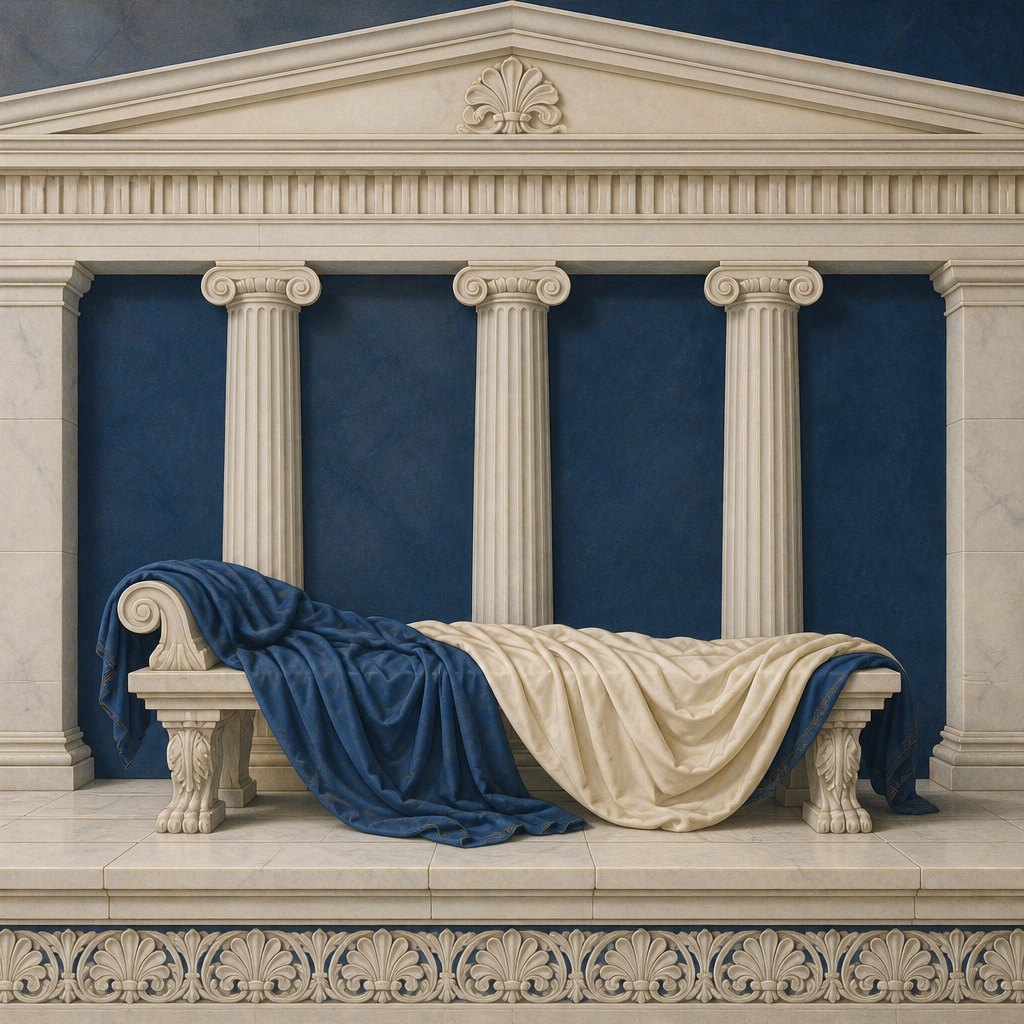
This interpretation was generated from a prompt like: “A calm classical interior with fluted stone columns and a simple pediment, drapery folds arranged over a marble bench in place of any figure, restrained palette of stone white and deep blue, crisp outlines, even clear light, frieze-like composition.”
Open the Neoclassicism Art Style generator →How to evoke the period
Use crisp, precise outlines and smooth, controlled modeling rather than loose or textured brushwork. Arrange forms in a shallow, stage-like space, roughly parallel to the picture plane, echoing ancient relief sculpture. Choose a restrained palette — stone white, muted red, deep blue — and avoid pastel or high-key color. Set the scene with classical architecture: columns, pediments, and simple geometric forms, evenly and clearly lit rather than dramatically shadowed. Keep any gesture controlled and dignified rather than theatrical. Drapery should fall in clean, sculptural folds. The overall effect should read as calm, ordered, and morally serious rather than playful or spontaneous.
What it left behind
Neoclassicism's classical architectural vocabulary became the default language of government buildings, banks, and museums across the Western world, a legacy still visible in courthouses and capitols today. Its ideal of art in service of civic virtue and public education shaped how national academies and later art schools structured training around drawing from classical sculpture. The tension it set up with the following Romantic era — reason against feeling, restraint against drama — became a recurring pattern in later art history, replaying in various forms through the nineteenth and twentieth centuries.
Frequently asked questions
What is Neoclassical art?
Neoclassical art is the European and American style of roughly 1750 to 1830 that revived ancient Greek and Roman clarity, restraint, and moral seriousness, reacting against the Rococo and drawing on fresh excavations of Roman antiquity.
When was the Neoclassical period?
The Neoclassical period ran from about 1750, spurred by the excavation of Pompeii, to around 1830, when Romanticism's emotional intensity began to take over from its cool classical restraint.
What caused the Neoclassical revival?
The mid-1700s excavation of Pompeii and Herculaneum, combined with Enlightenment ideas about reason and civic virtue, gave artists direct access to ancient Roman art and a philosophical reason to imitate its restraint.
How is Neoclassicism different from Rococo?
Neoclassicism rejected Rococo's pastel color and playful aristocratic subjects in favor of restrained color, clear outline, and morally serious classical subjects drawn from Roman and Greek history.