 Art
Art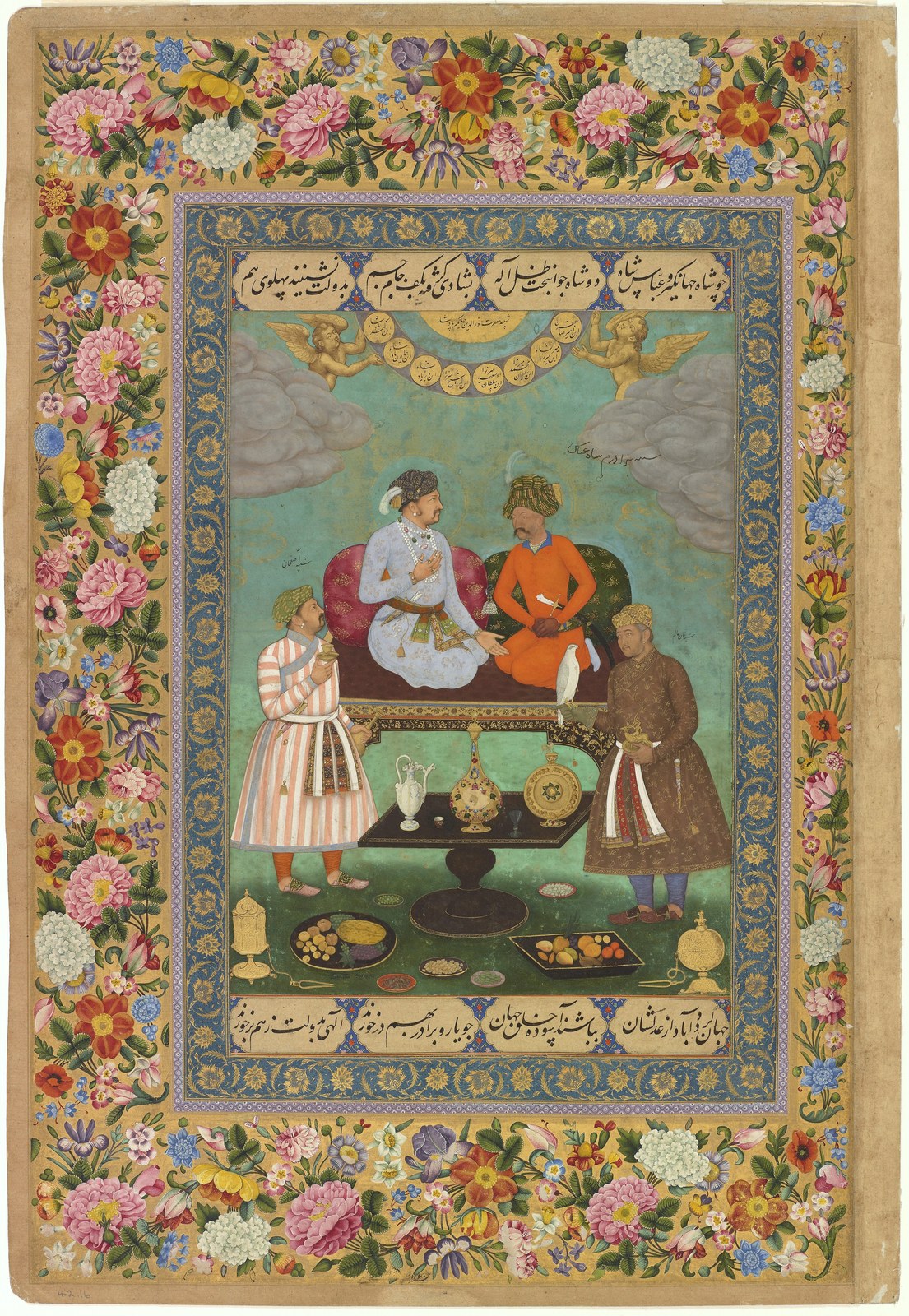
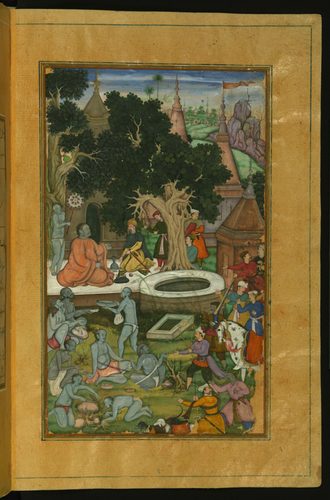
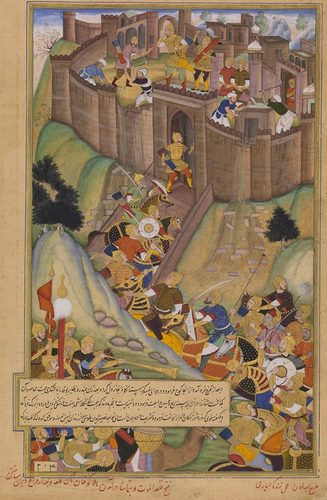
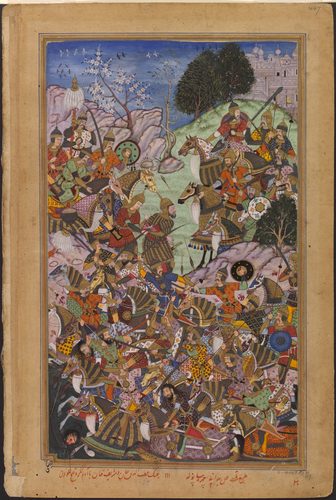
Mughal art refers to the painting, architecture, and decorative arts produced under the Mughal Empire, which ruled much of the Indian subcontinent from 1526, when Babur defeated the Delhi Sultanate at Panipat, until the empire's nominal end in 1857. Mughal rulers, descended from Central Asian Turco-Mongol lineage and steeped in Persian court culture, brought Persian manuscript-painting traditions into direct contact with Indian artistic workshops, producing a hybrid style unlike either source alone. Court painting ateliers, most active under Emperors Akbar, Jahangir, and Shah Jahan in the late 16th and 17th centuries, produced small, intensely detailed manuscript illustrations and portraits combining Persian linear precision with Indian color sense and closer observation of nature. Architecture reached its most celebrated expression under Shah Jahan, whose building projects paired Persian formal symmetry with Indian materials and craft traditions to monumental effect. The empire's workshops also produced jade carving, jewelry, textiles, and calligraphy of extraordinary refinement, supported by immense imperial wealth. As central authority weakened through the 18th century, court patronage fragmented among regional successor states, which carried Mughal-derived painting and craft traditions forward even as the empire's political power faded toward its formal dissolution in 1857.
The look: what defines Mughal Art
Persian-Indian Painting Fusion
Miniature manuscript painting combines Persian conventions — fine linear outline, flattened perspective, formal composition — with Indian color intensity and closer observation of local flora, fauna, and human likeness, producing a distinct hybrid idiom.
Naturalist Portraiture
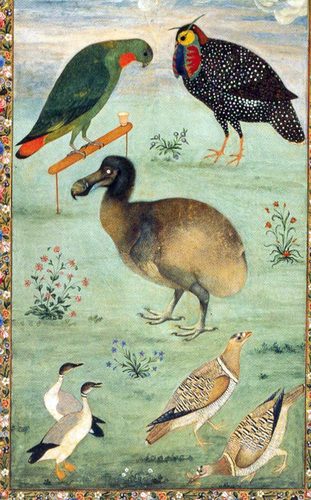
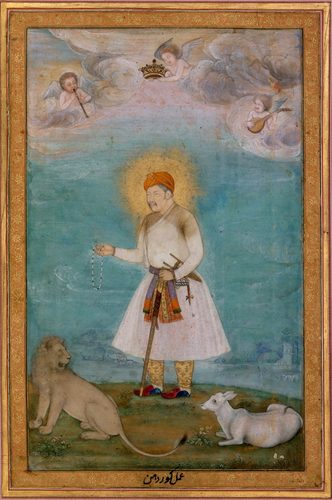
Court ateliers, especially under Jahangir, developed close individual portraiture and detailed studies of animals and plants, prized for careful observation rather than the more formulaic figure types of earlier Persian painting.
Symmetrical Garden Architecture
Mughal building favored strict bilateral symmetry, monumental gateways, and gardens laid out in a fourfold charbagh plan with straight channels of water, expressing paradise imagery through carefully controlled, orderly architectural space.
White Marble and Pietra Dura
Imperial buildings under Shah Jahan favored white marble inlaid with semiprecious stone in floral pietra dura patterns, replacing the red sandstone favored by earlier Mughal emperors with a lighter, more refined material palette.
Densely Detailed Manuscript Illustration
Illustrated histories and epics packed crowded battle scenes, court gatherings, and hunting expeditions into small manuscript pages, using tiered composition and minute detail to narrate complex events within a single frame.
Fine Jade and Jewelry Craft
Court workshops carved jade vessels and produced gem-set jewelry and gold work of exceptional technical refinement, reflecting the empire's vast wealth and its rulers' personal taste for portable luxury objects.
The story
Mughal rule began in 1526, when Babur, a Central Asian prince descended from Timur and Genghis Khan, defeated the Delhi Sultanate at the Battle of Panipat and established a new dynasty in northern India. Babur's grandson Akbar, who reigned from 1556, consolidated the empire and expanded an imperial painting atelier that deliberately paired Persian-trained master painters with Indian artists, forging the hybrid style that defines Mughal art.
Under Akbar's son Jahangir, painting turned toward closer naturalism, prized individual portraiture, and detailed studies of animals and plants, reflecting the emperor's own reported curiosity about the natural world. His son Shah Jahan, who reigned from 1628, redirected imperial resources toward architecture, commissioning white-marble monuments including a mausoleum for his wife that became the era's most celebrated building.
Mughal power began fragmenting after the death of the more austere emperor Aurangzeb in 1707, as regional governors and rival powers eroded central control through the eighteenth century. Even as political authority shrank to little more than ceremonial status, painting and craft traditions persisted at surviving regional courts, carrying Mughal visual language into successor Indian kingdoms. The empire's nominal end came in 1857, when British colonial authorities formally deposed the last Mughal emperor after a major uprising.
Timeline
- 1526Babur defeats the Delhi Sultanate at Panipat, founding the Mughal Empire
- 1556Akbar becomes emperor, expanding the imperial painting atelier
- 1590c. 1590: Akbar commissions the illustrated Akbarnama manuscript
- 1605Jahangir becomes emperor, shifting court painting toward naturalism
- 1628Shah Jahan becomes emperor, redirecting patronage toward architecture
- 1632Construction begins on the Taj Mahal
- 1707Death of Aurangzeb triggers the empire's political decline
- 1857Last Mughal emperor deposed, ending the dynasty
Works to know
| Work | Maker | Date | Why it matters |
|---|---|---|---|
| Taj Mahal | Unknown | 1632–1653 | White marble mausoleum built by Shah Jahan, the most celebrated example of Mughal architecture. |
| Akbarnama manuscript illustrations | Unknown, imperial atelier | c. 1590s | Illustrated chronicle of Emperor Akbar's reign, showcasing the newly fused Mughal painting style at manuscript scale. |
| Zebra | Ustad Mansur | 1621 | Closely observed animal study exemplifying Jahangir-era naturalism in court painting. |
| Red Fort, Delhi | Unknown | 1639–1648 | Fortified palace complex built by Shah Jahan, showcasing Mughal red sandstone architecture and formal garden planning. |
| Peacock Throne | Unknown | completed 1635 | Jewel-encrusted imperial throne commissioned by Shah Jahan, emblematic of Mughal wealth and craft. |
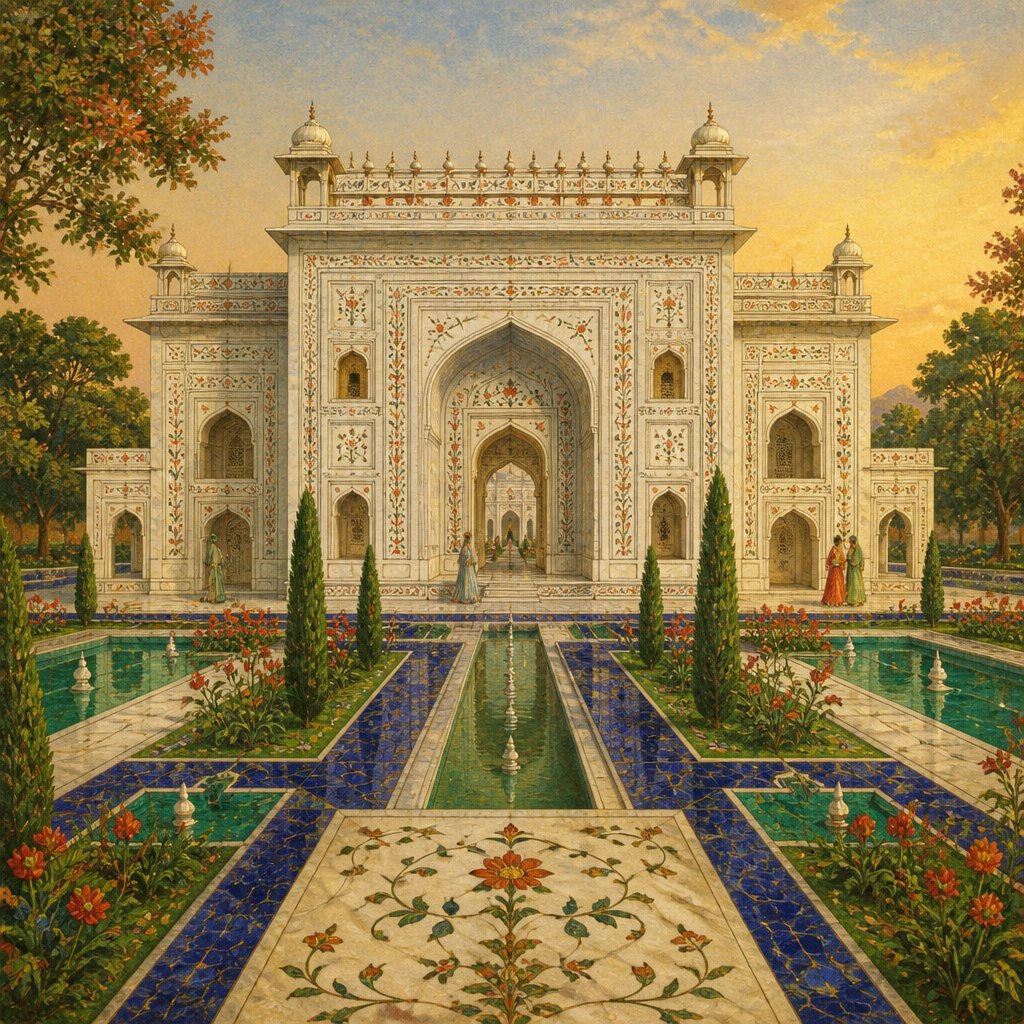 AI-generated
Make it yourself
Create art in the Mughal Art spirit
This interpretation was generated from a prompt like: “A white marble palace facade inlaid with floral pietra dura patterns in red and green stone, framed by a symmetrical garden with straight water channels, jewel-toned lapis and emerald accents, fine miniature-painting detail, golden late-afternoon light.”
Open the Mughal Miniature Art Style generator →How to evoke the period
Combine two registers: fine Persian-style linear outline and flattened, tiered composition with Indian intensity of color and close observation of plants and animals. For architecture, use bilateral symmetry, a tall central dome or gateway, and a fourfold garden plan with straight water channels. White marble with inlaid floral stone patterns reads as the era's most refined material; red sandstone with white trim reads as its earlier, sturdier phase. For manuscript-style scenes, pack in tiered detail — a crowded garden gathering, a hunting scene, or animals rendered with careful, almost scientific attention. Keep color jewel-bright: emerald, ruby red, lapis blue, and gold accents throughout.
What it left behind
Mughal painting's fusion of Persian precision and Indian color shaped regional Indian painting schools for generations after imperial patronage declined, feeding directly into Rajput and Pahari court painting traditions. Mughal architecture, especially its symmetrical garden planning and white-marble inlay work, remains one of the most recognized visual signatures of South Asian building and continues to influence commemorative and civic architecture in the region. The empire's decorative arts — jade carving, gem-set jewelry, fine textiles — set enduring standards of craft still referenced in South Asian luxury goods today. The Taj Mahal in particular has become a globally recognized symbol of the period and of monumental romantic architecture generally.
Frequently asked questions
What is Mughal art?
Mughal art is the painting, architecture, and decorative arts produced under the Mughal Empire, which ruled much of the Indian subcontinent from 1526 to 1857, fusing Persian court traditions with Indian color and craft.
When was the Mughal period?
The Mughal period runs from 1526, when Babur founded the empire after the Battle of Panipat, to 1857, when British colonial authorities formally deposed the last Mughal emperor.
What is Mughal miniature painting?
Mughal miniature painting is small-scale manuscript and album illustration combining Persian linear precision with Indian color and naturalism, produced in imperial ateliers especially active under Emperors Akbar and Jahangir.
Who built the Taj Mahal?
The Taj Mahal was commissioned by Emperor Shah Jahan starting in 1632 as a mausoleum for his wife, built primarily of white marble with inlaid semiprecious stone, and completed around 1653.