 Art
Art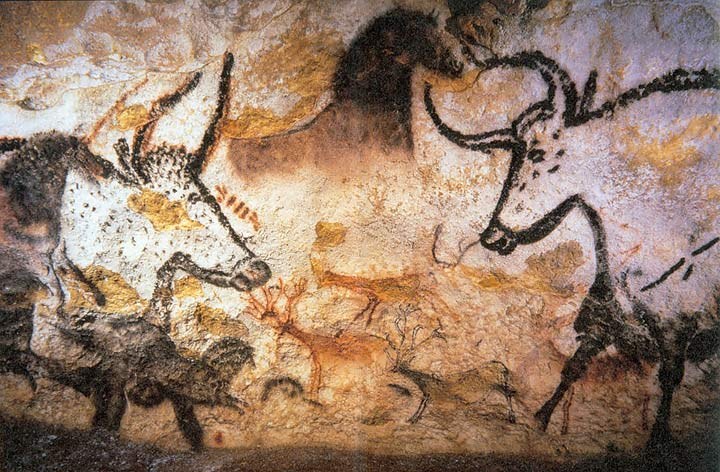
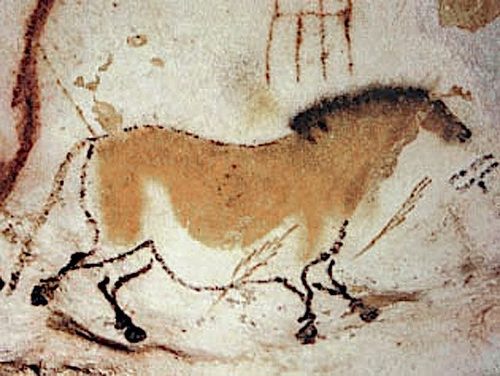
Prehistoric art is the visual record left by human communities before the invention of writing, spanning roughly 40,000 to 3,000 BCE and appearing on every inhabited continent, from the painted caves of France and Spain to rock shelters in Australia and southern Africa. It covers an enormous stretch of time and range of societies — small bands of Ice Age hunter-gatherers, then the first farming villages of the Neolithic — so "prehistoric art" is less a single style than a set of shared impulses: the urge to mark a wall, shape a figure, or raise a stone. Much of what survives is incidental to daily life — tool handles, pierced shells, painted rock shelters revisited over centuries — while some, like the deep cave galleries of Lascaux and Chauvet, required planning, scaffolding, and pigment recipes passed between generations. Nobody alive remembers what these images meant to the people who made them. Animals dominate the painted record; human figures are rarer and usually simplified or symbolic. By the Neolithic, as communities settled and farmed, art shifts toward pottery, woven crafts, and monumental stone architecture built by organized labor — a hint of the settled societies to come.
The look: what defines Prehistoric Art
Animal-dominant imagery
Painted and engraved art overwhelmingly favors animals — horses, bison, aurochs, deer — rendered with keen observational accuracy, often in profile, sometimes overlapping in dense clusters on cave walls, while human figures appear rarely and are usually stylized or faceless.
Cave and rock-shelter settings
Much of the surviving painted imagery sits deep inside limestone caves, reached through narrow passages far from any living space, suggesting these chambers served ceremonial or seasonal purposes, with images layered and repainted across many generations.
Mineral pigments and simple tools
Painters ground ochre, manganese, and charcoal into pigment, applying it by hand, with chewed-fiber brushes, or by blowing it through hollow bones to create stenciled outlines — most famously the negative handprints found scattered across painted caves worldwide.
Small carved figurines
Portable sculptures, carved from ivory, bone, antler, or soft stone, include animal forms and rounded female figures with exaggerated hips and minimal facial detail, small enough to be carried, worn, or passed hand to hand.
Geometric and abstract marks
Alongside animals, prehistoric art includes dots, grids, hand stencils, and repeated linear signs whose meaning is lost to us; some scholars read them as counting devices or seasonal markers, though no confirmed decoding exists.
Megalithic monuments
Toward the end of the period, Neolithic communities raised massive stone structures — standing stones, circles, and chambered tombs — requiring coordinated labor and basic engineering, marking a shift from portable art to permanent, land-altering construction.
The story
The earliest confidently dated painted caves appear roughly 40,000 years ago, though carved and pierced objects — beads, engraved ochre — push symbolic behavior back further still. For tens of thousands of years, art was the work of small, mobile hunter-gatherer bands responding to an Ice Age world of retreating glaciers and migrating herds. The animals painted on cave walls were the animals that mattered most: food, danger, and companionship in a harsh landscape.
Around 17,000–15,000 BCE, painted caves in what is now France and Spain reached a technical high point — multi-colored, carefully observed animal panels using the rock's natural contours to suggest volume and movement. Similar traditions, independently developed, appear in Indonesia, Australia, and southern Africa, some of comparable or even greater age, correcting the old assumption that sophisticated image-making began in Europe.
Everything changed with the retreat of the ice and the rise of farming, roughly after 10,000 BCE. As communities settled, art shifted from cave walls to portable and architectural forms: painted pottery, worked materials, and above all the megaliths — Stonehenge among the best known — that organized labor and land into lasting monuments. By around 3,000 BCE, writing systems emerge in parts of the world, and "prehistoric" gives way to the first historical civilizations.
Timeline
- 40,000 BCEc. Earliest confirmed painted caves and carved ivory figurines appear
- 36,000 BCEc. Chauvet Cave in France painted with detailed animal panels
- 25,000 BCEc. Venus figurines carved across Ice Age Europe
- 17,000 BCEc. Lascaux cave paintings created in southwestern France
- 9,500 BCEc. Göbekli Tepe's monumental stone enclosures built in Anatolia
- 7,000 BCEc. Early Neolithic farming villages spread pottery and woven crafts
- 3,000 BCEc. Construction begins on Stonehenge's earliest phase in Britain
Works to know
| Work | Maker | Date | Why it matters |
|---|---|---|---|
| Lascaux Cave Paintings | Unknown | c. 17,000 BCE | Multi-chamber gallery of painted horses, aurochs, and deer in southwestern France, among the best preserved Ice Age painted caves. |
| Chauvet Cave Paintings | Unknown | c. 36,000 BCE | One of the oldest known painted caves, its lions and rhinoceroses painted with striking anatomical confidence. |
| Venus of Willendorf | Unknown | c. 25,000 BCE | Small limestone figurine of a rounded female form, among the best known of many similar Ice Age carvings. |
| Göbekli Tepe | Unknown | c. 9,500 BCE | Monumental carved stone enclosures in Anatolia, among the earliest known large-scale architecture, predating farming and pottery. |
| Stonehenge | Unknown | c. 3,000–1,500 BCE | Megalithic stone circle in southern England, built and rebuilt over centuries; its exact purpose remains debated. |
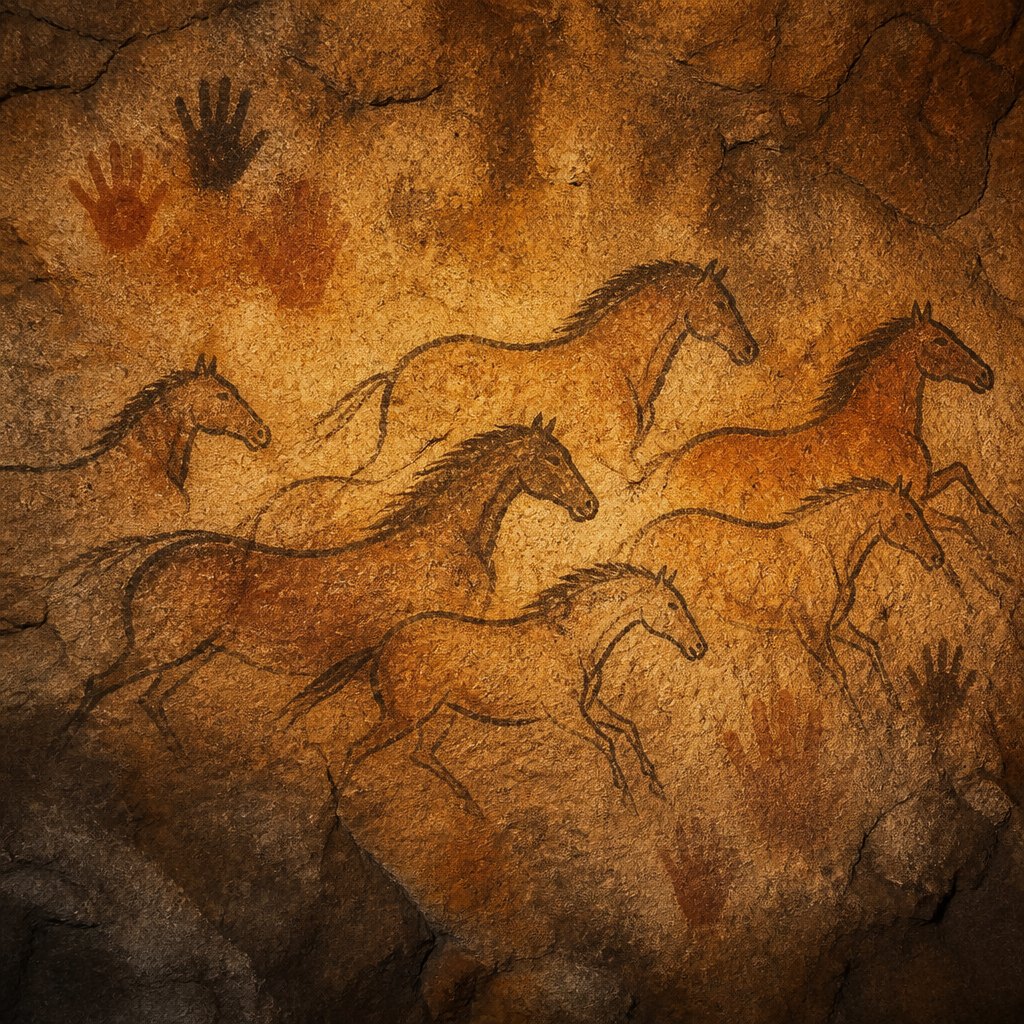 AI-generated
Make it yourself
Create art in the Prehistoric Art spirit
This interpretation was generated from a prompt like: “An ochre-and-charcoal painting of a herd of horses in profile, rendered in confident single lines across a rough, weathered limestone cave wall, mineral-pigment texture, torchlit amber glow, faint hand-stencil marks scattered nearby.”
Open the Prehistoric Cave Art Style generator →How to evoke the period
To evoke prehistoric art, work with earth tones only: ochre reds and yellows, charcoal black, chalky white, applied as if ground from mineral pigment rather than mixed from a tube. Choose animal subjects — horses, bison, deer, birds — rendered in confident single-line profiles, sometimes overlapping as if layered across a rock surface over time. Let the surface show through: uneven stone texture, cracks, natural contours the image seems to follow rather than ignore. Avoid smooth, even backgrounds — mottled, weathered surfaces sell the effect. Keep human figures rare, simplified, and symbolic rather than detailed. For sculpture-style images, favor rounded, worn forms in stone, bone, or ivory tones. Hand-stencil motifs and dot clusters add authenticity without needing to mean anything specific.
What it left behind
Prehistoric art set the terms every later tradition would work within: the idea that a wall, a stone, or a small carried object could hold meaning beyond its material. Its observational skill — the accurate, economical lines used to capture a running animal — remains a benchmark for figure drawing. Its portable figurines anticipate the entire history of small-scale sculpture. Its megaliths, aligning stone with sun and season, are the ancestors of monumental and land-based art. Because so little context survives, prehistoric art also taught later viewers to sit with ambiguity — to look at an image and accept that its full meaning may never return. That openness continues to draw artists and audiences back to it today.
Frequently asked questions
What is prehistoric art?
Prehistoric art refers to visual works made by human communities before the invention of writing, roughly 40,000 to 3,000 BCE, including cave paintings, carved figurines, engraved objects, and megalithic monuments found on every inhabited continent.
Why did early humans paint animals instead of people?
Animals dominated daily survival — as food, danger, or companionship — so they may have carried more meaning to paint than people did. Human figures do appear, but usually simplified, faceless, or symbolic rather than portraits.
What pigments were used in cave paintings?
Painters used mineral pigments ground from ochre (reds and yellows), manganese and charcoal (black), and chalk or clay (white), applied with fingers, chewed-fiber brushes, or blown through hollow bones.
Is prehistoric art the same everywhere in the world?
No. Painted caves, rock art, figurines, and megaliths developed independently across Europe, Africa, Asia, Australia, and the Americas, on different timelines, showing that image-making arose repeatedly rather than spreading from one source.