 Art
Art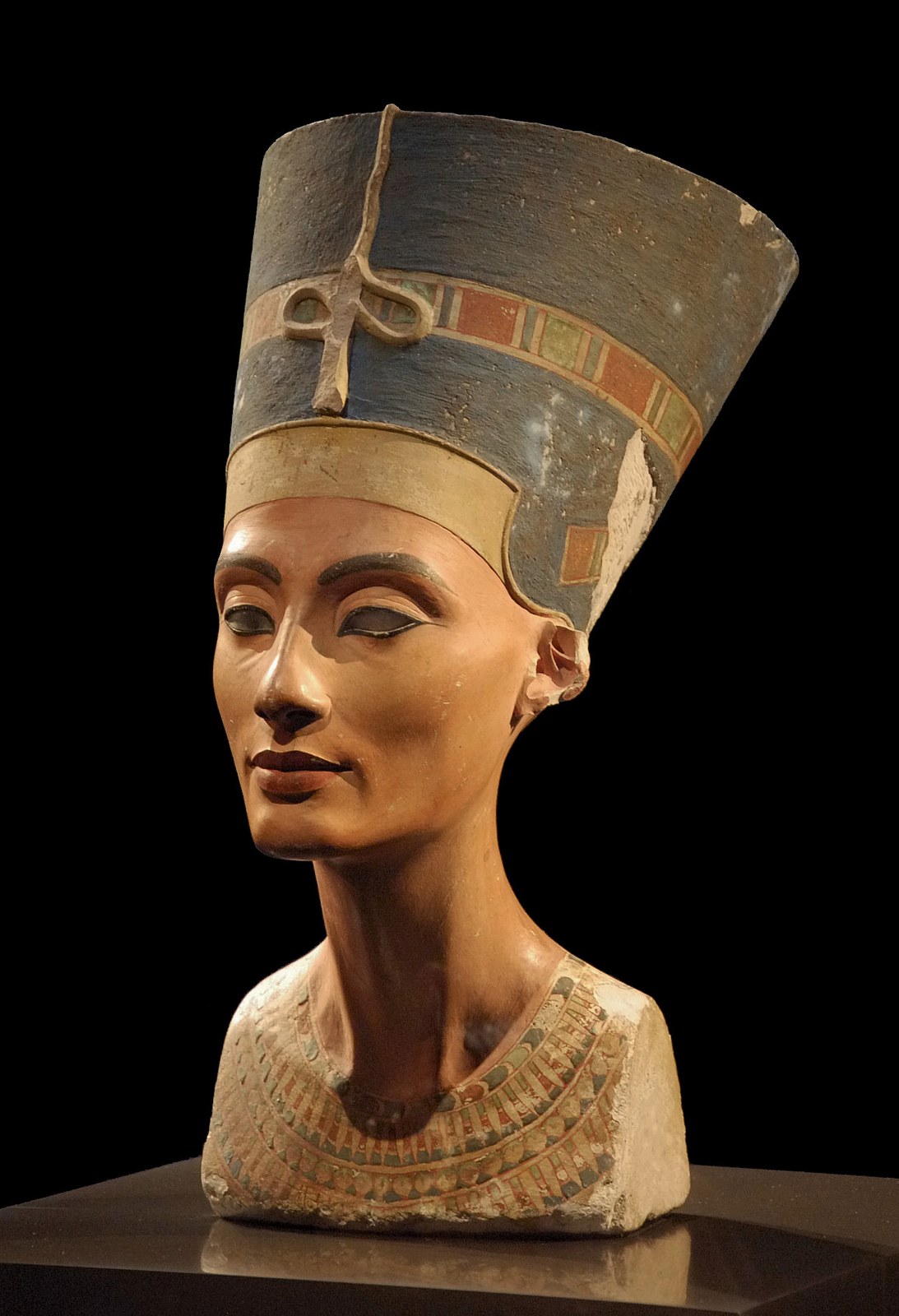
Ancient Egyptian art is the art of the civilization that flourished along the Nile River from the unification of Egypt around 3100 BCE to the death of Cleopatra VII and Roman annexation in 30 BCE. Nearly everything that survives was made for a purpose beyond decoration: statues housed a person's spirit, tomb paintings supplied the afterlife with food and servants, and temple reliefs kept the gods properly honored so that cosmic order, ma'at, would hold. This purpose shaped the look of the art itself — a set of conventions, refined early and kept remarkably stable for three thousand years, governing how a body should be posed, how a pharaoh should be sized against his subjects, and how a scene should be read. Pharaohs, priests, and wealthy officials were the chief patrons, commissioning tombs and temples meant to function forever rather than simply impress the living. Painters and sculptors worked largely anonymously, in workshops attached to royal and temple projects, following pattern books that changed only slowly across dynasties. The result is an art that reads, even to modern eyes, as instantly recognizable — and built, quite literally, to survive.
The look: what defines Ancient Egyptian Art
Composite figure pose
The human body is shown with head, arms, and legs in profile but the eye and shoulders facing forward, a convention chosen for clarity and completeness rather than realism, kept almost unchanged for three millennia.
Hierarchical scale
Figures are sized by importance, not distance: pharaohs and gods appear largest, officials smaller, servants and captives smallest of all, so a single glance tells the viewer exactly who holds power in the scene.
Registers and hieroglyphic text
Wall scenes are organized into horizontal bands read left to right, combined directly with hieroglyphic inscriptions naming figures and narrating events, so image and writing form a single continuous record.
Idealized, ageless bodies
Pharaohs and officials are shown young, fit, and calm regardless of their actual age at death, since art was meant to preserve an eternal, perfected self rather than a documentary likeness.
Durable stone and gold materials
Temples and tombs favored limestone, sandstone, granite, and gilded wood, chosen for permanence; pigments came from mineral sources — malachite green, ochre, and mineral blue — meant to stay bright in sealed darkness.
Animal-headed deities
Gods are frequently shown with human bodies and animal heads — falcon, jackal, ibis, cow — each attribute identifying a specific deity's powers and domain at a glance, without need for a label.
The story
Egyptian art begins with unification around 3100 BCE, when Upper and Lower Egypt were joined under a single ruler and the conventions of pose, scale, and register appear already largely formed on ceremonial objects like the Narmer Palette. The Old Kingdom that followed built the great pyramids at Giza, monumental royal tombs that fixed the idea of art as an engine for the afterlife, supported by a highly organized state and priesthood.
After a period of political fragmentation, the Middle Kingdom brought renewed royal building and more introspective portraiture, sometimes showing pharaohs with careworn, weary faces rather than idealized youth. The New Kingdom that followed was Egypt's imperial height: temple complexes at Karnak and Luxor expanded over centuries, and the pharaoh Akhenaten briefly upended tradition, promoting a single sun-disc god and a softer, more naturalistic art style before his successors restored the old conventions.
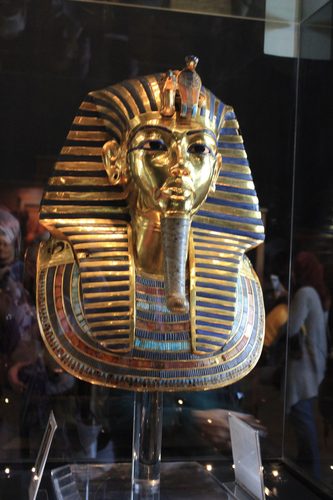
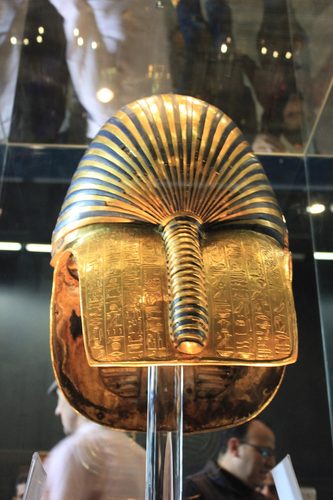
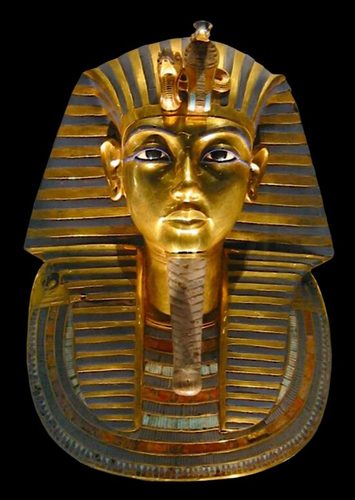
In the tomb of Tutankhamun, sealed and rediscovered largely intact, later ages found the fullest surviving picture of New Kingdom royal craft — gold, inlay, and funerary sculpture at their height. Egypt's final centuries brought foreign rule, first by Nubian and Persian conquerors, then Greek Ptolemaic pharaohs who blended Egyptian and Hellenistic styles, before Cleopatra VII's death in 30 BCE brought the pharaonic tradition to a close under Roman rule.
Timeline
- 3,100 BCEc. Unification of Egypt under the first pharaohs
- 2,560 BCEc. Great Pyramid of Giza completed for Khufu
- 1,352 BCEc. Akhenaten founds Amarna and reshapes Egyptian art style
- 1,332 BCEc. Tutankhamun becomes pharaoh, restoring traditional religion and art
- 1,279 BCEc. Ramesses II begins his long reign, expanding temple building
- 30 BCEDeath of Cleopatra VII ends pharaonic rule
Works to know
| Work | Maker | Date | Why it matters |
|---|---|---|---|
| Great Pyramid of Giza | Unknown | c. 2560 BCE | Monumental tomb built for the pharaoh Khufu, the last surviving Wonder of the Ancient World and a landmark of precise stone engineering. |
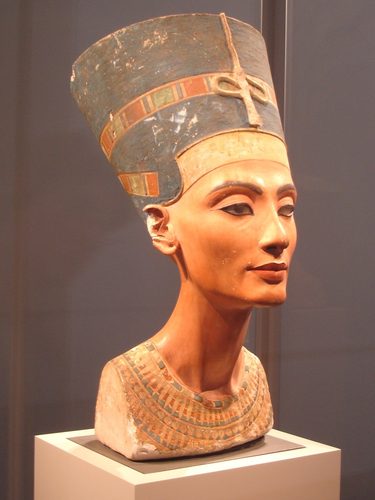
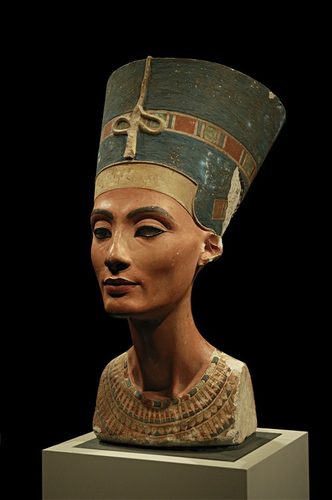
| Bust of Nefertiti | Unknown | c. 1345 BCE | Painted limestone bust of Queen Nefertiti, found at Amarna, prized for its serene naturalism and precise craftsmanship. |
| Mask of Tutankhamun | Unknown | c. 1323 BCE | Gold and inlaid funerary mask from Tutankhamun's tomb, among the best-known objects of ancient Egypt and a peak of New Kingdom goldwork. |
| Narmer Palette | Unknown | c. 3100 BCE | Carved siltstone ceremonial palette showing early unification imagery; its poses and hierarchical scale set conventions that lasted three thousand years. |
| Great Sphinx of Giza | Unknown | c. 2500 BCE | Colossal limestone lion-bodied guardian figure with a pharaoh's head, carved from the Giza plateau's bedrock beside the pyramids. |
| Temple of Ramesses II at Abu Simbel | Unknown | c. 1264 BCE | Rock-cut temple fronted by four colossal seated statues of Ramesses II, built to project power at Egypt's southern frontier. |
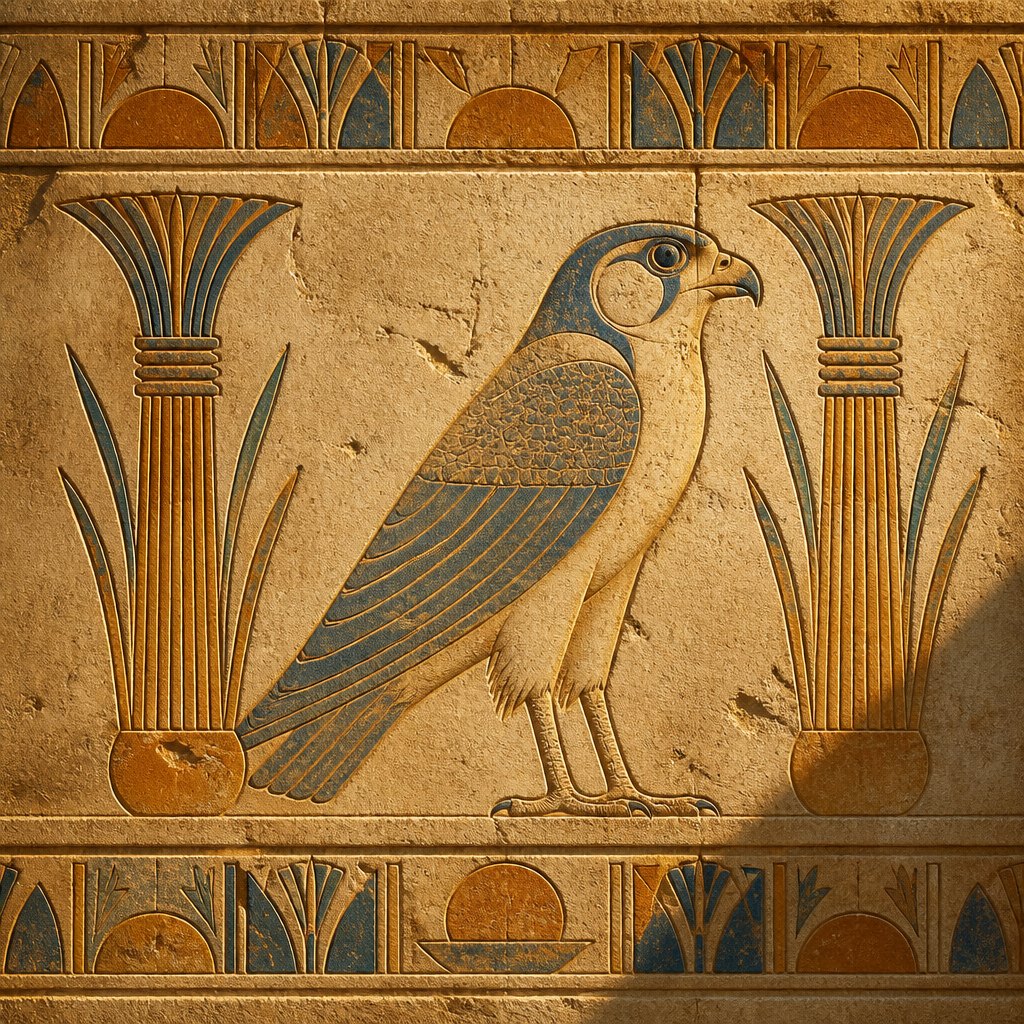 AI-generated
Make it yourself
Create art in the Ancient Egyptian Art spirit
This interpretation was generated from a prompt like: “A limestone temple relief of a falcon in profile flanked by papyrus columns, carved in flat registers with hieroglyph-like border patterns, warm ochre and mineral-blue pigment, low golden desert light.”
Open the Ancient Egyptian Art Style generator →How to evoke the period
To evoke Egyptian art, pose figures with the head and legs in profile, shoulders and eye facing forward, arms held stiffly at the sides or offering something outward. Scale figures by importance rather than realistic proportion. Work in warm, sun-baked materials — sandstone gold, deep mineral blue, malachite green, and gilded accents — against flat, mineral-pigment color fields rather than blended shading. Arrange scenes in horizontal registers, as if telling a story in bands, and add stylized border patterns or hieroglyph-like marks along the edges. Favor calm, frontal symmetry and stillness over motion. Temple columns, palm-leaf capitals, and sun-disc motifs are strong supporting details.
What it left behind
Egyptian art shaped how later cultures imagined monumentality itself: the pyramid and the colossal statue as expressions of a state's reach. Its stylized, symbolic figure conventions influenced neighboring Mediterranean art, including early Greek sculpture, before Greek artists moved toward naturalism. Its hieroglyphic fusion of image and text anticipates every tradition that has combined picture and word on a single surface. Egyptomania has recurred repeatedly in later centuries, resurging whenever new discoveries — most famously Tutankhamun's tomb — reached the public, feeding fashion, architecture, and design far beyond Egypt itself. Few ancient visual languages remain as instantly recognizable, or as widely borrowed, today.
Frequently asked questions
What is Ancient Egyptian art?
Ancient Egyptian art is the art of the civilization along the Nile River from about 3100 to 30 BCE, made chiefly for religious and funerary purposes — tomb paintings, temple reliefs, and sculpture meant to function forever.
Why do Egyptian figures look flat and sideways?
Artists combined each body part's clearest angle — profile head and legs, frontal shoulders and eye — into one pose, prioritizing legibility and completeness over realistic perspective, a convention kept stable for millennia.
Why was Egyptian art made mostly for tombs and temples?
Egyptians believed art had a functional afterlife role: statues housed the spirit, and painted scenes supplied food, servants, and comfort eternally. Very little art was made purely for private display or decoration.
How long did Ancient Egyptian art stay the same?
Its core conventions — pose, scale, register — stayed remarkably stable for roughly three thousand years, though style shifted subtly between kingdoms, with brief naturalistic departures like the Amarna period under Akhenaten.