 Art
Art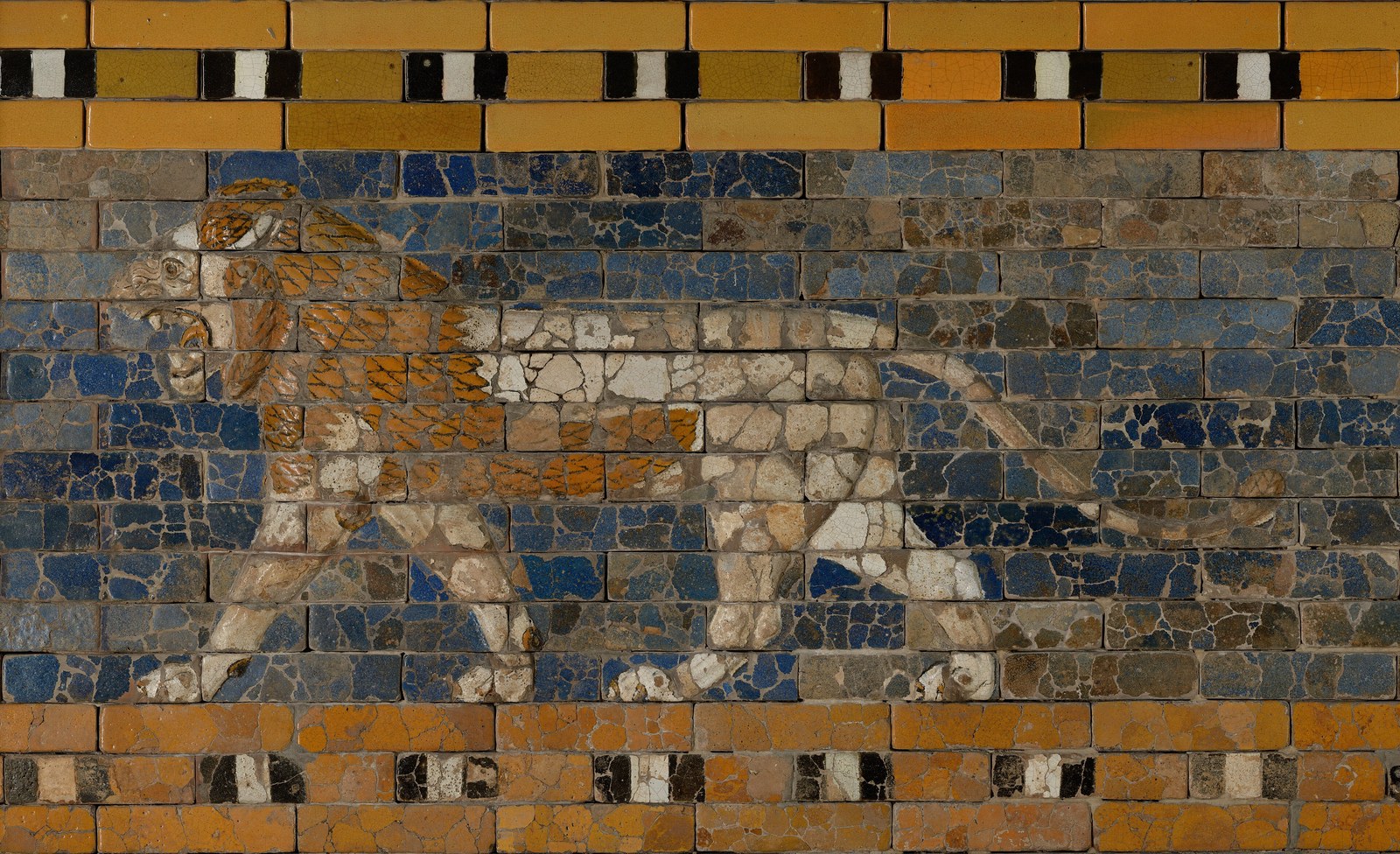
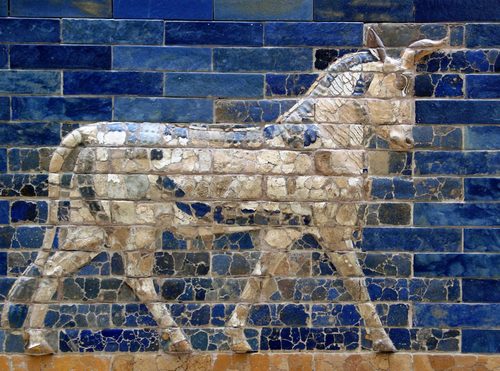
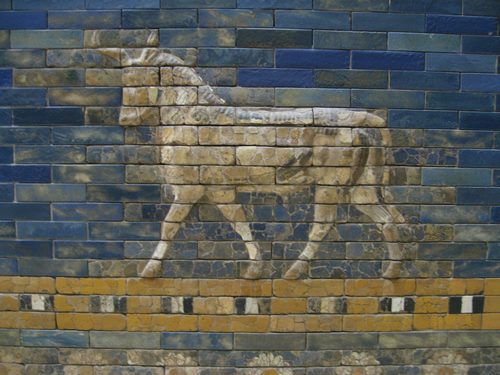
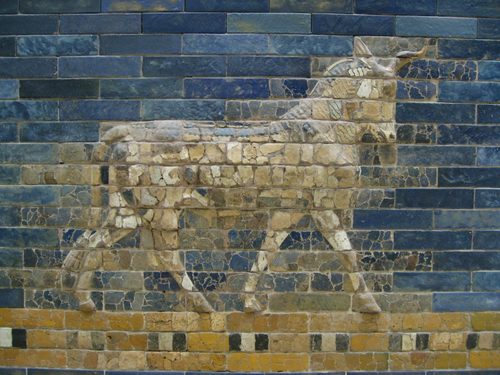
Mesopotamian art is the art of the civilizations that rose between the Tigris and Euphrates rivers in modern Iraq, from the first Sumerian city-states around 3500 BCE to the fall of Babylon to the Persians in 539 BCE. It is not one style but a sequence of empires — Sumerian, Akkadian, Babylonian, Assyrian — each building on and conquering the last, sharing a common toolkit of mudbrick architecture, cuneiform writing, and stone relief carving. Art here served temple and palace alike: cult statues stood in for worshippers before the gods, while kings commissioned monumental reliefs and inscriptions to record conquests and claim divine favor. Because Mesopotamia's alluvial plain had little stone or timber, materials were often imported at great expense, and art itself became a form of political statement — a display of the wealth and reach a ruler could command. Cylinder seals, rolled across wet clay to leave a continuous scene, gave even ordinary transactions a miniature work of art. Across three thousand years, the throughline is a fascination with narrative in relief — telling a story of battle, ritual, or hunt in continuous, readable sequence.
The look: what defines Mesopotamian Art
Narrative stone reliefs
Palace walls were lined with carved stone slabs telling continuous stories — royal hunts, military campaigns, tribute processions — read almost like a sequence of panels, with figures shown in profile, muscles and drapery picked out in precise, repeated detail.
Ziggurats and mudbrick temples
Cities were dominated by ziggurats, stepped temple towers built from sun-dried and fired mudbrick, rising in tiers toward a shrine at the summit, their massive plain walls sometimes faced with glazed brick in blue and gold.
Cylinder seals
Small carved stone cylinders, rolled across wet clay, produced continuous miniature scenes of gods, animals, and rituals; used to sign documents and seal goods, they are among the era's most personal and widespread art form.
Composite guardian figures
Palace gateways were flanked by colossal guardian figures — human-headed winged bulls and lions — carved with five legs so they read correctly as both standing still and striding forward from any viewing angle.
Frontal, hierarchical figures
Human and divine figures combine profile heads and legs with frontal shoulders and eyes, a convention for legibility rather than anatomy; size signals importance, with kings and gods rendered larger than servants or captives.
Cuneiform woven into art
Wedge-shaped cuneiform script, pressed into clay or carved into stone, often runs directly across relief scenes and statues, merging image and text so that artworks doubled as historical records and royal proclamations.
The story
Mesopotamian art begins with Sumer, the cluster of city-states — Uruk, Ur, Lagash — that emerged around 3500 BCE along the lower Tigris and Euphrates. Sumerians built the first ziggurats, carved votive statues with oversized, watchful eyes meant to keep a worshipper eternally present before a god, and developed cuneiform writing, which soon appears alongside images on seals and monuments.
Around 2300 BCE, Sargon of Akkad united the region's city-states into the first known empire, and Akkadian art shifted toward glorifying a single ruler — carved stelae show kings as god-like conquerors, physically larger than the enemies beneath their feet. Later, Babylon rose under Hammurabi, whose law code was carved onto a stone stela topped with a relief of the king receiving authority from a god, fusing law, religion, and image.
The Assyrian empire, centered further north, produced the period's most famous narrative reliefs: vast stone slabs lining royal palaces at Nineveh and Nimrud, recording military campaigns and royal lion hunts in obsessive, propagandistic detail, guarded by colossal winged bull sculptures. A revived Neo-Babylonian empire under Nebuchadnezzar II rebuilt Babylon with glazed-brick monuments before the city fell to the Persian ruler Cyrus the Great in 539 BCE, closing the Mesopotamian period and opening the region to Persian imperial art.
Timeline
- 3,500 BCEc. First Sumerian city-states rise along the Tigris and Euphrates
- 2,334 BCEc. Sargon of Akkad founds the Akkadian Empire
- 2,100 BCEc. Great Ziggurat of Ur built under the Third Dynasty of Ur
- 1,792 BCEc. Hammurabi becomes king of Babylon
- 883 BCEc. Neo-Assyrian palace reliefs flourish under Ashurnasirpal II
- 605 BCENebuchadnezzar II begins rebuilding Babylon
- 539 BCECyrus the Great conquers Babylon, ending Mesopotamian independence
Works to know
| Work | Maker | Date | Why it matters |
|---|---|---|---|
| Standard of Ur | Unknown | c. 2600 BCE | Wooden box inlaid with shell and lapis lazuli depicting war and peace scenes, found in a royal tomb at Ur. |
| Statue of Gudea | Unknown | c. 2100 BCE | Diorite statues of the ruler of Lagash, seated in prayerful stillness, showcase Sumerian mastery of hard-stone carving. |
| Code of Hammurabi Stela | Unknown | c. 1754 BCE | Basalt stela carved with nearly 300 laws beneath a relief of Hammurabi before a seated god, a landmark fusion of law and image. |
| Lamassu of Khorsabad | Unknown | c. 720 BCE | Colossal human-headed winged bull guardian figures carved for Sargon II's palace gateways, combining strength, wisdom, and vigilance. |
| Lion Hunt Reliefs of Ashurbanipal | Unknown | c. 645 BCE | Alabaster relief cycle from Nineveh depicting a ritual royal lion hunt with extraordinary anatomical detail and pathos. |
| Ishtar Gate | Unknown | c. 575 BCE | Glazed blue-brick gateway from Nebuchadnezzar II's Babylon, decorated with rows of striding lions, dragons, and bulls. |
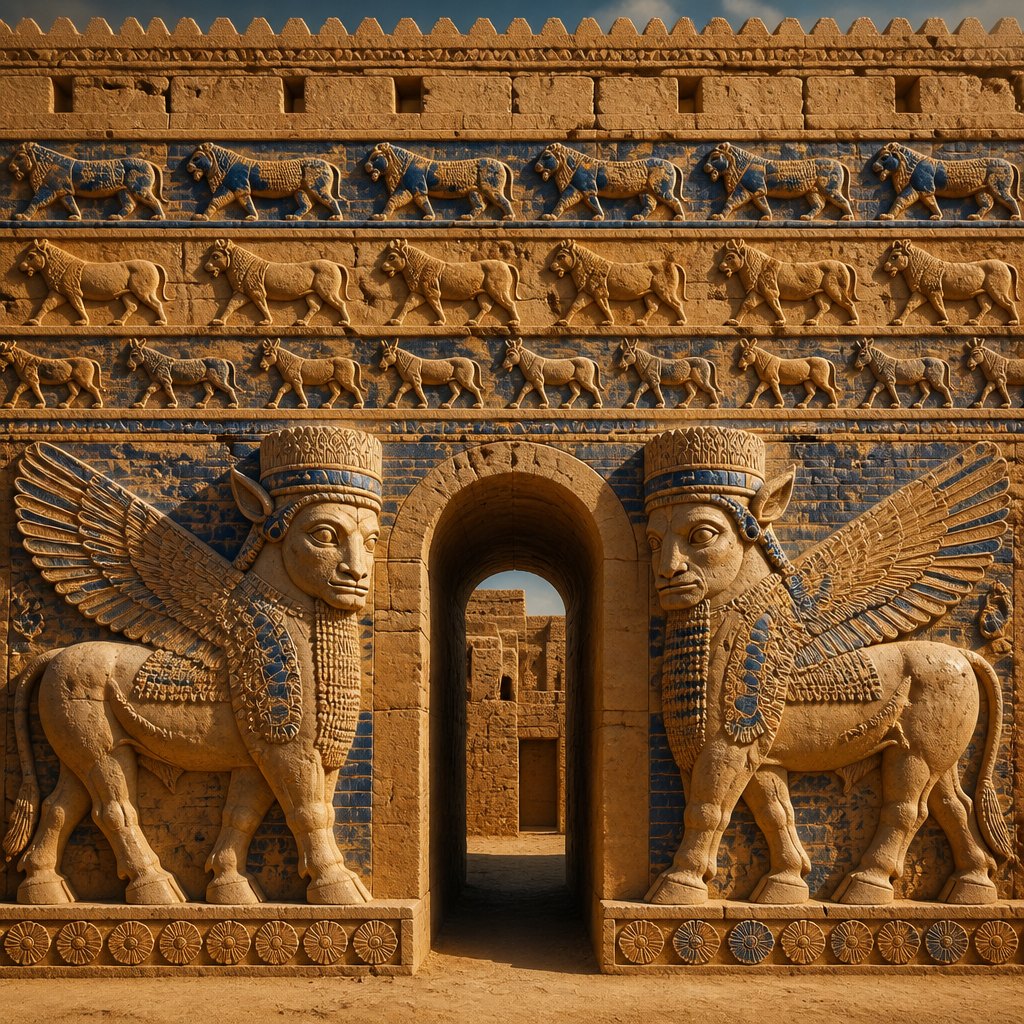 AI-generated
Make it yourself
Create art in the Mesopotamian Art spirit
This interpretation was generated from a prompt like: “A carved stone relief of a winged bull guardian flanking a mudbrick gateway, sandy limestone texture, horizontal narrative bands of striding animals above, warm ochre and lapis-blue glazed accents, low raking desert light.”
Open the Mesopotamian Relief Art Style generator →How to evoke the period
To evoke Mesopotamian art, use warm stone tones — sandy limestone, dark basalt, gold and lapis-blue accents — and think in registers: stack a scene into horizontal bands, each telling part of a story left to right. Render figures with heads and legs in profile but shoulders and eyes facing forward, a flattened, legible pose rather than naturalistic anatomy. Favor subjects of procession, ritual, or hunt — striding animals, tribute-bearers, guardian beasts with wings — over solitary portraits. Add wedge-shaped inscriptions along borders or hems to suggest cuneiform, and finish surfaces as carved relief or glazed brick rather than flat paint. Stepped, mudbrick temple silhouettes make strong backdrops.
What it left behind
Mesopotamia gave later art some of its most durable tools: narrative relief that tells a story across a continuous surface, the portrait of a ruler as a legitimate subject of monumental art, and the idea that writing and image could share a single surface. Its guardian figures echo in later palace and temple gateways across the ancient Near East and beyond. Its law-code stela, image and text fused into a single object of authority, anticipates every monument that has tried to make power look permanent since. Even the cylinder seal — art made to be pressed, repeated, and circulated — prefigures the much later idea of a reproducible image.
Frequently asked questions
What is Mesopotamian art?
Mesopotamian art is the art of the ancient civilizations — Sumerian, Akkadian, Babylonian, and Assyrian — that developed between the Tigris and Euphrates rivers from about 3500 to 539 BCE, including temple architecture, relief sculpture, and cylinder seals.
What materials did Mesopotamian artists use?
Mudbrick for architecture, since stone and timber were scarce; imported stone such as diorite, basalt, and alabaster for statues and reliefs; clay for cylinder seals and cuneiform tablets; and glazed brick for decorative facades.
Why do Mesopotamian figures look flat and sideways?
Artists combined the most recognizable angle of each body part — profile head and legs, frontal shoulders and eye — to keep every figure fully legible, prioritizing clarity and symbolic hierarchy over naturalistic perspective.
What are lamassu?
Lamassu are colossal guardian figures with a human head, a bull or lion's body, and wings, carved to flank Assyrian palace gateways; many were sculpted with five legs so they appear correct from front and side alike.