 Art
Art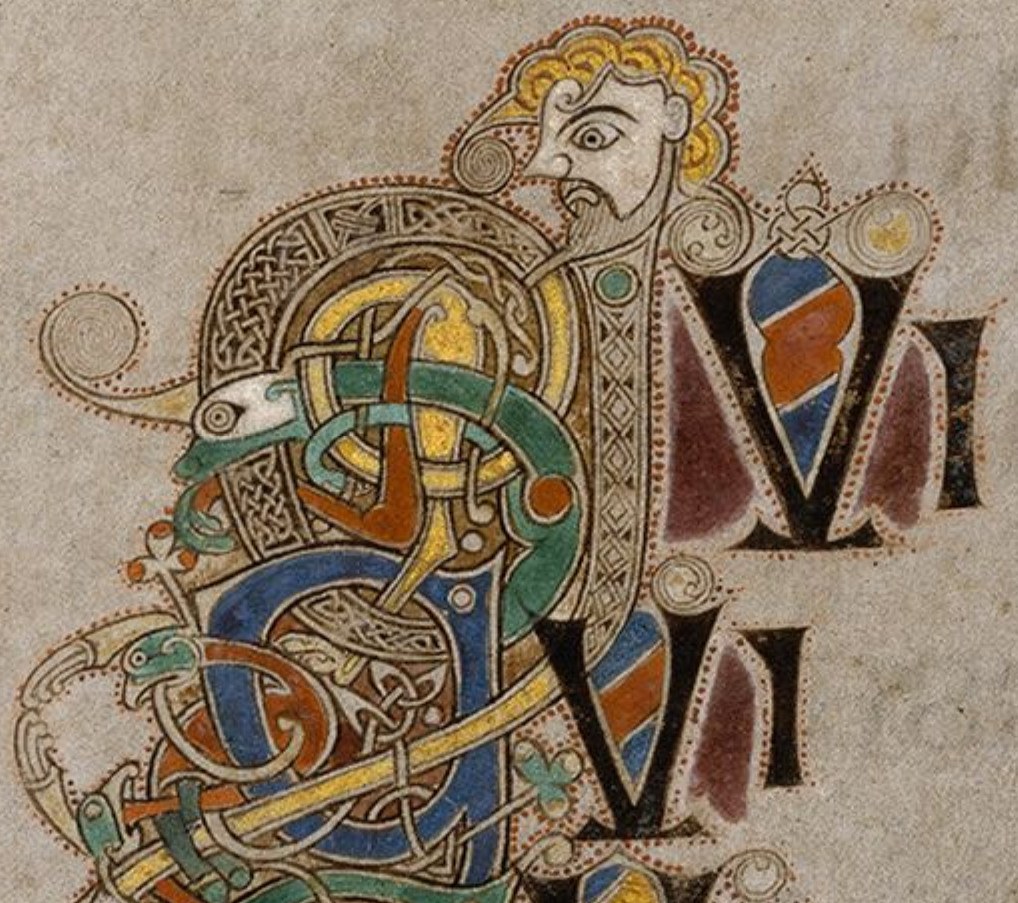
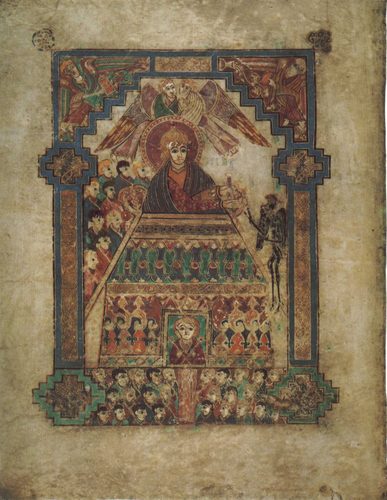
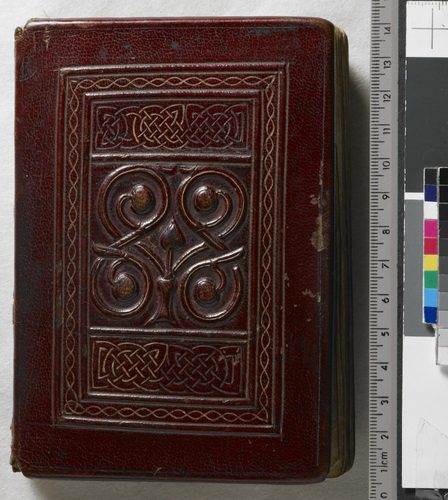
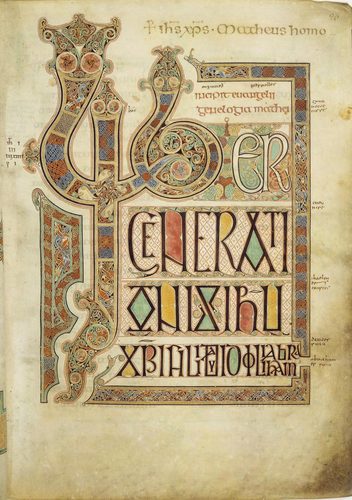
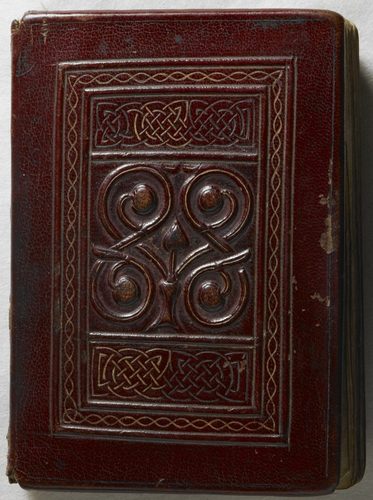
Medieval art refers to the art produced across Europe from roughly 500, after the fall of the Western Roman Empire, to around 1400, on the eve of the Renaissance. It spans an enormous range of styles and regions, unified less by a single look than by shared conditions: the Christian church as the dominant patron, land-based feudal economies, and craft organized through monasteries and later urban guilds rather than individual artistic fame. Early medieval art fused fading Roman techniques with the geometric, animal-interlace traditions of Germanic and Celtic peoples, producing richly decorated manuscripts and portable metalwork long before large stone churches were common. Carolingian and Ottonian courts in the 8th to 11th centuries sponsored deliberate revivals of Roman and Byzantine imagery to legitimize their rule, laying groundwork for the continent-wide building boom that followed. From roughly 1000 onward, the era's later chapters are usually named separately — Romanesque, then Gothic — as stone architecture, monumental sculpture, and stained glass came to dominate. Throughout, art served overwhelmingly religious and didactic purposes: teaching scripture, honoring relics, and making the unseen sacred order visible to a largely illiterate population.
The look: what defines Medieval Art
Church as Chief Patron
Monasteries, bishops, and later kings and guilds commissioned the overwhelming majority of surviving medieval art. Subject matter centers on scripture, saints, and salvation, and objects were made to serve worship rather than to showcase an individual artist's name.
Illuminated Manuscripts
Hand-copied and painted books — gospels, psalters, bestiaries — carried some of the era's finest imagery: gold leaf, jewel-bright pigment, and intricate interlace or foliate borders surrounding careful, formalized figures and decorated initial letters.
Flat, Symbolic Space
Figures are sized by spiritual rank rather than distance, backgrounds are gold or patterned rather than a real landscape, and perspective stays undeveloped until the era's final centuries. Meaning matters more than optical accuracy.
Portable Precious Metalwork
Reliquaries, chalices, book covers, and jeweled crosses show the era's finest technical craft: gold and silver worked with enamel, filigree, and gemstones, often outlasting the larger buildings they once furnished.
Interlace and Geometric Pattern
Especially in the early centuries, Germanic, Celtic, and Insular artists favored dense interlacing knotwork, stylized animal forms, and geometric borders, a decorative language distinct from, and often combined with, classical figure traditions.
Regional Revival Styles
Court-sponsored revivals, notably Carolingian and Ottonian, deliberately echoed Roman and Byzantine models to project imperial legitimacy, producing polished manuscript painting and ivory carving that stand apart from the more provincial art around them.
The story
Medieval art begins conventionally around 500, as the Western Roman Empire's political structures collapsed and Germanic kingdoms took their place across a fragmented Europe. Artistic production shifted from urban civic monuments to portable objects and manuscripts made in monasteries, blending fading Roman naturalism with the interlace and animal-style ornament of Germanic, Celtic, and Anglo-Saxon craftsmen, especially visible in Insular gospel books produced in Britain and Ireland.
From the late 8th century, Charlemagne's court deliberately revived Roman and Byzantine imagery to bolster its imperial claims, a program continued by the Ottonian rulers of Germany in the 10th century. These court workshops produced luxurious illuminated manuscripts and ivories that circulated as models across the continent, even as most regions still worked in simpler local idioms.
Around the year 1000, renewed political stability, monastic reform, and pilgrimage traffic triggered a continent-wide boom in stone church building, developing first into the Romanesque style and then, after about 1140, into Gothic, as pointed arches and stained glass transformed cathedral interiors. Through these later centuries the church remained art's central patron, though growing towns and guilds gradually built the workshop structures that would carry skilled craft production into the Renaissance.
Timeline
- 500 CEc. 500: fall of Western Roman political structures reshapes patronage across Europe
- 700 CEc. 700: Lindisfarne Gospels exemplify Insular manuscript art
- 800 CECharlemagne crowned emperor, sponsoring a deliberate revival of Roman imagery
- 962 CEOttonian Holy Roman Empire founded, spurring a manuscript and ivory revival
- 1000c. 1000: monastic reform and pilgrimage traffic spark a stone-building boom
- 1140Rebuilding of Saint-Denis begins the shift toward Gothic forms
- 1400c. 1400: International Gothic marks the era's late courtly phase
Works to know
| Work | Maker | Date | Why it matters |
|---|---|---|---|
| Sutton Hoo Ship Burial | Unknown | c. 620s | Anglo-Saxon ship burial whose gold and garnet metalwork shows early medieval craft at its finest. |
| Lindisfarne Gospels | Unknown | c. 700 | Insular illuminated gospel book famed for its intricate interlace carpet pages. |
| Book of Kells | Unknown | c. 800 | Elaborately decorated gospel manuscript, a high point of Insular interlace and calligraphy. |
| Gero Cross | Unknown | c. 970 | Ottonian wood crucifix, among the earliest large-scale sculpted depictions of Christ's suffering in the West. |
| Shrine of the Three Kings | Nicholas of Verdun | c. 1180–1225 | Monumental gold reliquary in Cologne Cathedral, a masterwork of medieval goldsmith craft. |
 AI-generated
Make it yourself
Create art in the Medieval Art spirit
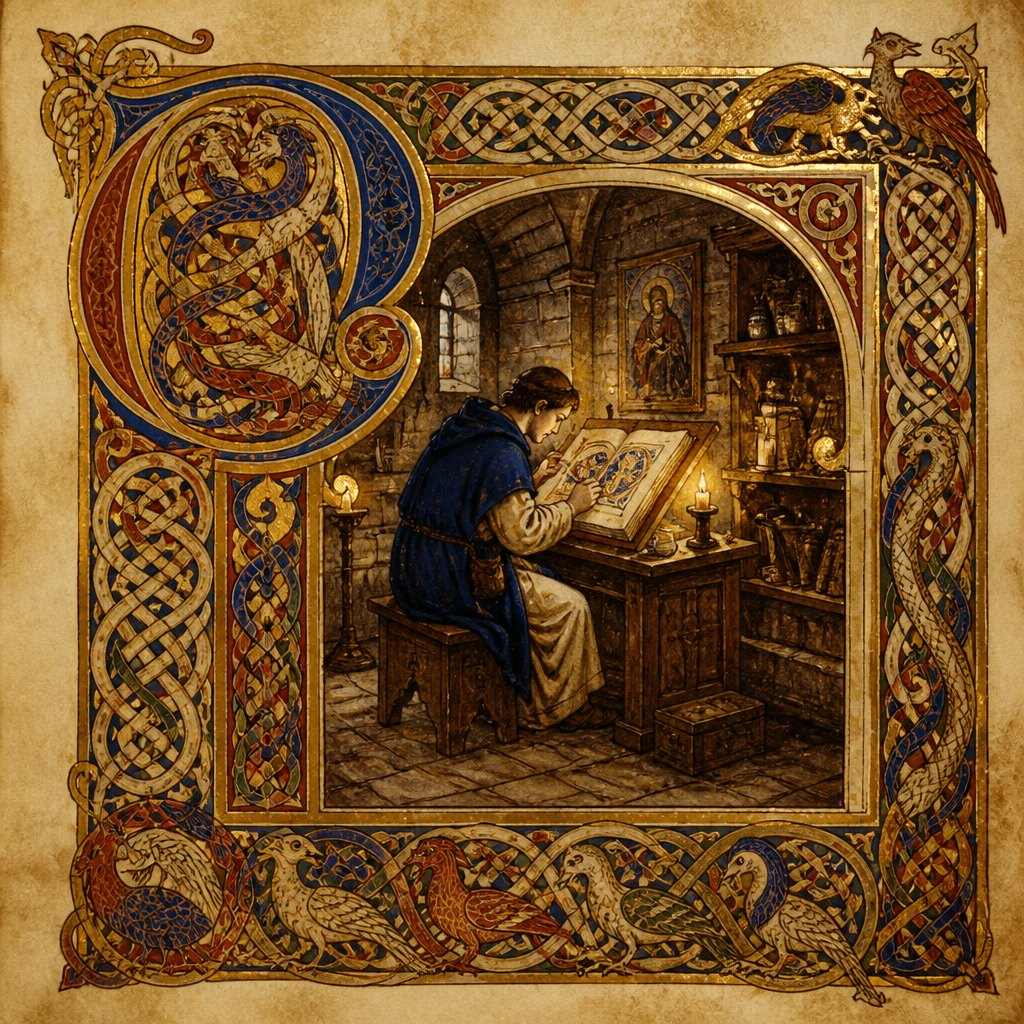
This interpretation was generated from a prompt like: “An illuminated manuscript page bordered with intricate interlacing knotwork and stylized animal patterns, gold leaf catching candlelight, deep red and blue pigment, aged parchment texture, ornate decorated initial letter, medieval scriptorium detail.”
Open the Medieval Gothic Art generator →How to evoke the period
Favor flat, symbolic space over realistic depth: gold or patterned backgrounds, figures sized by importance rather than distance, and formal, frontal poses. Combine interlacing knotwork, stylized animals, and geometric borders with more classical figure forms for an early-medieval feel, or lean into carved stone arches and glowing colored glass for the era's later centuries. Use rich, jewel-like color — deep red, blue, and gold — and metals worked with enamel or filigree patterns for precious objects. Keep surfaces textured: parchment grain, worn stone, hammered metal. Compose scenes as clear, legible narrative registers meant to instruct a viewer at a glance rather than to create an illusion of real space.
What it left behind
Medieval art established habits that later eras absorbed or reacted against: the illuminated book as a luxury object, the workshop and guild as the basic unit of craft production, and the idea that a building's sculpture and glass could instruct as much as any sermon. Its manuscript traditions preserved and transmitted classical texts through copying, feeding directly into Renaissance humanism. Gothic engineering, developed in the era's final centuries, remained the default church-building vocabulary in parts of Europe for hundreds of years afterward. Even the Renaissance, which defined itself partly against medieval art's flattened space, inherited its religious subject matter, workshop training methods, and much of its surviving technical knowledge of pigment, gilding, and stone carving.
Frequently asked questions
What is medieval art?
Medieval art is the art of Europe from roughly 500 to 1400, spanning the fall of Rome to the eve of the Renaissance, dominated by church patronage and including manuscripts, metalwork, and eventually Romanesque and Gothic architecture.
When was the medieval period?
The medieval, or Middle Ages, period runs from about 500 CE, after Western Roman political collapse, to around 1400, when Renaissance ideas began emerging in Italy.
What is the difference between medieval, Romanesque, and Gothic art?
Medieval art is the umbrella term for the whole era; Romanesque (c. 1000–1200) and Gothic (c. 1140–1500) are its later architectural phases, distinguished by round versus pointed arches and increasingly large stained-glass windows.
Why is so much medieval art religious?
The Christian church was medieval Europe's wealthiest and most stable patron, commissioning manuscripts, metalwork, and buildings meant to teach scripture and honor relics for a largely illiterate population.