 Art
Art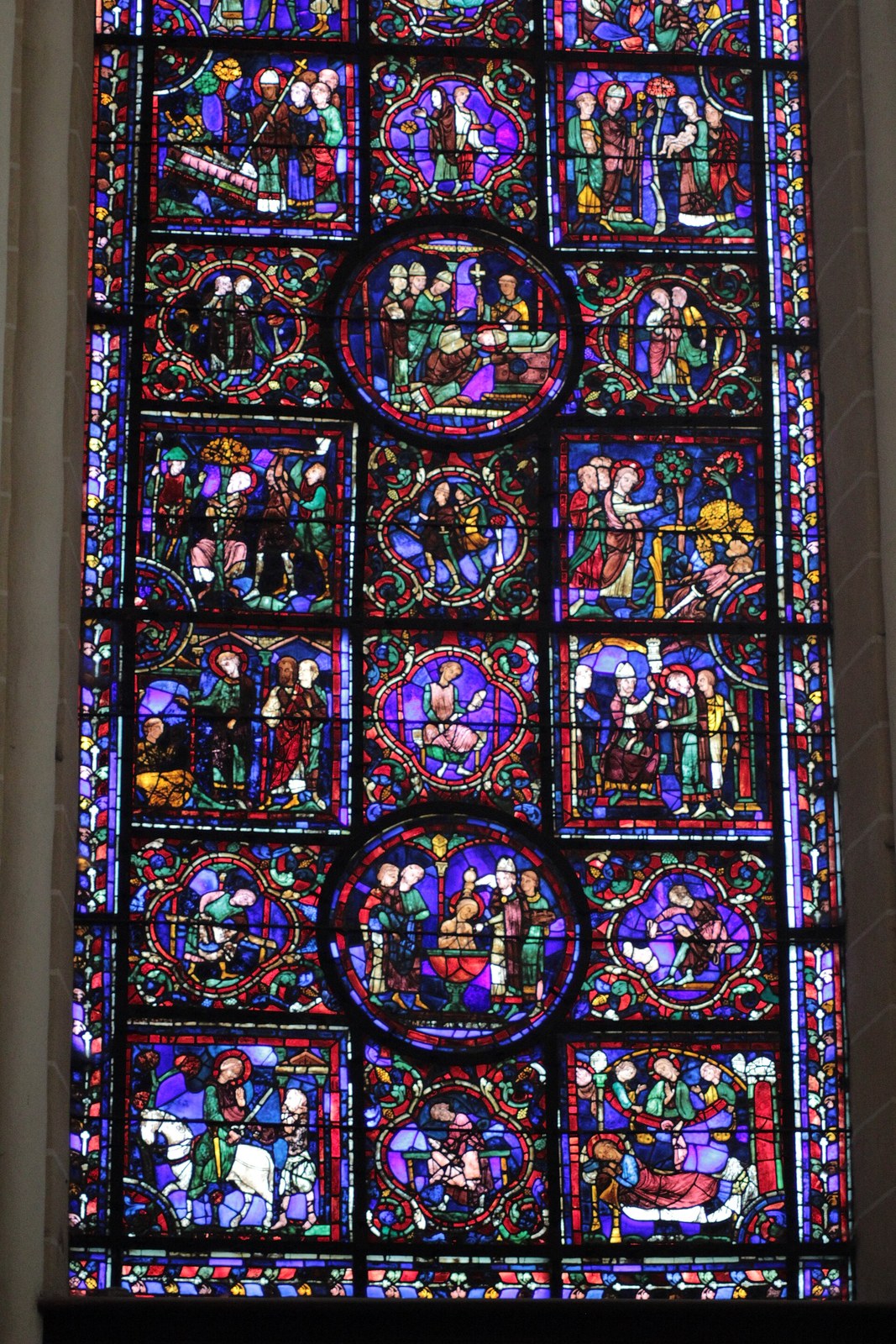
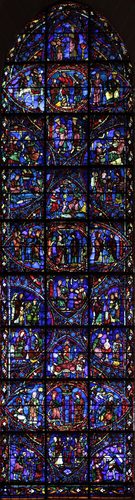
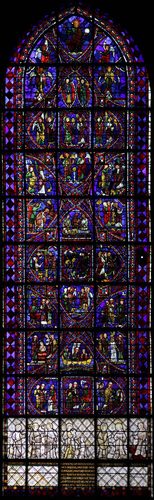
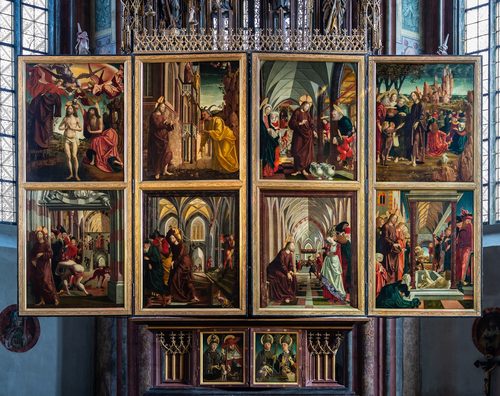
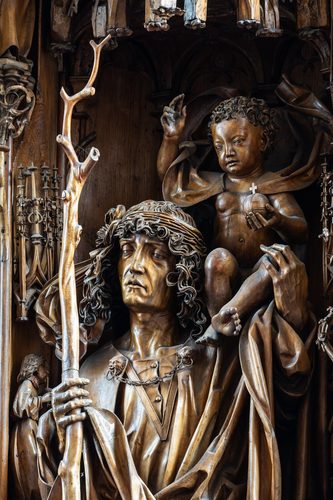
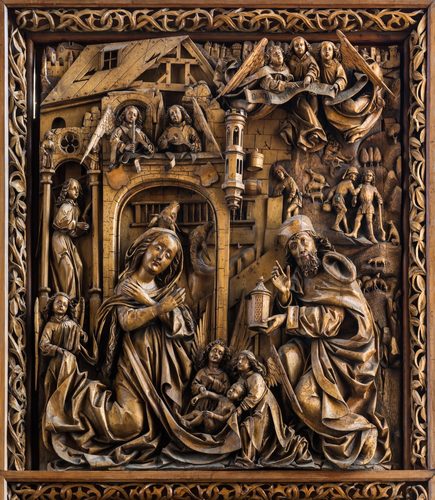
Gothic art describes the architecture, sculpture, and painting produced across Western Europe from about 1140, when the pointed arch and ribbed vault first appeared at the abbey of Saint-Denis near Paris, to around 1500, when Renaissance ideas took hold in Italy and the north. The style is defined first by engineering: pointed arches and flying buttresses let masons push walls higher and thinner, freeing them for vast stained-glass windows that flooded cathedral interiors with colored light. Cathedral chapters, wealthy bishops, and increasingly powerful towns competed to build the tallest naves and richest facades, turning church-building into a form of civic pride as much as devotion. Sculpture, once flattened against Romanesque walls, gained a freer stance and softer, more naturalistic drapery, while portal statues began to look at each other rather than stare fixedly forward. Painting followed a parallel path from stiff, gold-ground panels toward figures with weight, depth, and individualized faces, a shift most visible in the courtly International Gothic style that spread across European courts around 1400. By the century's end, illuminated manuscripts, altarpieces, and tapestries carried Gothic elegance into private devotion and noble households alike.
The look: what defines Gothic Art
Pointed Arches and Ribs
The pointed arch replaces the Romanesque semicircle, directing weight downward more efficiently and allowing taller, narrower openings. Ribbed vaults cross the ceiling in visible stone skeletons, turning structural necessity into decorative pattern overhead.
Flying Buttresses
Exterior stone arms lean against the upper walls from outside, carrying the outward thrust of the vaults so interior walls no longer need to be load-bearing. This frees the wall for windows and lets naves climb to previously impossible heights.
Stained Glass and Light
Large tracery windows fill openings with jewel-toned glass depicting saints, donors, and biblical narrative, staining the interior air red, blue, and gold. Rose windows anchor the west front and transepts as the building's largest single image.
Softer, Swaying Figures
Sculpted and painted figures adopt an S-curved stance, gentle head tilts, and drapery that clings and folds more naturally than Romanesque stiffness. Faces grow individualized, sometimes gently smiling, a marked shift from earlier stock expressions.
Verticality and Tracery
Everything reaches upward: tall lancet windows, steep spires, and pinnacles bristling with carved crockets. Stone tracery divides windows and walls into slender, lace-like patterns that multiply in complexity toward the style's later, more ornate phases.
Gold-Ground Panel Painting
Early Gothic panels and altarpieces set figures against flat gold backgrounds signaling sacred, timeless space, gradually giving way to modeled drapery, architectural settings, and receding floor tiles as painters worked toward greater spatial depth.
The story
Gothic architecture began in 1140 at the royal abbey of Saint-Denis near Paris, where the pointed arch and ribbed vault were combined for the first time to let walls dissolve into stained glass. The idea spread quickly through the wealthy dioceses of northern France — Chartres, rebuilt after a fire in 1194, and later Reims and Amiens — as cathedral chapters competed to build higher, lighter naves than their neighbors.
Through the thirteenth century the style matured into what is often called High Gothic, then spread beyond France along trade and church networks: Cologne Cathedral was begun in 1248 on French models, while England developed its own Decorated and later Perpendicular variants. Royal and princely courts became major patrons alongside the church, commissioning illuminated manuscripts and reliquaries in the same slender, ornamented taste.
Around 1400, a courtly, elegant late phase known as International Gothic spread across the courts of France, Burgundy, Bohemia, and northern Italy, prized for its rich color, fine detail, and graceful, elongated figures. In Italy this refined style overlapped with, and was gradually displaced by, the new naturalism of the early Renaissance from the 1420s onward, while in northern Europe Gothic forms persisted in increasingly elaborate, Flamboyant and Perpendicular variations well into the 1500s before Renaissance taste took hold there too.
Timeline
- 1140Rebuilding of Saint-Denis introduces the pointed arch and ribbed vault
- 1163Construction begins on Notre-Dame de Paris
- 1194Chartres Cathedral rebuilt after fire, a model of High Gothic
- 1220Construction begins on Amiens Cathedral, Gothic's structural high point
- 1248Cologne Cathedral begun on French Gothic models
- 1400c. 1400: International Gothic elegance spreads across European courts
- 1500c. 1500: Renaissance style eclipses Gothic in Italy and, gradually, the north
Works to know
| Work | Maker | Date | Why it matters |
|---|---|---|---|
| Notre-Dame de Paris | Unknown | 1163–1345 | Early Gothic cathedral whose flying buttresses and rose windows became models across Europe. |
| Chartres Cathedral | Unknown | rebuilt 1194–1220 | High Gothic cathedral renowned for its stained glass and sculpted west portals. |
| Reims Cathedral | Unknown | 1211–1275 | Coronation church of French kings, celebrated for its expressive portal sculpture. |
| Cologne Cathedral | Unknown | begun 1248 | German cathedral raised on French Gothic models, though not finished until the 19th century. |
| Très Riches Heures du Duc de Berry | Limbourg brothers | c. 1412–1416 | Illuminated manuscript epitomizing International Gothic color and courtly detail. |
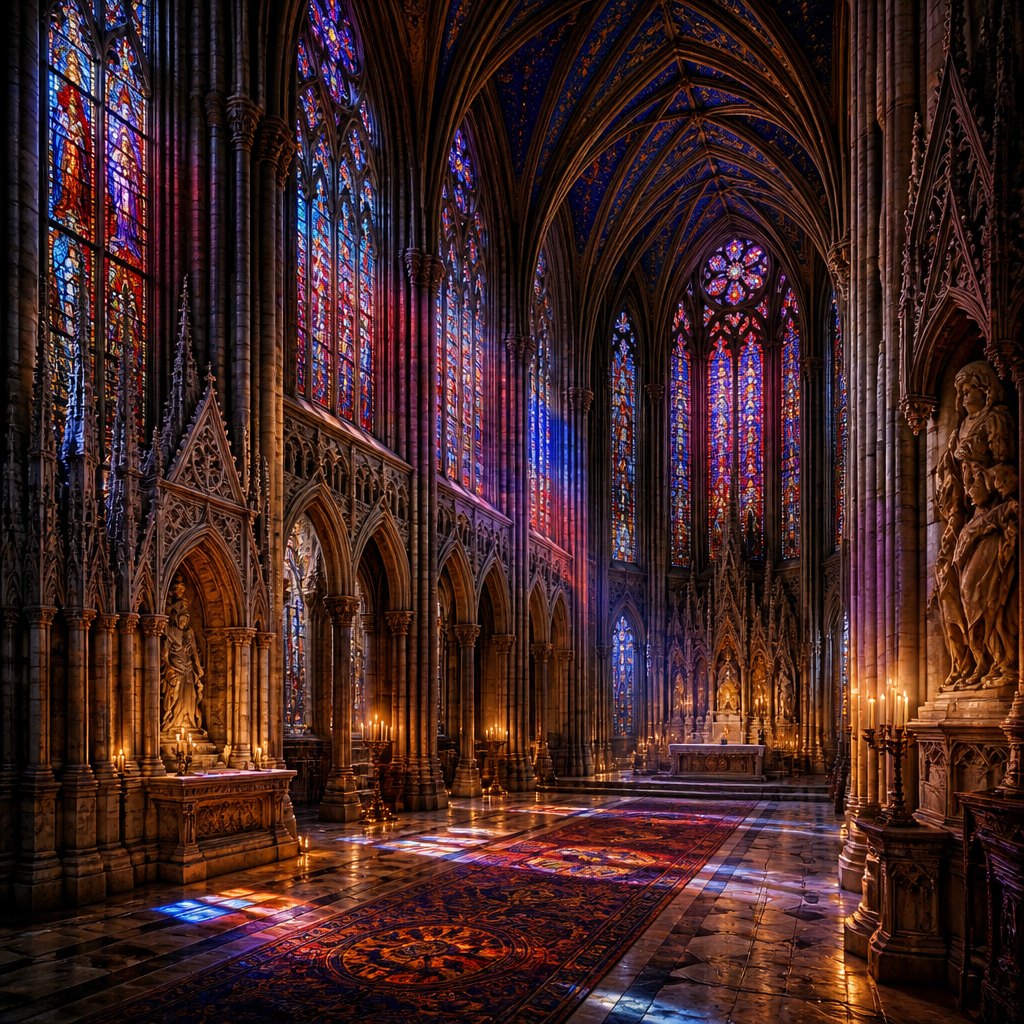 AI-generated
Make it yourself
Create art in the Gothic Art spirit
This interpretation was generated from a prompt like: “A soaring cathedral interior with tall pointed arches, slender ribbed vaulting overhead, jewel-toned stained glass casting red and blue light across a stone floor, delicate carved tracery, candlelit shadows, intricate stonework surface detail.”
Open the Gothic Art Style generator →How to evoke the period
Push everything upward: tall pointed arches, slender columns bundled together, and windows that dominate more wall than they leave solid. Let light do the work — imagine deep jewel tones of red, blue, and violet glass staining the air, or gold leaf behind a flattened, otherworldly scene. Add lace-like tracery, carved foliage, and small pinnacles along any edge or frame. If including figures, give them a gentle S-curve stance and softly falling drapery rather than rigid symmetry. Favor cool stone grays and glowing glass color together, and compose scenes as tall, narrow panels rather than wide horizontal ones to capture the style's reach toward height.
What it left behind
Gothic engineering — pointed arches, ribs, flying buttresses — remained a default toolkit for church building across Europe for centuries and still defines the profile of many Western cathedral cities. The Gothic Revival of the 19th century deliberately reached back to this vocabulary for churches, universities, and government buildings, embedding pointed-arch silhouettes into the modern skyline. Stained glass as a narrative art form, refined in Gothic cathedrals, remains a benchmark for colored light in architecture. The style's slow turn toward naturalistic figures and individualized faces also laid groundwork that Renaissance painters built on directly, even as they rejected Gothic's flattened space and gold backgrounds.
Frequently asked questions
What is Gothic art?
Gothic art is the architecture, sculpture, and painting of Western Europe from about 1140 to 1500, marked by pointed arches, ribbed vaults, flying buttresses, and stained-glass windows that filled churches with colored light.
When was the Gothic period?
The Gothic period runs from about 1140, when pointed arches first appeared at Saint-Denis near Paris, to around 1500, when Renaissance style took hold in Italy and gradually spread north.
What is International Gothic?
International Gothic is the elegant, courtly late phase of Gothic art, roughly 1375 to 1425, prized for rich color, fine detail, and graceful figures shared across French, Burgundian, Bohemian, and Italian courts.
What replaced Gothic art?
The Renaissance replaced Gothic art, beginning in Italy in the early 1400s with a return to classical proportion and perspective, though Gothic forms persisted in parts of northern Europe into the 1500s.