 Art
Art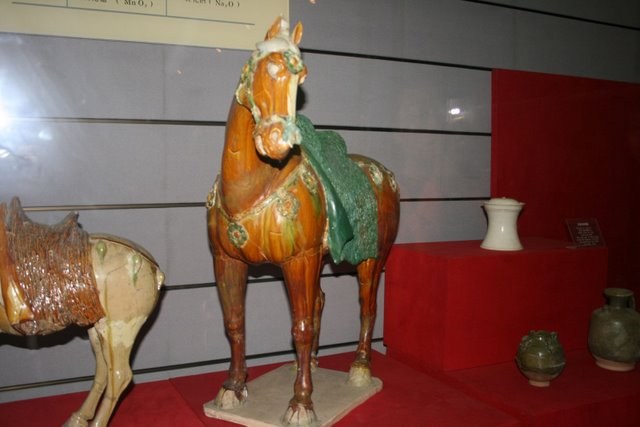
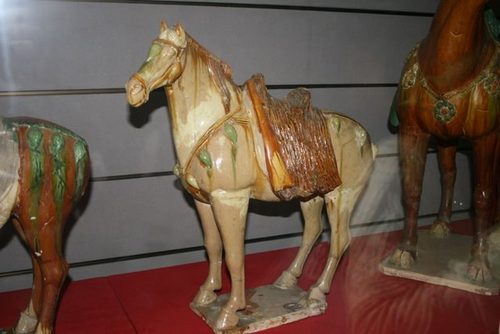
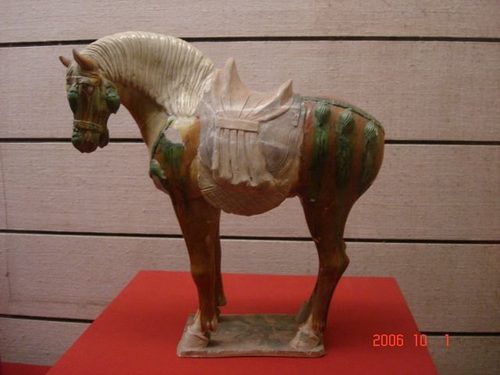
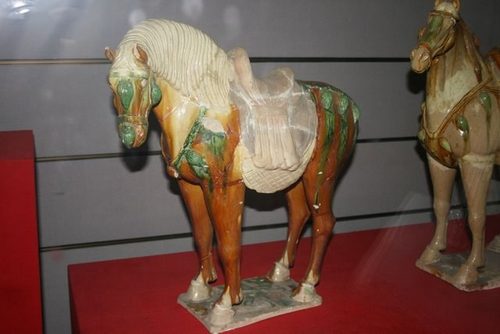
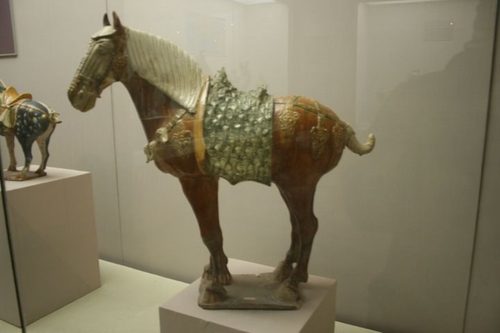
Tang Dynasty art refers to the painting, sculpture, and ceramics produced in China under the Tang court from 618 to 907, an era widely regarded as a golden age of Chinese civilization centered on the cosmopolitan capital of Chang'an. Trade along the Silk Road brought merchants, musicians, and religious travelers from Central Asia, Persia, and beyond into the capital, and Tang art absorbed and reworked these foreign influences with confident ease. Buddhism, imported centuries earlier, reached a peak of imperial patronage, filling cave temples and monasteries with monumental sculpture even as periods of persecution later challenged its institutions. The court commissioned elegant figure paintings of court ladies, horses, and diplomatic scenes, prized for fluid brushwork and closely observed posture. Tomb culture flourished among the aristocracy, producing sancai, or three-color lead-glazed earthenware, in the form of camels, horses, and foreign traders meant to accompany the dead into the afterlife. Poetry, calligraphy, and painting were increasingly discussed together as linked arts of the cultivated official class, a framework that would shape Chinese aesthetic theory for centuries afterward.
The look: what defines Tang Dynasty Art
Sancai Glazed Ceramics
Lead-glazed earthenware in amber, green, and cream — sancai, or 'three-color' ware — was shaped into camels, horses, and foreign traders for elite tombs, its splashed, dripping glaze a signature look of the period.
Fuller, Rounder Figures
Court paintings and figurines depict women and horses alike with fuller, rounder forms than earlier or later Chinese art, reflecting a Tang ideal of prosperity and health rather than slender refinement.
Buddhist Cave Sculpture
Imperial patronage carved monumental Buddhist figures directly into cliff-face cave-temple complexes, their draped robes and serene, downcast expressions blending Indian and Central Asian sculptural influence with fuller Chinese facial modeling and softer proportion.
Fine-Line Figure Painting
Court and religious figure painting favored confident, even brushline outlines filled with mineral color, capturing court ladies, musicians, and horses with close attention to fabric, posture, and gesture rather than landscape setting.
Cosmopolitan Foreign Motifs
Central Asian and Persian imports — polo, foreign musicians, camel caravans, exotic animals — appear repeatedly across tomb figures and paintings, visual evidence of Chang'an's role as an international trading capital.
Emerging Landscape Painting
Landscape painting began establishing its own conventions during the Tang, moving beyond a backdrop role toward mountains and rivers rendered in mineral blue-and-green color, laying groundwork for its later dominance in Chinese art.
The story
The Tang Dynasty was founded in 618 after the short-lived Sui Dynasty reunified China, and it quickly built one of the era's great cities at Chang'an, a planned capital that became the eastern terminus of Silk Road trade. Wealth from this trade, combined with a stable, meritocratic bureaucracy, gave the court resources to patronize painting, sculpture, and elaborate aristocratic burial customs on an unprecedented scale.
Buddhism reached its height of imperial favor during the 7th and early 8th centuries, with emperors and empresses sponsoring cave-temple sculpture and monastery construction across the empire. The reign of Emperor Xuanzong in the early 8th century is often remembered as the dynasty's cultural peak, a court famous for poetry, music, and painting, before the An Lushan Rebellion of 755 shattered the empire's stability and drained state patronage for decades afterward.
In the rebellion's aftermath, the dynasty never fully recovered its earlier confidence, and a wave of Buddhist persecution in the 840s further curtailed religious art production. Tang art nonetheless left a deep imprint: its cosmopolitan figure painting, ceramic technique, and poetic culture became reference points that the following Song Dynasty both inherited and, in some respects, defined itself against.
Timeline
- 618 CETang Dynasty founded, reunifying China after Sui collapse
- 690 CEWu Zetian declares herself emperor, a major patron of Buddhist art
- 712 CEXuanzong becomes emperor, opening the dynasty's cultural high point
- 750 CEc. 750: sancai tomb ceramics reach peak popularity among the aristocracy
- 755 CEAn Lushan Rebellion begins, shattering imperial stability
- 845 CEGreat Anti-Buddhist Persecution curtails religious art patronage
- 907 CETang Dynasty falls, ending the era
Works to know
| Work | Maker | Date | Why it matters |
|---|---|---|---|
| Admonitions Scroll (Tang copy) | Unknown, after Gu Kaizhi | c. 8th century | A Tang-era painted copy preserving an earlier composition, prized for its fine, fluid brush-outline technique. |
| Fengxian Temple Buddha, Longmen Grottoes | Unknown | completed 675 | Monumental rock-cut Buddhist sculpture commissioned under imperial patronage, among the era's largest carved figures. |
| Mogao Caves murals, Dunhuang | Unknown | Tang-era phase, 7th–9th century | Buddhist cave-temple murals and sculpture representing the height of Tang imperial Buddhist patronage along the Silk Road. |
| Tang Sancai Tomb Ceramics | Unknown | 7th–8th century | Three-color lead-glazed earthenware camels, horses, and figures made for aristocratic burials, among the era's most recognizable objects. |
| Night-Shining White | Han Gan | c. 750 | Portrait of Emperor Xuanzong's favorite horse, a celebrated example of Tang animal painting. |
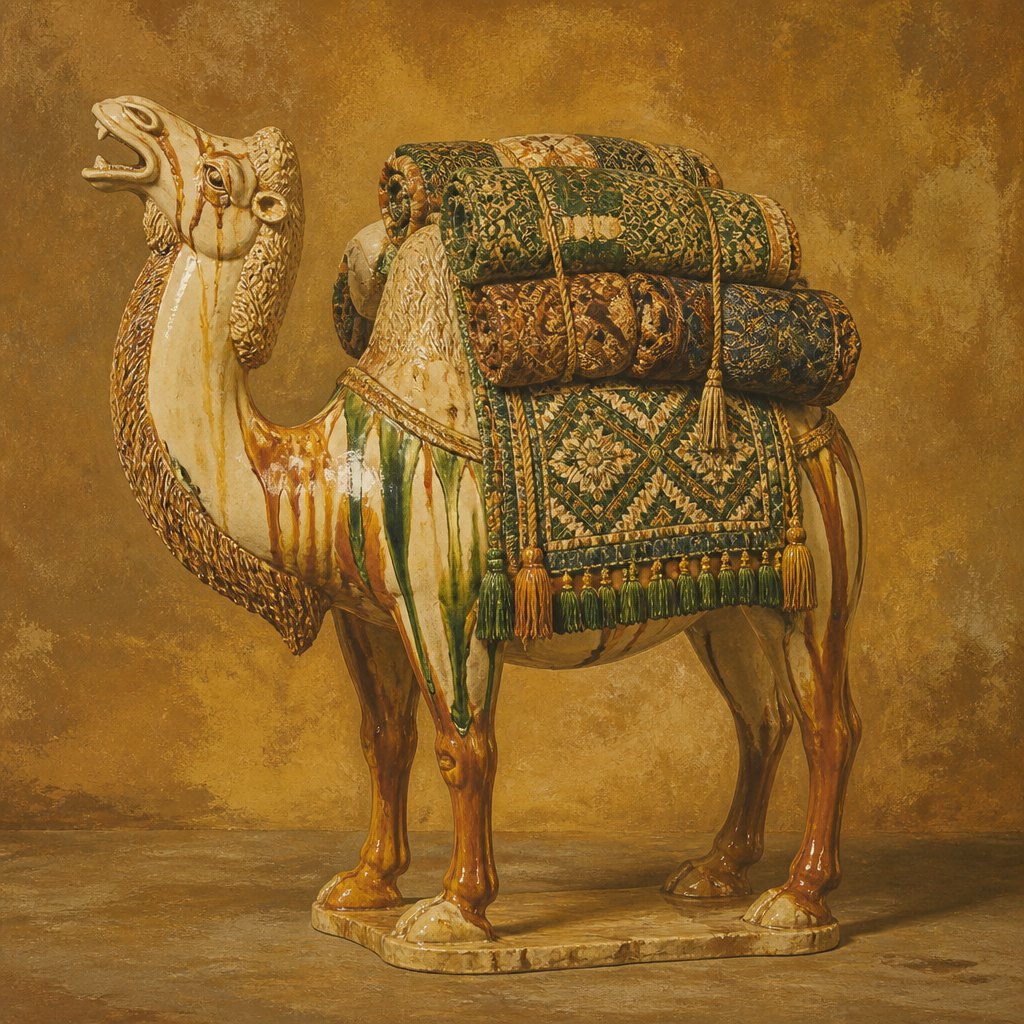 AI-generated
Make it yourself
Create art in the Tang Dynasty Art spirit
This interpretation was generated from a prompt like: “A glazed three-color ceramic camel figure with amber, green, and cream dripping glaze, loaded with patterned foreign textile bundles, set against a warm ochre backdrop, fine mineral pigment detail, Tang-era tomb ceramic surface texture.”
Open the Tang Dynasty Art Style generator →How to evoke the period
Aim for confident, fluid outline drawing filled with warm mineral color rather than heavy shading. Give figures — court women, horses, camels — fuller, rounder forms suggesting ease and prosperity rather than slenderness. Mix in foreign-inflected details: patterned foreign textiles, caravan animals, or musical instruments from beyond China to suggest cosmopolitan trade. For ceramic-inspired surfaces, use amber, green, and cream glaze that pools and drips unevenly. Keep compositions calm and legibly staged rather than busy, with generous open space around the main subject. Warm, earthy color paired with gold or bronze accents reads as period-appropriate without needing any specific reference.
What it left behind
Tang painting and ceramic technique became reference points for later Chinese art and for neighboring cultures across East Asia. Japanese and Korean courts studied Tang capital planning, Buddhist sculpture, and administrative culture directly, embedding Tang aesthetic ideals into their own early medieval art. Sancai glaze technique influenced ceramic experimentation for centuries, part of the long lineage leading to later Chinese porcelain traditions. The Tang model of the cultivated official skilled in poetry, calligraphy, and painting together shaped Chinese literati culture well into the Song Dynasty and beyond. Chang'an's cosmopolitan example also remains a touchstone for how art historians describe cross-cultural exchange along the Silk Road.
Frequently asked questions
What is Tang Dynasty art?
Tang Dynasty art is the painting, sculpture, and ceramics of China from 618 to 907, known for cosmopolitan Silk Road influence, Buddhist cave sculpture, fluid figure painting, and glazed sancai tomb ceramics.
When was the Tang Dynasty?
The Tang Dynasty ruled China from 618 to 907, with its cultural high point generally placed in the early-to-mid 8th century under Emperor Xuanzong, before the An Lushan Rebellion of 755 weakened the empire.
What is Tang sancai pottery?
Sancai, or 'three-color' ware, is lead-glazed earthenware in amber, green, and cream, shaped into tomb figures like camels, horses, and foreign traders for aristocratic burials during the Tang Dynasty.
How did the Silk Road shape Tang art?
Silk Road trade brought merchants, musicians, and Central Asian and Persian goods into the capital Chang'an, and Tang painters and ceramicists absorbed these foreign motifs into court art and tomb objects.