 Art
Art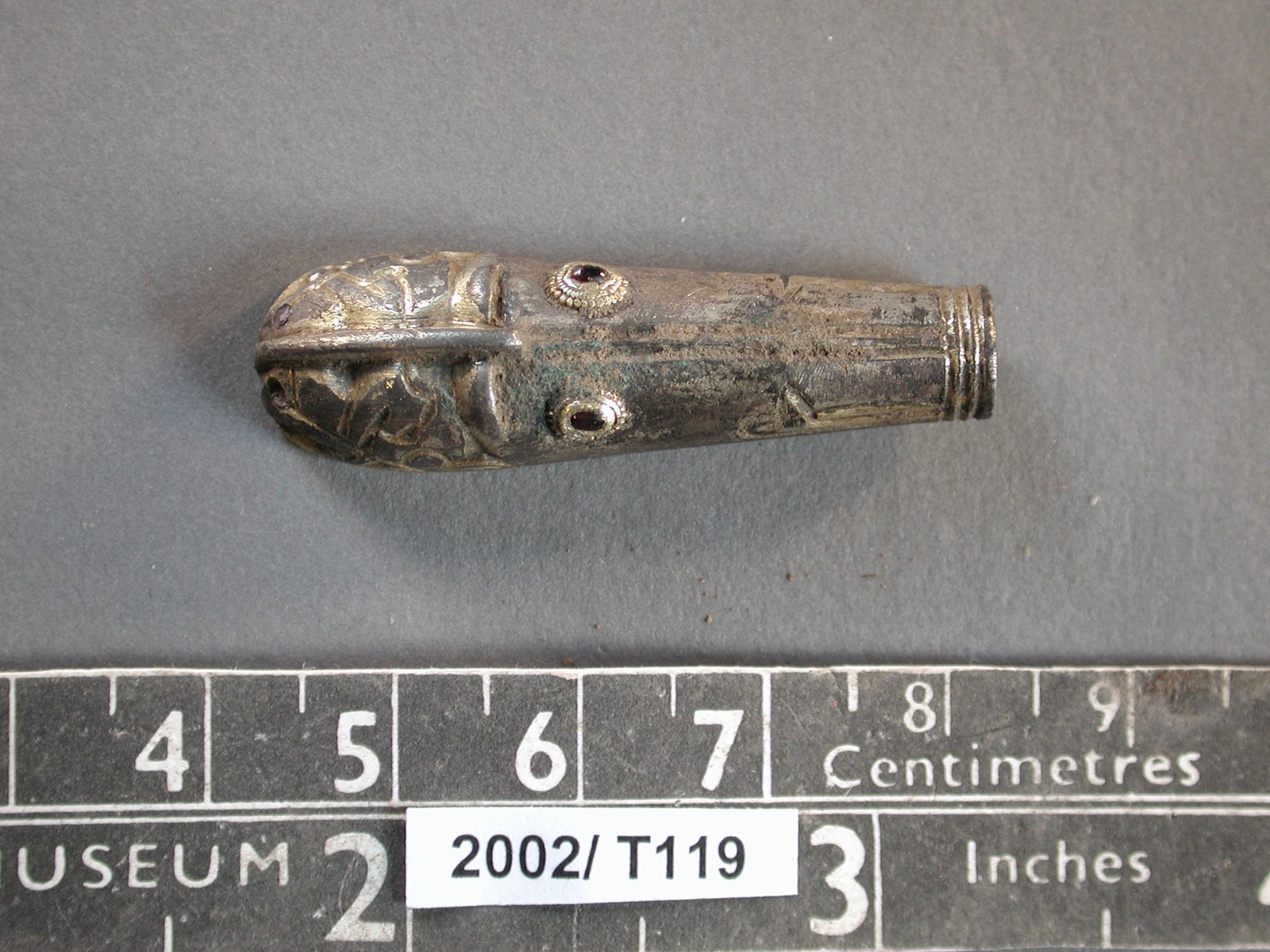
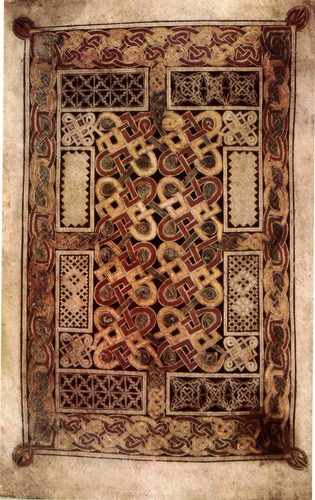
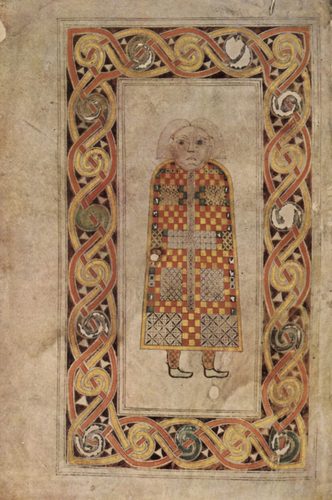
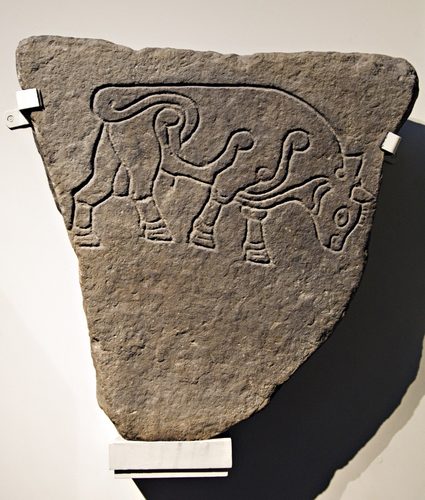
Migration Period art covers the artistic output of Germanic and related peoples across northern Europe roughly between 300 and 800 CE, the centuries in which groups including the Goths, Franks, and Anglo-Saxons moved into and reshaped the territory of the former Western Roman Empire. Its patrons were warrior elites rather than emperors or churches, at least at first, and its dominant art forms reflect a mobile, non-urban society: gold and garnet jewelry, ornamented weapons, and elaborately decorated personal objects that could travel with their owners or accompany them into burial. Rather than the human figure, artists favored dense, interlacing animal ornament, abstracted almost past recognition into ribbon-like limbs and biting jaws. Fine metalworking, especially cloisonné inlay using thin gold cell-walls packed with garnet, reached a level of technical sophistication that rivaled anything produced in the more centralized societies to the south. As these peoples converted to Christianity across the seventh and eighth centuries, the same animal-ornament sensibility migrated onto a new medium: illuminated manuscripts, where interlace patterns wrapped around Christian text and imagery.
The look: what defines Migration Period Art
Portable elite metalwork
Because Migration Period societies were mobile and largely non-urban, their finest art took portable forms: brooches, belt buckles, sword fittings, and drinking vessels, meant to display status on the body rather than a building's facade.
Cloisonné garnet inlay
Goldsmiths built thin cell-walls of gold, or cloisons, and packed each cell with a cut garnet or colored glass, producing a glittering, jewel-like surface used on brooches, sword pommels, and helmet fittings.
Zoomorphic interlace ornament
Animal forms were stretched, ribboned, and interwoven into continuous, hypnotic patterns, their limbs and jaws dissolving into abstract knotwork rather than depicting any single, calmly recognizable creature at quiet rest.
Burial as art context
Much surviving Migration Period art comes from graves and ship burials, where weapons, jewelry, and feasting vessels were deposited with the dead, preserving objects otherwise lost to reuse or melting down.
Interlace manuscript decoration
As Germanic peoples converted to Christianity, animal interlace migrated onto parchment, filling illuminated gospel pages with knotwork borders and zoomorphic letterforms around sacred text, fusing an old ornamental vocabulary with a new purpose.
Absence of monumental architecture
Unlike Rome or Byzantium, Migration Period peoples left little in stone; timber halls and simple structures have mostly vanished, meaning metalwork and manuscript art carry the era's artistic memory almost alone.
The story
Migration Period art grows out of upheaval. From around 300 CE, pressure on Rome's frontiers set Germanic and other peoples, Goths, Vandals, Franks, Angles, Saxons, moving into and eventually settling former Roman territory, a process that accelerated after the Western Empire's collapse in the fifth century.
These were largely warrior aristocracies without Rome's urban infrastructure, and their art followed suit: portable, personal, and metal rather than monumental and stone. Merovingian Francia and early Anglo-Saxon England both produced gold jewelry set with garnet cloisonné, alongside weapons and feasting equipment, often buried with high-status owners, as at the early seventh-century Sutton Hoo ship burial in England.
Christian conversion reshaped patronage across the sixth to eighth centuries. Missionaries brought literacy and manuscript culture, and Insular workshops in Britain and Ireland fused native interlace ornament with gospel text, producing illuminated manuscripts of extraordinary intricacy.
By 800 CE, this fusion of Germanic ornament and Christian content had matured into a distinct visual tradition, even as new political structures, including the Carolingian court on the continent, began drawing artistic patronage in a more centralized, Rome-facing direction.
Timeline
- 300 CEc. Germanic peoples begin migrating into Roman frontier territory
- 410 CEc. Rome withdraws from Britain amid imperial collapse
- 500 CEc. Merovingian goldsmiths refine cloisonné garnet jewelry
- 620 CEc. Sutton Hoo ship burial furnished with elite grave goods
- 650 CEc. Book of Durrow illuminated in Ireland or Britain
- 700 CEc. Lindisfarne Gospels illuminated in Northumbria
- 800 CEc. Book of Kells completed, closing the period's manuscript tradition
Works to know
| Work | Maker | Date | Why it matters |
|---|---|---|---|
| Sutton Hoo ship burial and helmet | Unknown | c. 620s CE | An East Anglian ship burial with garnet-inlaid gold shoulder clasps and purse lid, a niello-inlaid gold buckle, and a ceremonial helmet. |
| Book of Durrow | Unknown | c. 650–700 CE | An early Insular gospel book whose carpet pages fuse Christian text with dense Germanic-derived interlace ornament. |
| Lindisfarne Gospels | Eadfrith of Lindisfarne | c. 700 CE | An illuminated gospel book from Northumbria prized for its intricate carpet pages and zoomorphic initials. |
| Book of Kells | Unknown | c. 800 CE | A lavishly illuminated gospel book from an Insular monastic scriptorium, often considered the high point of interlace manuscript art. |
| Merovingian cloisonné disc brooches | Unknown | 6th–7th century CE | Circular gold brooches set with garnet cloisonné, a hallmark of Frankish elite female dress across the period. |
 AI-generated
Make it yourself
Create art in the Migration Period Art spirit
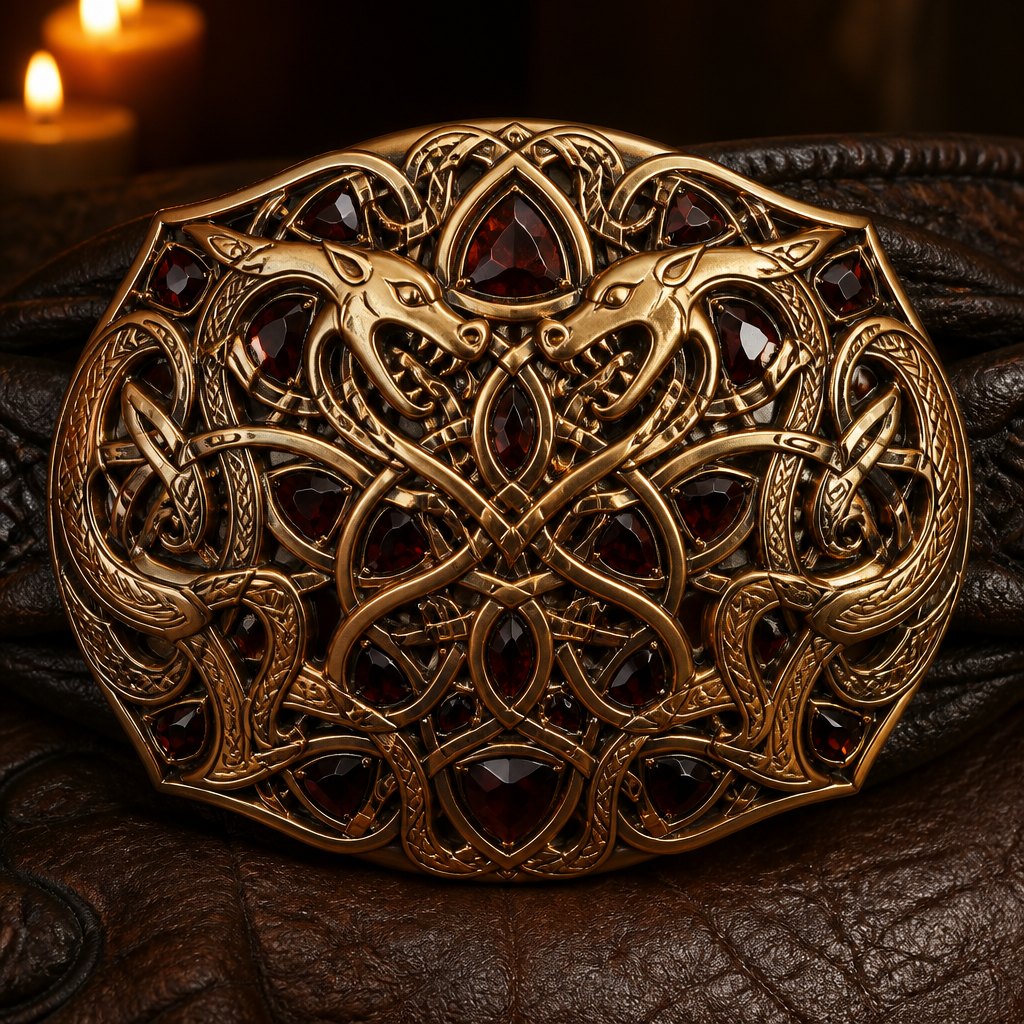
This interpretation was generated from a prompt like: “An ornate gold buckle surface densely inlaid with cut garnet cells and interlacing ribbon-like animal forms, biting jaws dissolving into knotwork, warm candlelight glinting off polished metal, dark leather background, intricate symmetrical detail.”
Open the Anglo-Saxon Metalwork Art Style generator →How to evoke the period
Favor gold, garnet red, and deep bronze-green patina, with a dense, jewel-like inlay texture rather than open, empty space. Build ornament from ribboned, interlacing animal forms, elongated limbs and biting jaws dissolving into continuous knotwork, rather than a naturalistic creature at rest. Apply this interlace as a border or frame around a central object: a buckle shape, a shield boss, or a manuscript page corner. Keep the surface busy and symmetrical, filling every available edge, and finish with a worn, excavated-metal patina or aged parchment texture. Runic-style linear marks make a good border accent.
What it left behind
Migration Period interlace and animal ornament fed directly into the Insular art of Britain and Ireland, and from there into Carolingian and later medieval manuscript decoration across Europe. Cloisonné garnet inlay techniques influenced jewelry making for centuries after the period closed. The reliance on grave goods as a primary source for reconstructing an era's art, forced by the near-total loss of its architecture, shaped how archaeologists and historians study early medieval Europe more broadly. Even modern interest in Norse and Anglo-Saxon heritage owes much to finds like Sutton Hoo, which reset assumptions about the sophistication of early medieval craft.
Frequently asked questions
What is Migration Period art?
It is the art of Germanic and related peoples, including the Anglo-Saxons and Franks, made across northern Europe roughly between 300 and 800 CE, dominated by portable metalwork and, later, illuminated manuscripts.
What is Migration Period animal style?
It is a decorative tradition that stretches and interlaces animal forms into abstract, ribbon-like patterns, used on jewelry, weapons, and, eventually, manuscript borders.
What is Sutton Hoo?
Sutton Hoo is an early seventh-century Anglo-Saxon ship burial in England containing garnet-inlaid gold jewelry and a ceremonial helmet, among the richest surviving finds from the period.
Why is so little Migration Period architecture preserved?
Migration Period societies mostly built in timber rather than stone, and those structures have largely decayed, leaving portable metalwork and manuscripts as the main surviving evidence of the era's art.