 Art
Art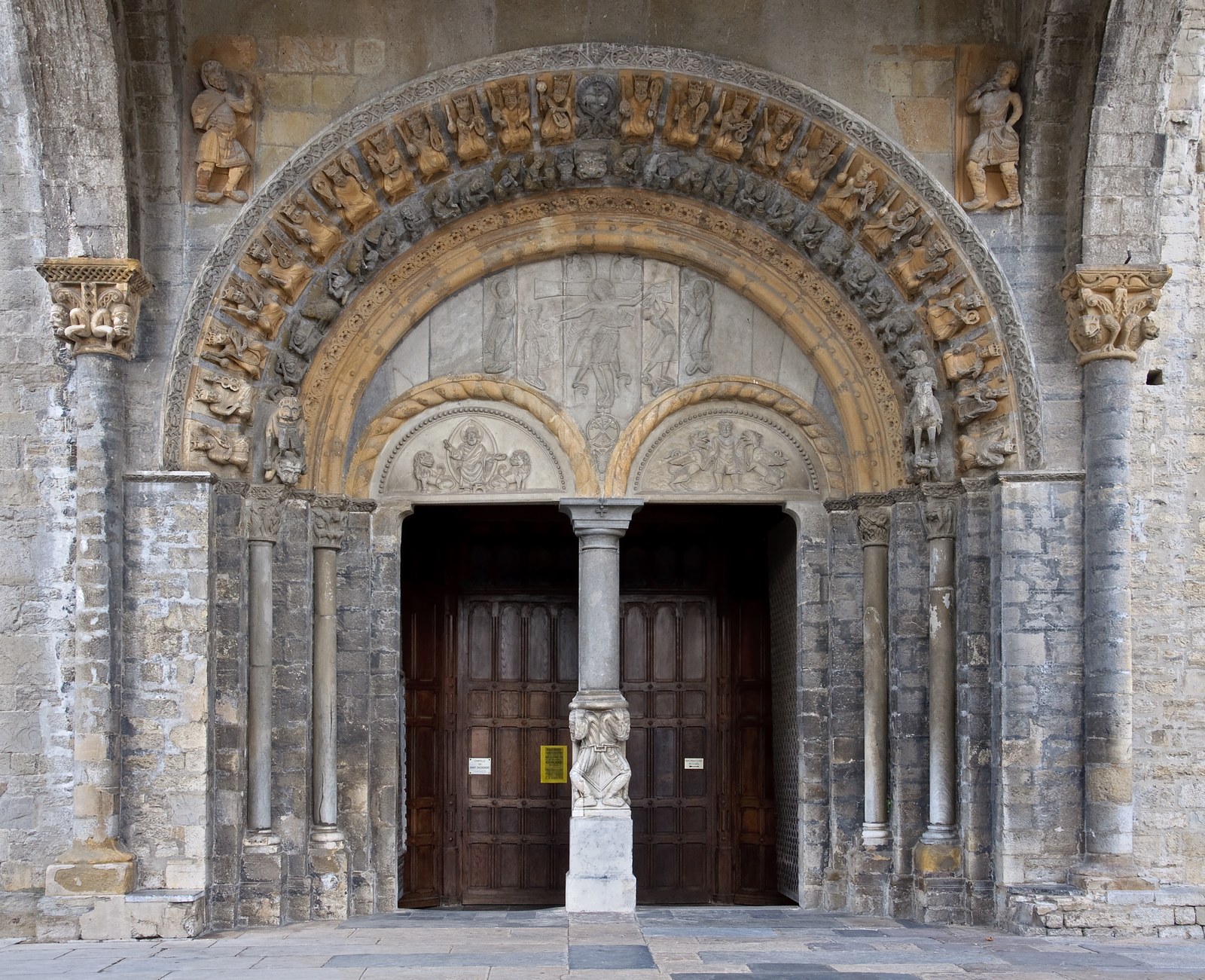
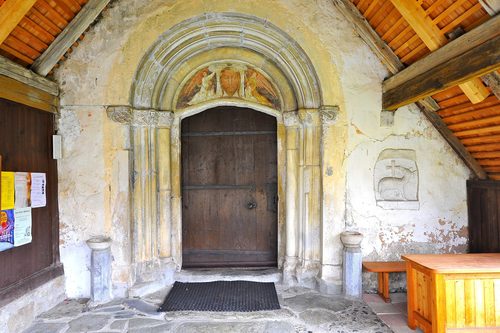
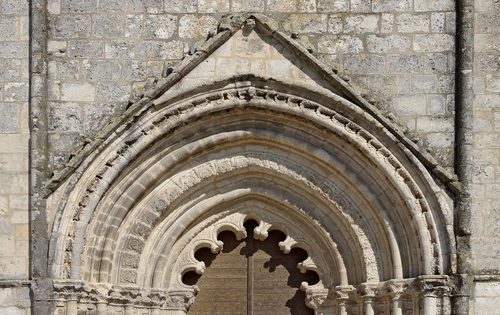
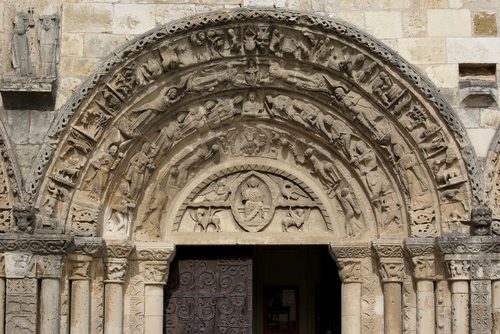

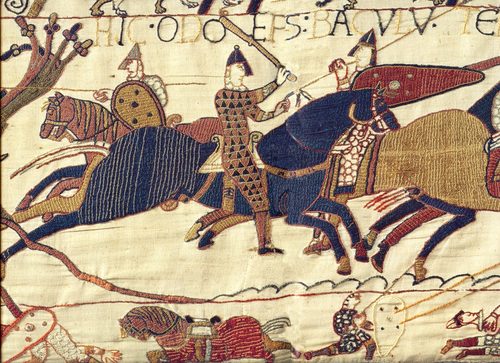
Romanesque art was the architectural and sculptural style that dominated Western Europe from roughly 1000 to 1200, centered on the stone churches and monasteries built along pilgrimage routes and in newly stabilized feudal kingdoms. The name is a nineteenth-century coinage, pointing to the style's debt to ancient Roman engineering: round arches, barrel and groin vaults, and walls thick enough to carry real weight rather than merely enclose space. After the disruptions of the early medieval centuries, a revival of stone building swept from Burgundy and Normandy to Tuscany and northern Spain, funded by monastic orders, bishops, and lords eager to house relics and stage the liturgy in permanent form. Sculpture returned to monumental scale for the first time since antiquity, concentrated on church portals where carved tympanums warned entering worshippers of Judgment Day. Wall painting, metalwork, and illuminated manuscripts carried the same blocky, symbolic figures, flattened and stylized rather than naturalistic, meant to teach doctrine to a largely illiterate population. Regional variants — Norman, Burgundian, Lombard, Iberian — shared this vocabulary while developing distinct local details.
The look: what defines Romanesque Art
Round Arches and Vaults
Doorways, windows, and ceiling vaults all use the semicircular Roman arch rather than the pointed Gothic one. Barrel and, later, groin vaults let masons cover naves in stone instead of wood, though the resulting buildings stayed dark and low compared to what followed.
Thick Load-Bearing Walls
Walls carry the weight of the vaults above, so windows stay small and openings are cut sparingly. The result is a fortress-like massing — deep window reveals, heavy piers, and an interior gloom broken mainly by candlelight and small clerestory openings.
Tympanum Relief Sculpture
Carved stone fills the semicircular tympanum above church doors, usually with a towering Christ in Judgment surrounded by elongated apostles, angels, and writhing sinners. Figures are stacked by importance rather than realistic scale, so the largest figure carries the most spiritual weight.
Stylized, Non-Naturalistic Figures
Bodies are elongated, drapery falls in rhythmic parallel folds, and faces repeat a few stock expressions rather than individual likeness. Proportion bends to fit the architectural frame — a figure squeezed into a capital or archway is stretched or compressed to fill the space.
Historiated Capitals
Column capitals inside cloisters and naves carry miniature carved scenes — Bible stories, fantastic beasts, foliage, sometimes local legend — turning structural supports into a running visual commentary for monks and pilgrims walking the aisle.
Fresco and Manuscript Color
Interior walls and vaults were painted in earthy reds, ochres, and blues depicting saints and biblical cycles, largely lost today to time and whitewash. The same flat, outlined figure style appears in illuminated manuscripts produced in monastic scriptoria.
The story
Romanesque building began as Western Europe emerged from two centuries of Viking, Magyar, and Saracen raids and settled into a more stable feudal order around the year 1000. Monastic reform movements, especially the Cluniac network of Benedictine houses, financed an explosion of church construction, and the pilgrimage routes converging on Santiago de Compostela in Spain gave builders a practical reason to raise large, durable churches able to funnel crowds past relic shrines.
Through the eleventh and twelfth centuries the style reached its high point. Norman conquerors carried it to England after 1066, raising cathedrals and castles in the same thick-walled vocabulary. Trade and the early Crusades brought Mediterranean and Byzantine influences into southern French and Italian sculpture, while regional schools in Burgundy, Lombardy, and the Rhineland each developed signature approaches to vaulting and portal carving.
The style's end was gradual rather than sudden. Around 1140, the rebuilding of the abbey church of Saint-Denis outside Paris introduced pointed arches and ribbed vaults that let walls open into stained glass — the first steps toward Gothic art. Romanesque forms lingered for decades afterward in more conservative regions, overlapping with the new style rather than being replaced overnight.
Timeline
- 1000c. 1000: post-invasion stability sparks a continent-wide stone church boom
- 1066Norman Conquest carries Romanesque architecture into England
- 1075Construction begins on the pilgrimage cathedral at Santiago de Compostela
- 1088Work begins on the great abbey church of Cluny III
- 1130c. 1130: Vézelay's carved tympanum nears completion
- 1140Rebuilding of Saint-Denis introduces pointed arches, prefiguring Gothic
- 1200c. 1200: Gothic dominates the north while Romanesque persists in Italy and Spain
Works to know
| Work | Maker | Date | Why it matters |
|---|---|---|---|
| Bayeux Tapestry | Unknown | c. 1070s | Embroidered narrative of the Norman Conquest, a rare survival of large-scale secular Romanesque art. |
| Durham Cathedral | Unknown | 1093–1133 | Early large-scale use of ribbed vaulting over the nave, a structural step toward Gothic engineering. |
| Tympanum of Sainte-Foy, Conques | Unknown | early 12th century | Densely carved Last Judgment relief above the abbey's west portal, among the best-preserved of its kind. |
| Santiago de Compostela Cathedral | Unknown | 1075–1211 | Major pilgrimage church whose plan and sculpture shaped Romanesque building across Western Europe. |
| Vézelay Abbey Tympanum | Unknown | c. 1130s | Monumental carved tympanum showing Christ sending the apostles out to convert the world. |
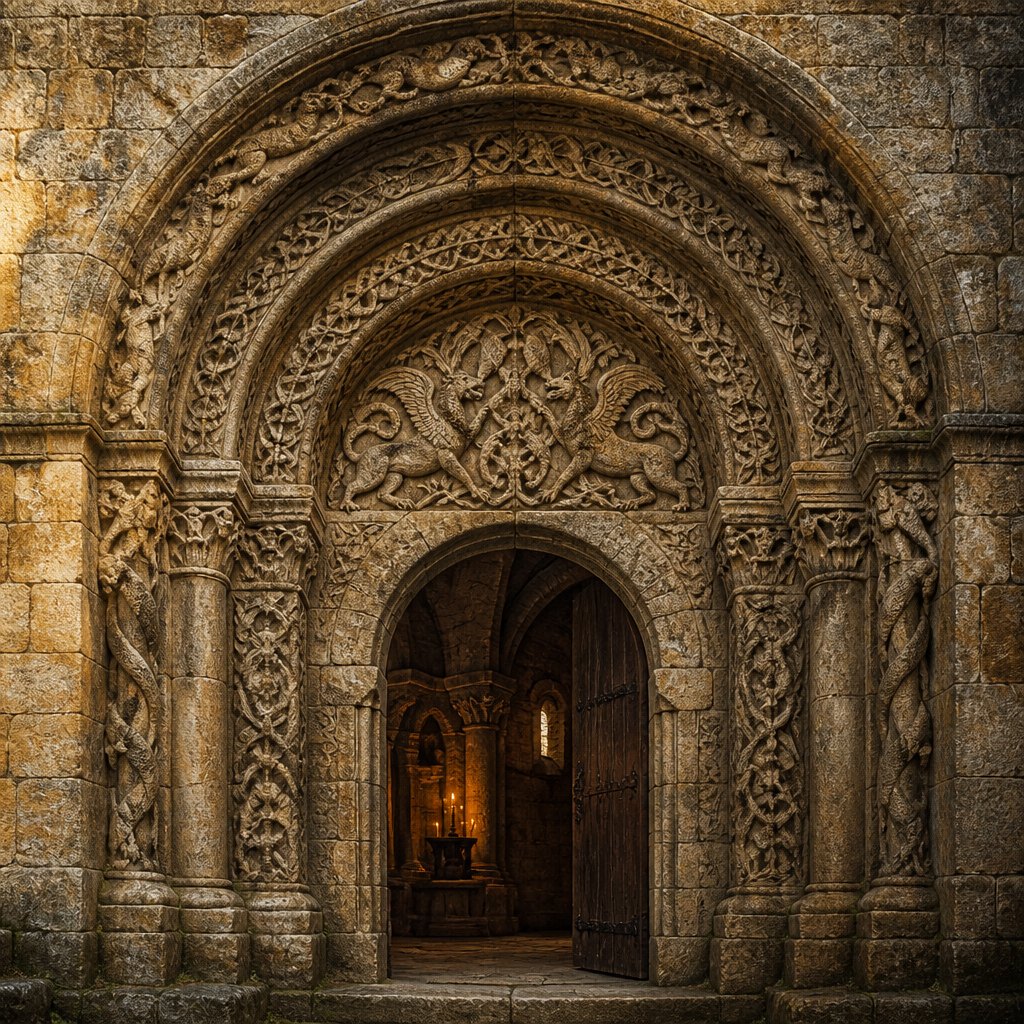 AI-generated
Make it yourself
Create art in the Romanesque Art spirit
This interpretation was generated from a prompt like: “A weathered stone church portal under a deep round arch, carved relief of interlacing foliage and mythical beasts, shadowed archivolts, warm ochre sandstone texture, thick fortress-like walls, soft candlelit interior glow, medieval stone-carving surface detail.”
Open the Romanesque Art Style generator →How to evoke the period
Lean into mass and shadow. Frame a scene with thick, round arches and deep-set openings rather than soaring verticals — the round arch is the single most recognizable signature. Keep color earthy: ochre stone, warm sandstone tan, muted red and blue pigment as if painted on plaster. Flatten and elongate any figures rather than modeling them naturalistically; let drapery fall in repeated, rhythmic folds and let proportions bend to fit a curved frame, as if stretched to fit inside an arch. Fill borders with carved-looking foliage, interlace, or small fantastical beasts. Favor stone, weathered relief, and worn pigment textures over polish, and compose scenes as stacked registers of symbolic importance rather than single-point perspective.
What it left behind
Romanesque building habits outlived the style's fashion for round arches. The idea that architecture itself could preach — portals staged as sermons in stone, capitals crowded with narrative — carried straight into Gothic cathedrals and shaped how Western churches organize sculpture around entrances ever since. The revival of stone vaulting also solved the fire risk of timber-roofed churches, a structural lesson later builders refined rather than discarded. Many Romanesque churches still stand, sometimes swallowed inside later Gothic additions, giving cities from Toulouse to Cologne a visible cross-section of medieval building history. The style set a lasting template for using monumental sculpture to address an audience that could not read.
Frequently asked questions
What is Romanesque art?
Romanesque art is the architectural and sculptural style of Western Europe from roughly 1000 to 1200, defined by round arches, thick stone walls, barrel vaults, and carved church portals depicting biblical judgment scenes.
When was the Romanesque period?
Romanesque art spans roughly 1000 to 1200 CE, beginning as Europe stabilized after Viking and Magyar raids and ending as pointed Gothic arches spread from northern France after about 1140.
What comes after Romanesque art?
Gothic art followed, emerging around 1140 at the abbey of Saint-Denis near Paris, where pointed arches and ribbed vaults allowed taller buildings with larger windows than Romanesque walls could support.
Where can I see Romanesque architecture today?
Well-preserved examples survive across Western Europe, including Durham Cathedral in England, the pilgrimage cathedral at Santiago de Compostela in Spain, and abbey churches throughout Burgundy and southern France.