 Art
Art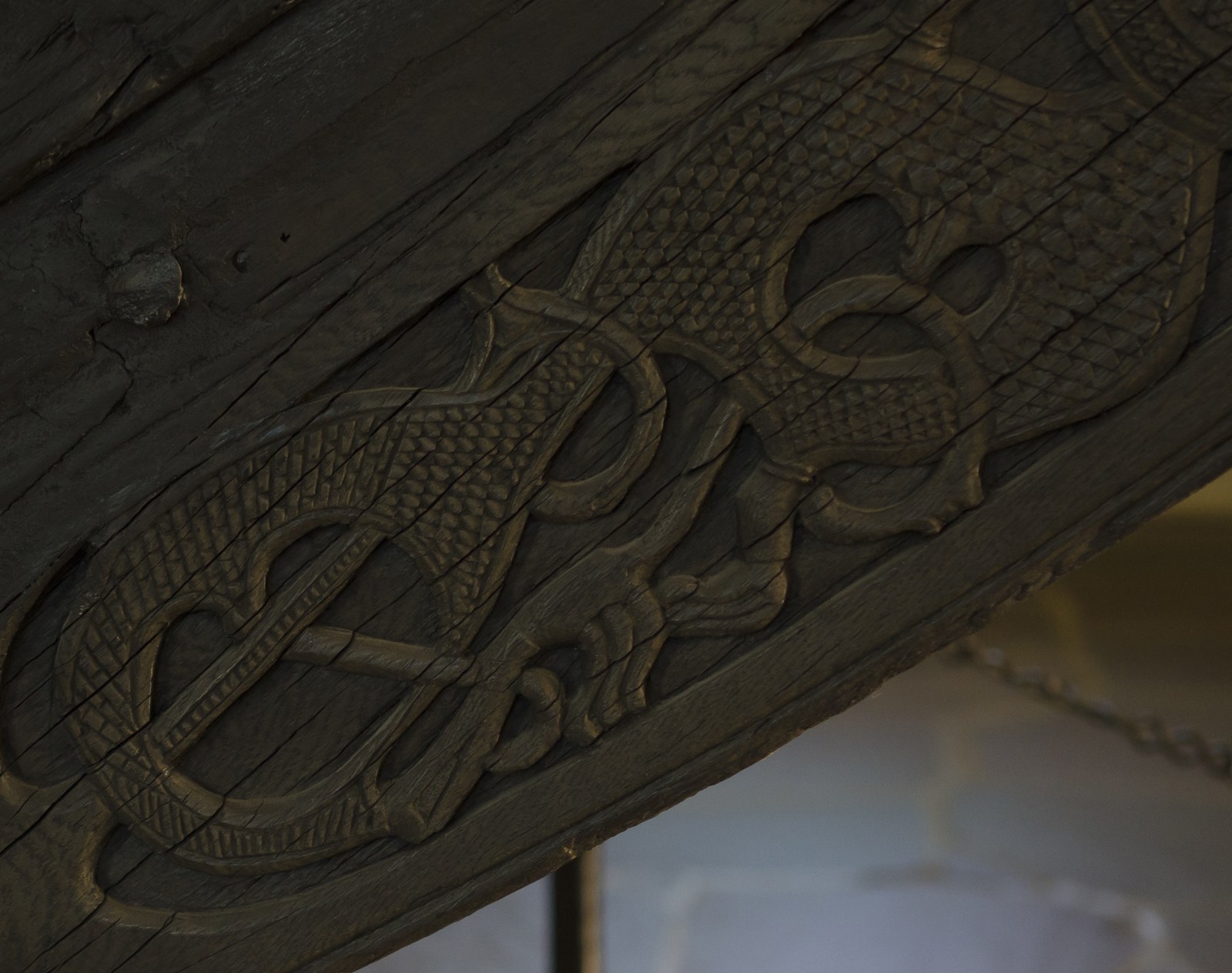
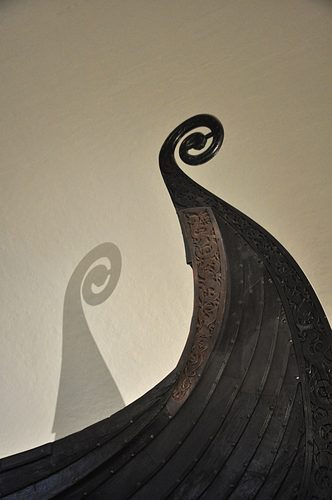
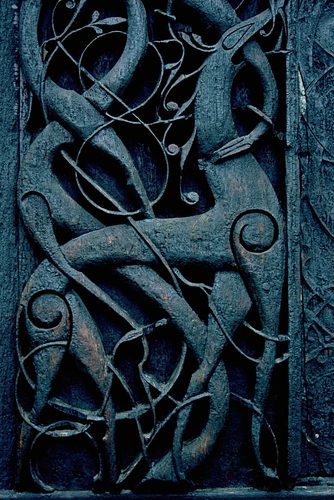
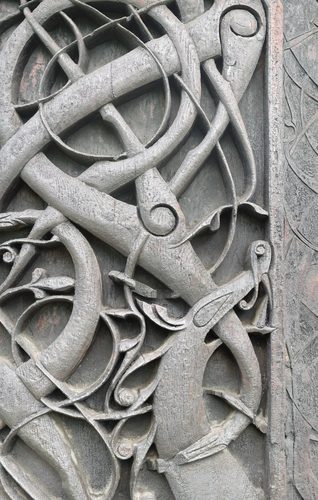
Viking art is the art of Scandinavia and Norse-settled regions from roughly 790 to 1100 CE, the centuries of raiding, trade, and settlement historians call the Viking Age. It was made for a seafaring warrior and merchant aristocracy, and it favored portable, functional objects over the monumental buildings and stone sculpture common further south: carved ships, jewelry, weapons, wooden household goods, and, later, memorial runestones. Its defining visual signature is a restless, interlacing animal ornament, often reduced to a single stylized creature, gripping, biting, or twisting around itself and its neighbors across a crowded surface. This animal style was not static; it moved through a recognized sequence of named phases across the period, each refining how the beast's body dissolved into pattern. Wood carving, well preserved in ship burials sealed in wet clay, shows the style at its most virtuosic, while smaller-scale jewelry and weapon fittings carried it into everyday elite life. Toward the period's end, as Scandinavia converted to Christianity, the same ornamental vocabulary was applied to runestones and early church carving, briefly overlapping with Christian subject matter before giving way to imported Romanesque style.
The look: what defines Viking Art
Gripping-beast ornament
A recurring motif shows a stylized animal gripping its own body, a neighboring beast, or a framing border with paw-like limbs, packing dense, writhing energy into brooches, ship fittings, and carved wood panels.
Wood-carved ship burials
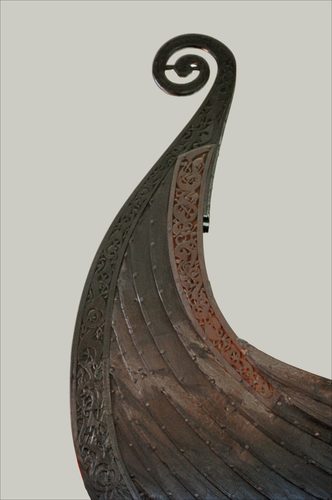
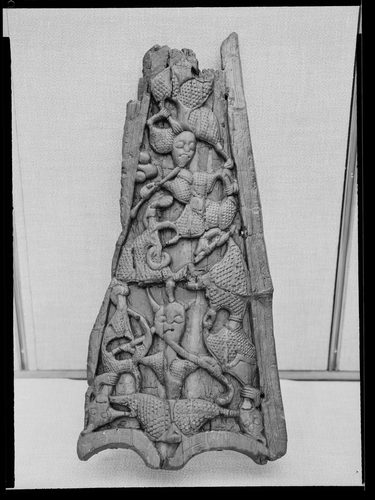
Elite dead were sometimes buried in full ships, their prows, sledges, and grave goods carved with elaborate animal ornament, preserved for centuries where wet clay or peat sealed out air.
Sequential named art styles
Viking ornament moved through a recognized run of styles across three centuries, each reworking the animal motif differently, from tight, ribbon-like beasts to looser, more naturalistic, vine-like creatures late in the period.
Runestone memorial carving
Toward the period's later centuries, raised stones carved with runic inscriptions and interlacing beasts commemorated the dead, recorded journeys, and, increasingly, announced Christian conversion in the same visual language as pagan ornament.
Silver and jewelry hoards
Oval brooches, arm rings, and Thor's-hammer pendants, often cast in silver, carried animal-style ornament into everyday dress and were sometimes buried in hoards for safekeeping, later recovered largely intact centuries afterward.
Functional-object art
Because so much surviving Viking art decorates ships, weapons, and tools rather than standalone artworks, ornament and function are inseparable: a sword hilt or a rudder post was also, unavoidably, a canvas.
The story
Viking art emerges from a seafaring culture rather than a settled court or church. From around 790 CE, Scandinavian raiding, trading, and settlement expeditions reached Britain, Ireland, continental Europe, and beyond, and the wealth and contact these voyages generated fed a distinctive artistic tradition centered on portable, high-status objects.
Early Viking Age ornament, sometimes grouped under names like the Oseberg and Borre styles, favored tightly interlaced, ribbon-bodied animals covering nearly every available surface, seen vividly in the carved wood of the Oseberg ship burial. Later phases, including the Jellinge and Mammen styles of the tenth century, refined the same gripping-beast vocabulary into sharper, more graphic forms.
As Scandinavian rulers converted to Christianity across the tenth century, most visibly under Denmark's Harald Bluetooth, the same interlace tradition was pressed into new service: runestones combined pagan-derived animal ornament with Christian imagery and commemorative inscriptions, marking a visual transition rather than a clean break.
By the late eleventh century, later styles such as Ringerike and Urnes had loosened the animal motif into longer, more fluid, plant-like forms, even as Romanesque stone architecture and sculpture, imported with an increasingly organized church, began to compete with and eventually eclipse native Scandinavian ornament by around 1100.
Timeline
- 790 CEc. Viking Age begins as Scandinavian seaborne activity expands
- 793 CERaid on Lindisfarne monastery marks the Viking Age's opening
- 834 CEc. Oseberg ship burial furnished in Norway
- 890 CEc. Gokstad ship burial furnished in Norway
- 965 CEc. Jelling stones raised, recording Denmark's conversion to Christianity
- 1050c. Ringerike style flourishes on runestones and metalwork
- 1100c. Urnes style closes the period as Romanesque style arrives
Works to know
| Work | Maker | Date | Why it matters |
|---|---|---|---|
| Oseberg ship burial | Unknown | c. 834 CE | A Norwegian ship burial with elaborately carved animal-head posts, sledges, and a cart, among the best-preserved Viking Age wood carving. |
| Gokstad ship | Unknown | c. 890s CE | A large, seaworthy Norwegian burial ship valued as much for its structural design as for its carved ornament. |
| Jelling stones | Unknown | c. 965 CE | Danish memorial stones at Jelling; the larger, raised by Harald Bluetooth, carries an early image of Christ amid interlace, marking Denmark's conversion. |
| Viking oval brooches | Unknown | 9th–11th century CE | Cast silver and bronze brooches worn in pairs by Norse women, their surfaces covered in gripping-beast and interlace ornament. |
| Urnes stave church portal carvings | Unknown | c. 11th century CE | Carved wooden portal panels in the sinuous late Urnes style, an animal motif loosened into flowing, vine-like form. |
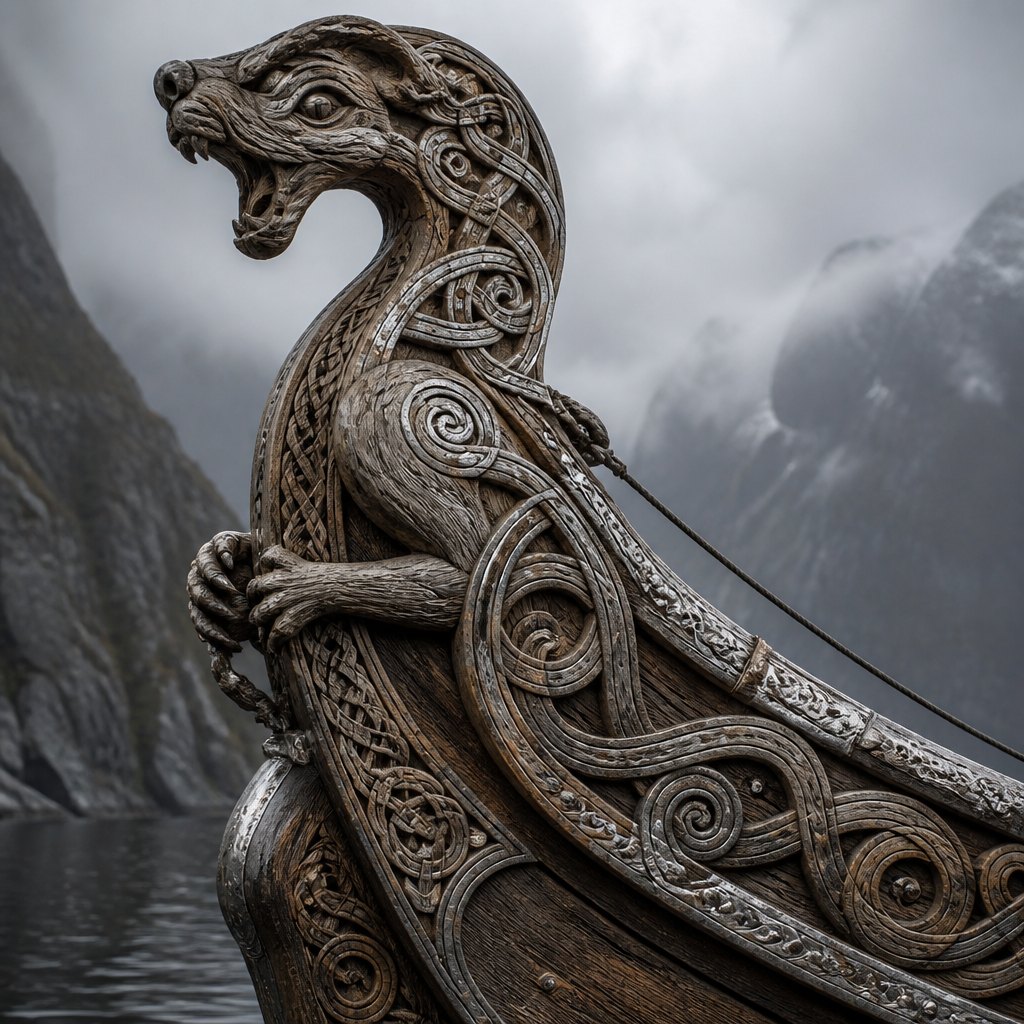 AI-generated
Make it yourself
Create art in the Viking Art spirit
This interpretation was generated from a prompt like: “A weathered wooden ship's prow carved with a single writhing, ribbon-bodied animal form, gripping paws and looping interlace covering every surface, cold grey fjord mist behind, muted natural wood tones with hammered silver accents, richly textured relief carving.”
Open the Viking Art Style generator →How to evoke the period
Cover a surface, whether a ship's prow, a brooch, or a border panel, with a single writhing animal form whose limbs and body twist into interlace rather than sitting still. Keep the creature abstracted almost to pattern: ribbon-like body, gripping paws, biting jaws looping back on themselves. Favor carved wood grain, hammered silver, or weathered grey stone textures over smooth paint, and work in a restrained palette of natural wood brown, oxidized silver, and lichen-grey stone. Fill the whole available space edge to edge, leaving little empty ground. Runic-style linear marks make a good border accent.
What it left behind
Viking interlace and animal-style ornament fed into later Scandinavian folk art and design, and its rediscovery in later centuries helped shape a modern Scandinavian visual identity still traded on today. Runestones remain the largest surviving body of Viking-Age text and image together, giving historians rare direct evidence of names, journeys, and belief. Ship-burial finds like Oseberg and Gokstad reshaped understanding of Norse shipbuilding and carving skill, since so little other large-scale Viking woodwork survived. The gripping-beast motif and its later, looser descendants also echo in modern jewelry and graphic design drawing on Norse heritage.
Frequently asked questions
What is Viking art?
It is the art of Scandinavia and Norse-settled regions from roughly 790 to 1100 CE, made mainly for ships, jewelry, weapons, and runestones, defined by interlacing animal ornament.
When was the Viking Age?
The Viking Age is generally dated from the 790s CE, when Scandinavian raiding and trade expeditions expanded, to around 1100 CE, as Christianity and Romanesque style took hold in Scandinavia.
What is the gripping-beast motif?
It is a recurring Viking ornamental motif showing a stylized animal grasping its own body or a neighboring creature with paw-like limbs, common on brooches, ship fittings, and carved wood.
What are runestones?
Runestones are raised memorial stones carved with runic inscriptions, often paired with interlacing animal ornament, that commemorated the dead, recorded journeys, and later announced Christian conversion.