 Art
Art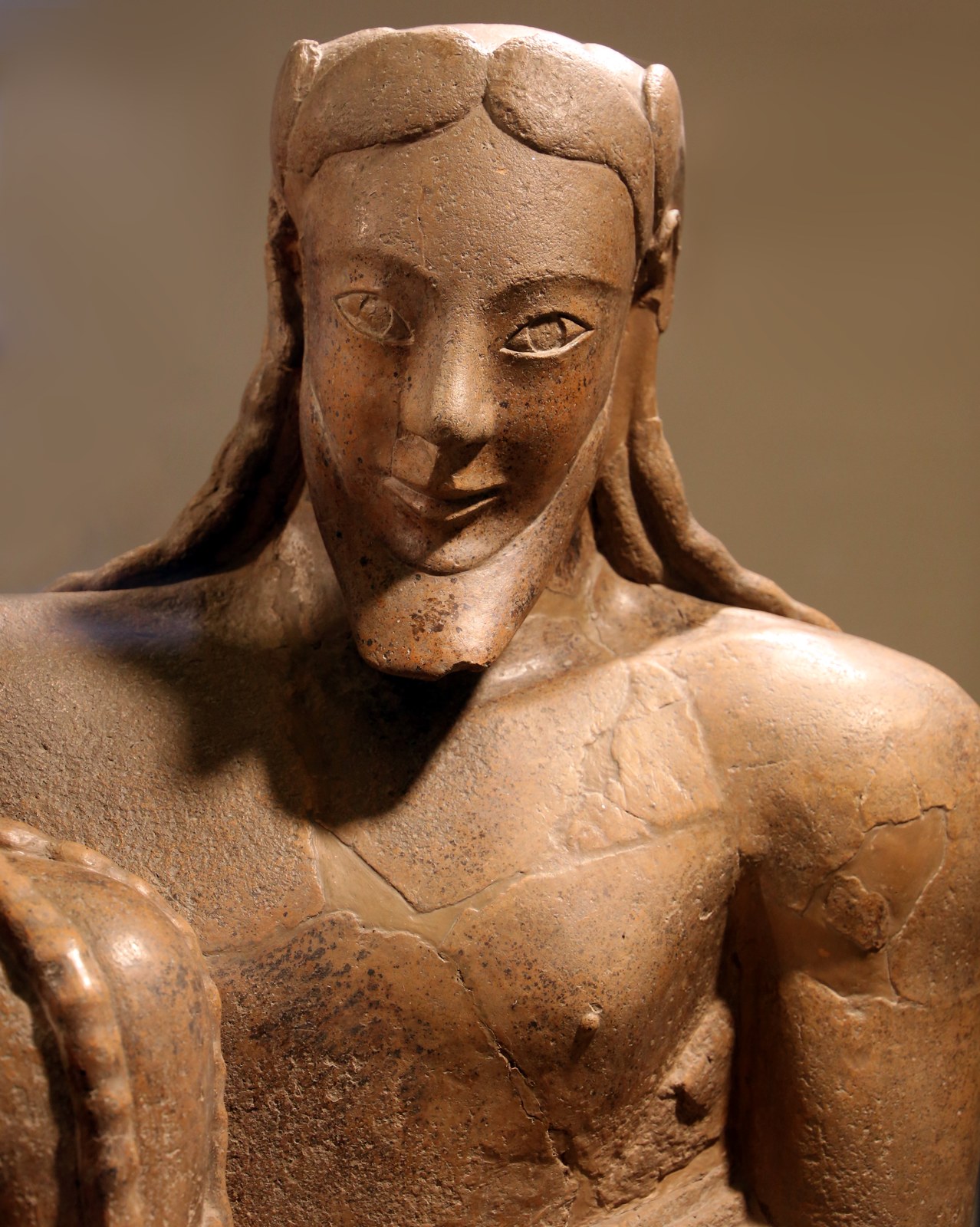
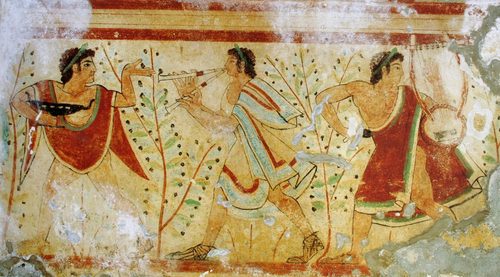
Etruscan art is the art of the Etruscans, a network of independent city-states that flourished in central Italy, roughly the modern region of Tuscany, from about 900 to 100 BCE, before their gradual absorption into an expanding Rome. Etruscan society was wealthy, trade-connected, and deeply concerned with the afterlife, and it is chiefly through tombs — carved into hillsides and painted with scenes of banqueting, dancing, music, and the natural world — that most Etruscan art survives, since the wooden and mudbrick buildings of the living have largely vanished. Etruscan artists worked skillfully in bronze and terracotta, producing life-sized sculpture, mirrors, and decorative objects traded and admired across the Mediterranean, and they drew openly on Greek pottery, myth, and sculptural convention while giving figures a livelier, less idealized, more individual character. Patronage came from an aristocratic elite whose wealth derived from metalworking, agriculture, and maritime trade. Etruscan political power waned as Rome expanded through the fourth and third centuries BCE, and Etruscan cities were gradually absorbed, their language and distinct art eventually folding into a broader Roman culture that had, in its own formative centuries, learned a great deal from its Etruscan neighbors.
The look: what defines Etruscan Art
Painted tomb interiors
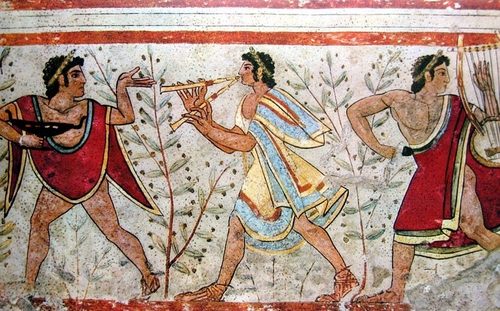
Underground tomb chambers, carved to resemble the rooms of a house, were painted with lively scenes of banqueting, dancing, music, and hunting, using bold outline and flat color to celebrate life rather than mourn death.
Terracotta sculpture
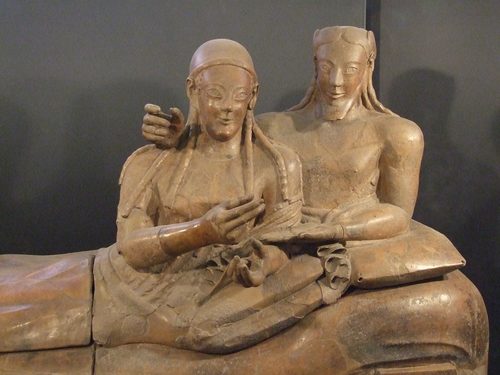
Etruscans excelled in fired clay sculpture at large scale, including life-sized figures and sarcophagus lids topped with reclining couples shown smiling and animated, a warmth rarely seen in contemporary Greek funerary art.
Bronze work and mirrors
Skilled bronze casting produced statues, decorative fittings, and especially hand mirrors, their polished backs finely engraved with mythological scenes, prized personal possessions traded and admired well beyond Etruria's own borders.
Greek-influenced, distinct figure style
Etruscan artists adapted Greek pottery shapes, myths, and sculptural poses but rendered figures with a livelier, more individual, sometimes exaggerated character, favoring expressive gesture and asymmetry over strict idealized proportion.
Reclining banquet imagery
A recurring motif shows the deceased reclining at a banquet, cup or plate in hand, sometimes alongside a spouse, reflecting the era's distinctively convivial and this-worldly vision of the afterlife.
Hilltop cities and necropolises
Etruscan cities were built on defensible hilltops, each paired with a separate necropolis of carved tomb chambers arranged along streets, effectively a city of the dead planned to mirror the city of the living.
The story
Etruscan art emerges around the ninth century BCE from the earlier Villanovan culture of Iron Age Italy, as scattered communities in Etruria grew into wealthy, independent city-states loosely bound by shared language, religion, and trade. Contact with Greek colonists in southern Italy and Greek traders across the Mediterranean brought Greek pottery, myth, and artistic technique into Etruscan workshops from an early date, absorbed and reworked into a distinctly Etruscan idiom.
Etruscan art and wealth reached their height between roughly the seventh and fifth centuries BCE, the period of the great painted tombs at sites like Tarquinia, elaborate bronze work, and monumental terracotta sculpture for temples and sarcophagi, supported by profitable trade in metals and agricultural goods across the Mediterranean and inland Italy.
From the fifth century BCE onward, Etruscan political power gradually weakened relative to a growing Rome, which had itself been ruled by Etruscan kings in its early history and absorbed considerable Etruscan artistic and engineering influence, from arch construction to religious ritual. Rome's steady military and political expansion through the fourth and third centuries BCE brought one Etruscan city after another under Roman control, and by around 100 BCE, Etruscan cities had lost their independence and much of their distinct artistic identity, folded into the broader culture of Republican Rome.
Timeline
- 900 BCEc. Villanovan culture gives rise to early Etruscan city-states
- 700 BCEc. Greek pottery and myth begin shaping Etruscan art
- 600 BCEc. Painted tomb chambers built at Tarquinia
- 509 BCEc. Rome ousts its last Etruscan king
- 396 BCERome conquers the Etruscan city of Veii
- 300 BCEc. Etruscan bronze and terracotta work continues under Roman pressure
- 100 BCEc. Etruscan cities lose independence, absorbed into Roman culture
Works to know
| Work | Maker | Date | Why it matters |
|---|---|---|---|
| Sarcophagus of the Spouses | Unknown | c. 520 BCE | Painted terracotta sarcophagus from Cerveteri showing a reclining husband and wife at a banquet, smiling and animated, a hallmark of Etruscan funerary art. |
| Tomb of the Leopards | Unknown | c. 480–450 BCE | Painted tomb chamber at Tarquinia showing lively banqueting and dancing figures beneath leopards, prized for its bold color and rhythmic composition. |
| Chimera of Arezzo | Unknown | c. 400 BCE | Bronze sculpture of the mythological chimera, wounded and snarling, showcasing Etruscan skill in large-scale bronze casting. |
| Ficoroni Cista | Novios Plautios | c. 320 BCE | Engraved bronze bridal casket signed by its maker on its own surface, incised with a detailed mythological scene in fine line. |
| François Tomb | Unknown | c. 4th century BCE | Large painted tomb chamber at Vulci with scenes drawn from Greek and Roman legend, notable for its unusually narrative-rich figural cycle. |
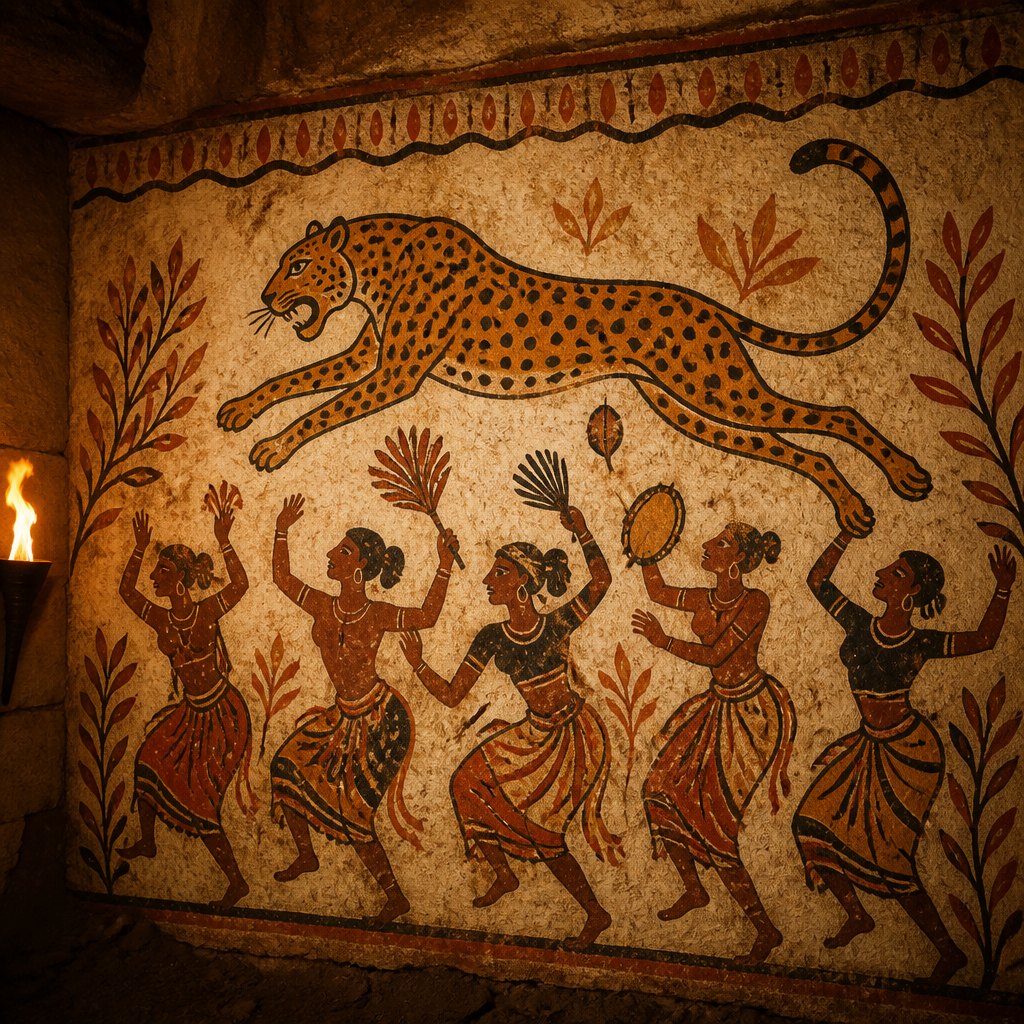 AI-generated
Make it yourself
Create art in the Etruscan Art spirit
This interpretation was generated from a prompt like: “A tomb-mural-style painting of a leopard and dancing figures in bold outline, warm terracotta red, ochre, and black pigment on a plaster-cream wall, loose confident brushwork, torchlit underground chamber atmosphere.”
Open the Etruscan Art Style generator →How to evoke the period
To evoke Etruscan art, favor warm terracotta reds, ochre, and black outline against a plaster-cream ground, painted with the loose, confident line of tomb murals rather than precise realism. Subjects work well as lively banquet or dance scenes — figures reclining, gesturing, mid-motion — with a slightly exaggerated, animated character rather than calm idealism. For sculpture, render smiling, individualized faces and reclining poses in warm fired-clay orange tones. Add stylized animals, such as leopards or mythical hybrid creatures, as decorative border or companion motifs. Keep compositions frontal and flattened, more concerned with energy and warmth than anatomical precision, evoking the feel of a torchlit underground chamber.
What it left behind
Etruscan art shaped Rome directly, at the moment Rome itself was still forming: temple design, terracotta architectural sculpture, divination practices, and elements of civic ritual all carried Etruscan roots into Roman culture. Etruscan portrait sculpture's interest in individual, characterful faces anticipated the famously unflattering realism of later Roman portraiture. Because so much survives from tombs rather than ruined cities, Etruscan art also preserved an unusually intimate, everyday record of banqueting, music, and dance, rare among ancient cultures. Long overshadowed by Greece and Rome in popular memory, Etruscan art is increasingly recognized as a distinct, confident tradition in its own right rather than a mere stepping stone.
Frequently asked questions
What is Etruscan art?
Etruscan art is the art of the Etruscans, city-states of pre-Roman central Italy, from about 900 to 100 BCE, known chiefly for painted tomb chambers, bronze work, and terracotta sculpture.
How did Etruscan art influence Rome?
Rome, ruled by Etruscan kings early in its history, absorbed Etruscan temple design, terracotta architectural sculpture, and divination practices, and Etruscan portrait realism likely shaped the unflattering style of later Roman portraits.
Why do we know Etruscan art mainly from tombs?
Etruscan homes and civic buildings were built largely of wood and mudbrick and have not survived, while carved and painted tomb chambers, built to last, preserved most of what we know of Etruscan art today.
What happened to the Etruscans?
Etruscan city-states gradually lost independence to an expanding Rome between the fifth and first centuries BCE, and by around 100 BCE their distinct culture and language had largely been absorbed into Roman civilization.