 Art
Art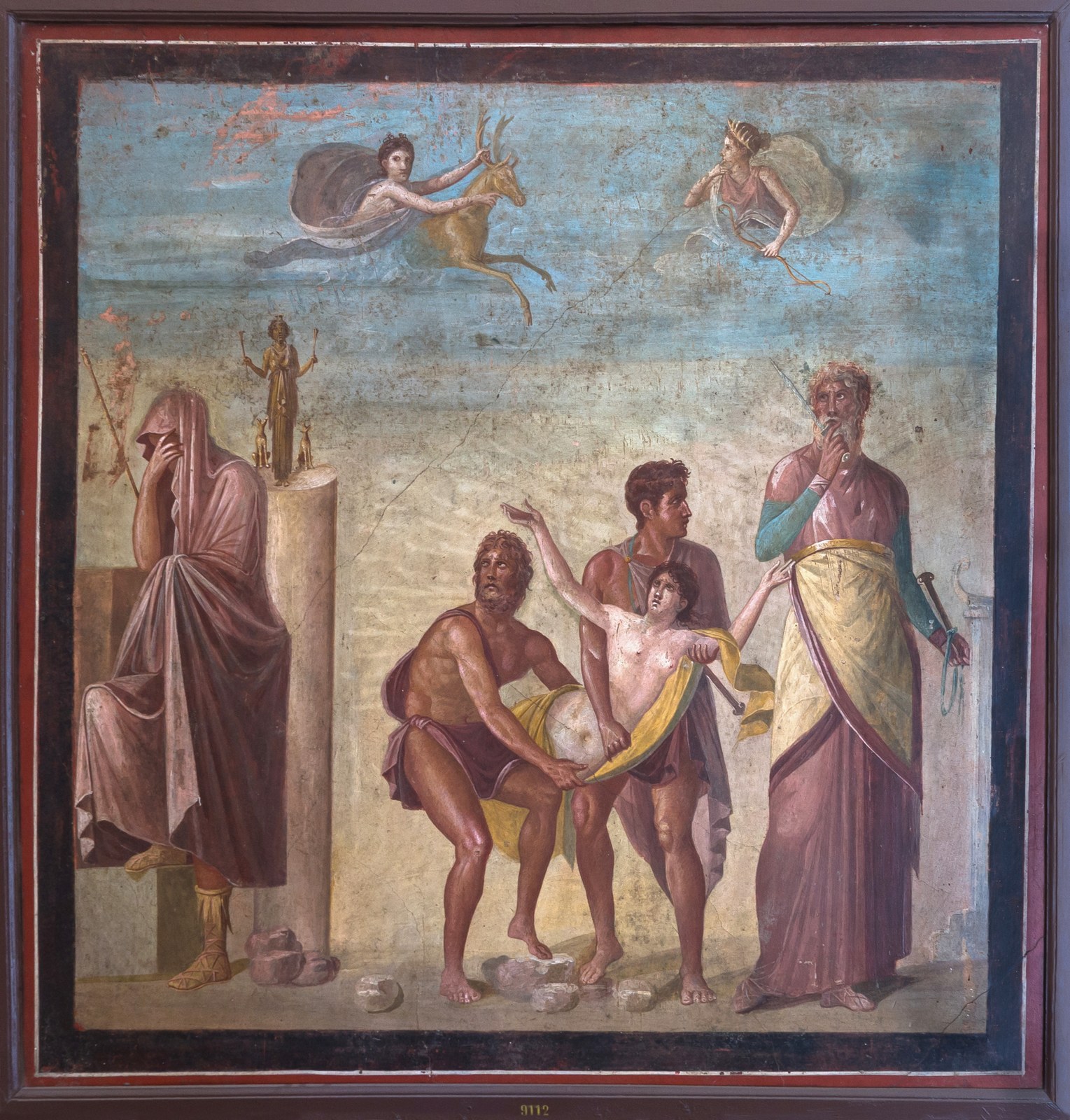
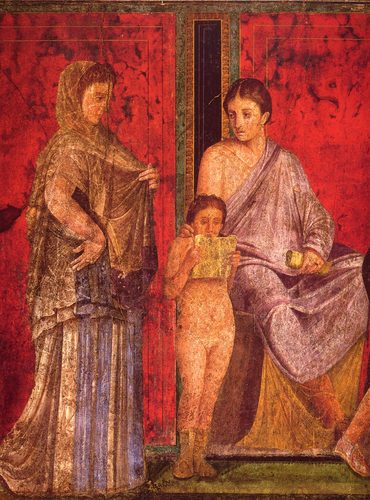
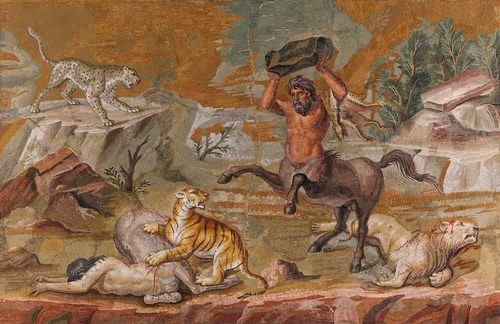
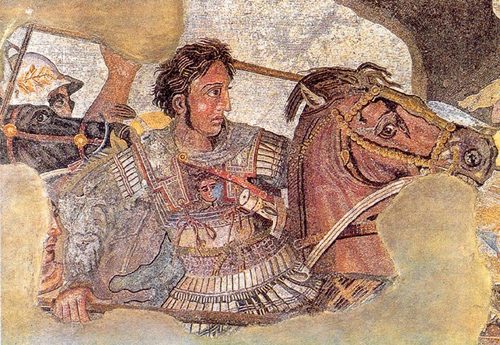
Ancient Roman art spans nearly a thousand years, from the traditional founding of the Roman Republic around 509 BCE to the fall of the Western Roman Empire in 476 CE, across territory stretching from Britain to North Africa and the Near East. It was made for senators, emperors, temples, and ordinary households alike, absorbing Etruscan funerary customs and Greek sculptural ideals into something distinctly Roman: unflinching portrait busts modeled on ancestral wax death masks, narrative relief that recorded specific historical events rather than myth alone, and an architectural ambition made possible by concrete. Under the Republic, patrons favored blunt, veristic likenesses that advertised age and gravitas as civic virtue. Once Augustus reshaped the state into an empire, official portraiture turned smoother and more idealized, borrowing Greek classicism to project stability. Wall painting, mosaic floors, and household shrines carried this visual culture into private life, while triumphal arches, columns, and amphitheaters broadcast it in public. By the empire's fracture in the fifth century, Roman art had spread its conventions across three continents.
The look: what defines Ancient Roman Art
Veristic portrait busts
Republican-era portraits favored blunt, unflattering realism: sagging jowls, deep wrinkles, and balding heads, modeled on the wax ancestor masks kept in noble households. Age and evident hardship read as civic virtue, not flaw.
Historical narrative relief
Unlike Greek relief's mythic focus, Roman relief carved specific, dated events, a triumph, a battle, a sacrifice, in continuous bands, most famously spiraling up commemorative columns to record real campaigns.
Concrete-enabled architecture
Roman concrete let builders vault huge unsupported spans and coffered domes, seen in the Pantheon's oculus-lit interior and the Colosseum's tiered arcades, an engineering leap Greek post-and-lintel building never attempted.
Illusionistic wall painting
Pompeian-style frescoes used painted architecture, faux marble paneling, and trompe-l'oeil landscapes to dissolve a room's walls into imagined colonnades, gardens, and distant vistas, a decorative language preserved almost intact under Vesuvius's ash.
Copies after Greek originals
Wealthy Romans commissioned marble copies of famous Greek bronzes for gardens and villas, meaning many canonical Greek sculptures survive today only through Roman replication rather than the vanished originals themselves.
Idealized imperial portraiture
Once Augustus took power, official images shifted from Republican wrinkles to smooth, ageless, Greek-inflected faces, projecting calm authority; the emperor's likeness, standardized and distributed empire-wide, became a tool of rule.
The story
Roman art begins in debt to its neighbors. After the Republic's traditional founding around 509 BCE, early workshops absorbed Etruscan funerary practice, including the wax ancestor masks that fed Republican Rome's taste for blunt, veristic portrait busts, alongside imported Greek sculptural technique from conquered southern Italy and Greece itself.
Conquest kept feeding the visual culture: victorious generals brought home Greek statuary and the craftsmen to copy it, while triumphal art recorded specific campaigns rather than myth. Augustus's reshaping of the Republic into an empire from 27 BCE brought a deliberate style shift toward calm, idealized, classicizing portraiture, seen in monuments like the Ara Pacis, meant to project peace and legitimacy.
Imperial wealth and engineering then reached full scale: concrete construction raised the Colosseum and, later, the Pantheon's great dome, while columns and arches recorded military victories in continuous narrative relief. Provincial workshops from Britain to Egypt adapted these conventions locally, producing hybrids like the painted Fayum mummy portraits.
By the third century, instability and new religious currents were already reshaping patronage, and by 476 CE, when the last western emperor was deposed, Roman visual culture had long since begun merging with the Christian art of its eastern, Byzantine continuation.
Timeline
- 509 BCERoman Republic traditionally founded
- 146 BCEc. Rome conquers Greece, absorbing Greek art and craftsmen
- 27 BCEAugustus becomes first emperor, reshaping official portraiture
- 9 BCEAra Pacis dedicated in Rome, celebrating Augustan peace
- 79 CEVesuvius erupts, burying Pompeii and Herculaneum
- 80 CEColosseum dedicated in Rome
- 113 CETrajan's Column dedicated, commemorating the Dacian Wars
- 476 CEWestern Roman Empire falls
Works to know
| Work | Maker | Date | Why it matters |
|---|---|---|---|
| Augustus of Prima Porta | Unknown | c. 15 BCE | Idealized full-length statue of the first emperor, its cuirass carved with imperial propaganda; a template for imperial portraiture. |
| Ara Pacis Augustae | Unknown | 13–9 BCE | Marble altar carved with processional relief celebrating Augustan peace, blending Greek classicism with Roman ceremony. |
| Colosseum | Unknown | 70–80 CE | Amphitheater seating tens of thousands, showcasing concrete-and-arch engineering that made monumental public architecture routine. |
| Trajan's Column | Unknown | 113 CE | A 100-foot column wrapped in a continuous spiral relief narrating the Dacian Wars in vivid, documentary detail. |
| Pantheon | Unknown | c. 113–125 CE | Temple with the largest unreinforced concrete dome built in antiquity, lit by a single oculus. |
| Fayum mummy portraits | Unknown | 1st–3rd century CE | Naturalistic encaustic panel portraits from Roman Egypt, bound into mummy wrappings; among antiquity's most lifelike painted faces. |
 AI-generated
Make it yourself
Create art in the Ancient Roman Art spirit
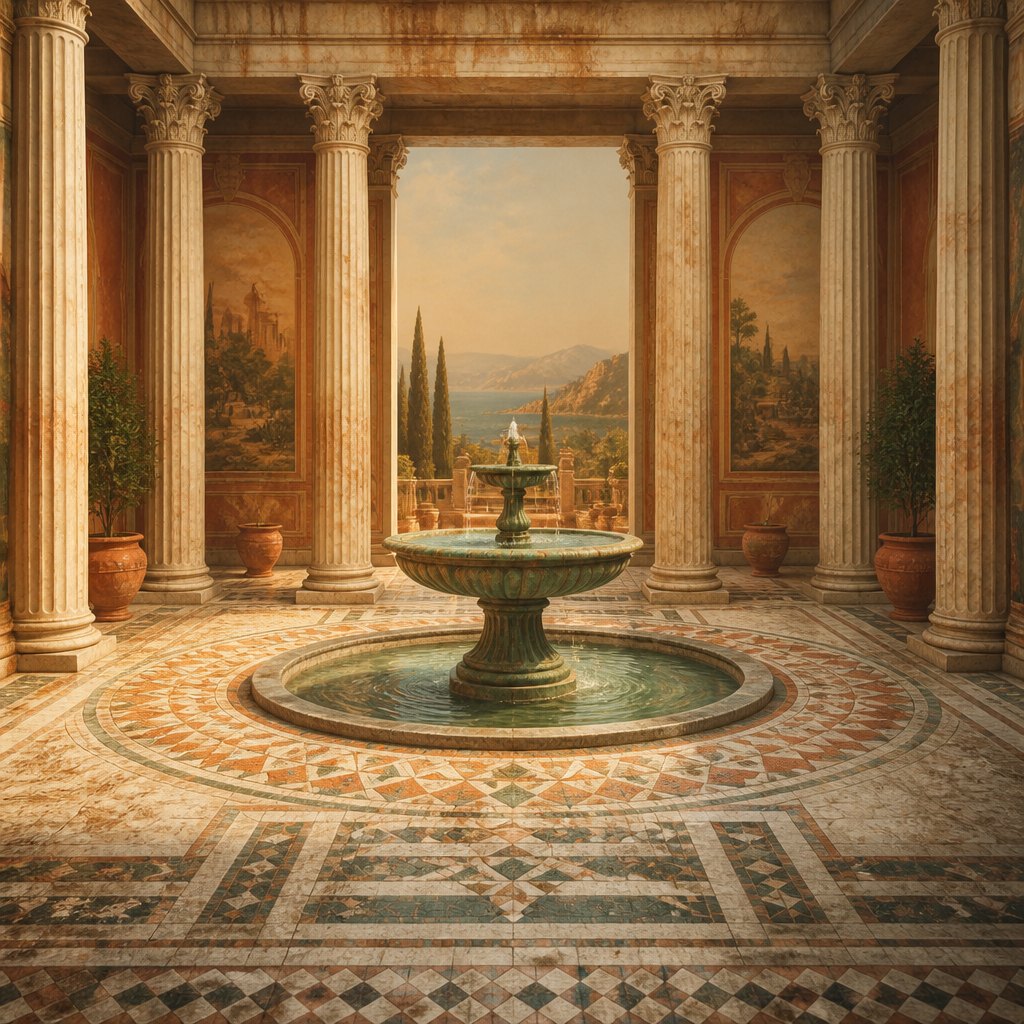
This interpretation was generated from a prompt like: “A weathered marble courtyard with fluted columns, a mosaic floor of geometric tesserae, and a bronze-green patina fountain, warm terracotta light, faux-painted wall panels receding into a hazy Mediterranean landscape, symmetrical composition.”
Open the Roman Classical Art Style generator →How to evoke the period
Favor marble white, terracotta red, and weathered bronze-green, with gold accents for imperial touches. Center a single figure in confident contrapposto, draped in heavy, naturalistic fabric folds, or arrange a continuous narrative band, a procession or battle, wrapping around a column or altar face. For interiors, layer painted faux-architecture: false columns, framed landscape vignettes, and marbled panels that trick the eye into extra depth. Add cracked plaster, weathered stone texture, and warm Mediterranean light. Keep every composition ordered and carefully symmetrical, favoring calm, unhurried gravitas over drama or sudden motion.
What it left behind
Roman portrait realism and its idealized imperial counterpart both became templates for how later Western art depicted rulers and individuals. Concrete construction and the dome, engineered at Roman scale, went unmatched for centuries and were studied directly by Renaissance architects examining the Pantheon. Triumphal arches and commemorative columns set patterns still used in civic monuments today. Because so many Greek bronzes survive only through Roman marble copies, Roman workshops effectively preserved much of what is now called classical art. Pompeii's buried frescoes gave later centuries a rare, near-complete record of Roman domestic decoration.
Frequently asked questions
What is Ancient Roman art?
It is the sculpture, painting, mosaic, and architecture produced across the Roman world from the Republic's founding around 509 BCE to the Western Empire's fall in 476 CE, blending Etruscan, Greek, and distinctly Roman conventions.
When did the Roman Empire begin?
The Roman Empire began in 27 BCE, when Augustus became the first emperor, prompting a shift in official art toward calmer, more idealized portraiture.
How is Roman portraiture different from Greek?
Republican Roman portraits favored blunt, wrinkled realism drawn from ancestral wax death masks, while Greek sculpture generally idealized its subjects; imperial Roman portraiture later blended both approaches.
What made Roman architecture possible?
Concrete let Roman builders vault huge unsupported spans and domes, such as the Pantheon's, achieving a structural scale Greek post-and-lintel construction could not reach.